
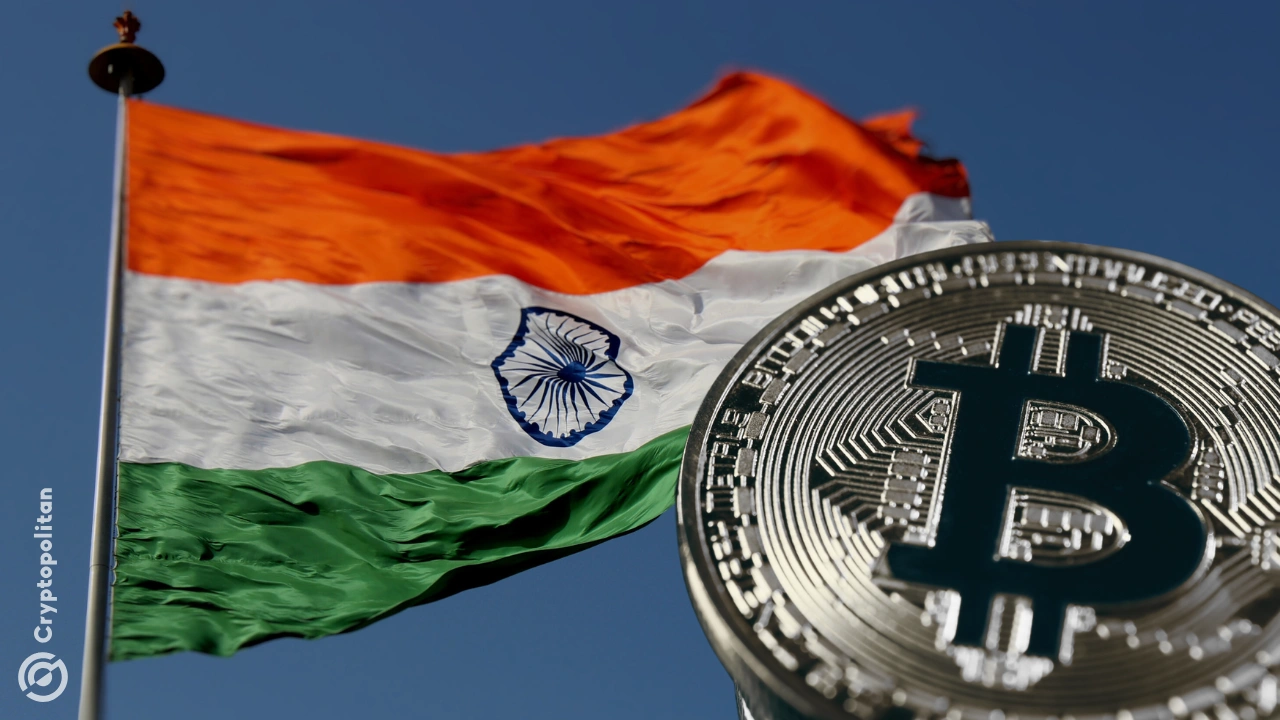
India’s premier stock exchange, the Bombay Stock Exchange (BSE), has turned down a listing request from a company. Reports indicate the rejection stems from the company’s plan to allocate a significant portion of funds, acquired through a preferential share issuance, into cryptocurrency investments.
The BSE’s official statement clarified that their “policy regarding investments in virtual digital assets (VDAs) is currently under review. Until a definitive position is established, we are unable to process applications of this nature.” The company involved, Jetking Infotrain, is primarily involved in IT education. They initially received preliminary approval from the BSE on May 9th, following a board resolution on May 23rd to allocate over 396,000 shares, totaling approximately Rs. 6 lakh (about $7,200 USD).
BSE Denies Listing to Firm with Crypto Investment Plans
Documentation submitted to the BSE, which initially secured their initial approval, outlined objectives including education and skills development, general business expenses, and acquiring VDAs. A substantial portion of the proceeds, roughly Rs. 3.96 crore or 60%, was designated for the purchase of virtual digital assets.
Jetking has disclosed cryptocurrency holdings in its treasury, filing this information with the Registrar of Companies under the Ministry of Corporate Affairs. Indian businesses are permitted to invest in VDAs, similar to how they utilize surplus funds in mutual funds, securities, and term deposits, but are required to report these investments. The BSE’s action suggests that while companies can directly invest in crypto using existing cash reserves, regulators are hesitant about listed companies raising capital specifically for investing in digital currencies.
“We initially handled the application according to standard procedures. However, the final approval was delayed to address the issue of fundraising for VDA investment at a higher policy level. Following revised guidelines, the decision was made to reject the application,” a BSE spokesperson stated.
Siddharth Bharwani, Joint MD and CFO of Jetking, noted that the company is evaluating the situation and considering an appeal to the Securities Appellate Tribunal. “It has been five years since the Supreme Court acknowledged that cryptocurrencies are not illegal but necessitate regulation,” Bharwani added. Reversing the share allocation and returning funds after deployment can be a complex undertaking.
Cryptocurrency Regulations in India: Still Unclear
The Bombay Stock Exchange’s current position on VDA-focused entities could force many domestic companies to reconsider plans to launch similar initiatives. Prior to this decision, there was increasing optimism that firms would emulate Bitcoin treasury leaders like MicroStrategy in the USA and Metaplanet in Japan. Currently, their main strategy is to hold Bitcoin and other digital assets on their financial records.
However, this concept may be difficult to implement in India because virtual currencies are neither thought of as securities or real currencies but as intangible assets. Consequently, dealing in virtual currencies cannot be seen as offering financial assistance, such as those that non-banking financial organizations can offer. Furthermore, if a digital currency treasury company’s shareholders are local, they could have to address issues relating to foreign direct investments, portfolio investments, and the Foreign Exchange Management Act.
“There is an increasing urgency for explicit classification of virtual digital assets under existing laws. A clearer regulatory framework would be preferred to policy uncertainty,” said Jaideep Reddy, a partner at Trilegal. Similar to the Bombay Stock Exchange’s situation, banks are also experiencing comparable uncertainty. Although some businesspeople have been able to invest in US crypto ETFs through the RBI’s liberalized remittance scheme, local banks are divided on how to classify the investments when processing funds.
If you’re reading this, you’re already ahead. Stay there with our newsletter.