
- The fate of three proposed cryptocurrency laws in the US Congress is now uncertain, following two days of intense internal conflict among House Republicans regarding the bills’ content and the procedures for advancing them.
- House Speaker Mike Johnson dedicated approximately 10 hours to attempting to unify his political group enough to pass a procedural vote that would establish the rules for debating both the crypto bills and a related defense spending package.
- Approval of the rules was only achieved after a number of representatives who initially voted ‘no’ changed their vote to ‘yes’.
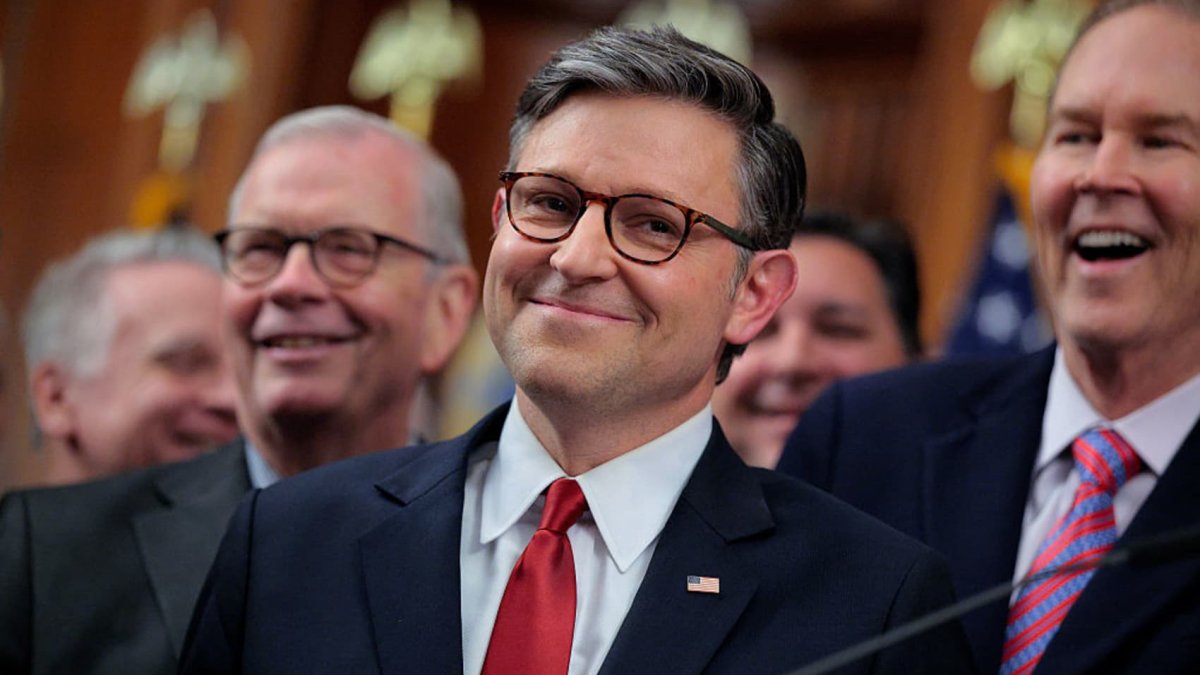
Speaker of the House Mike Johnson (R-LA) walks to his office at the U.S. Capitol on July 02, 2025 in Washington, DC. Johnson, U.S.
The prospects for three separate legislative proposals focused on regulating digital currencies are now clouded with uncertainty after opposition from some Republicans in the House of Representatives caused a delay of nearly half a day before the matter could be moved forward.
Additional resistance also surfaced during the day from more moderate Republicans, who were critical of revisions made at the last minute. These modifications were intended to win back the support of a group of staunch conservatives whose initial ‘no’ votes had stalled the bills the previous day.
Finally, late on Wednesday night, some of those who had voted against the measure switched their stance to ‘yes,’ leading to the approval of the rules for debating the cryptocurrency bills as well as a related Pentagon funding package.
Wednesday’s drawn-out voting process established a new milestone as the most extended open vote observed in modern House history, eclipsing a record previously established earlier in the same month.
House Speaker Mike Johnson, representing Louisiana’s Republican party, has a limited margin for error; he can only afford to lose a small number of Republican votes on any given measure to still secure its passage along party lines.
Despite the late-night breakthrough on Wednesday, the two-day gridlock regarding crypto regulations has created doubts regarding the House Republicans’ ability to find common ground between members who hold differing opinions on regulating cryptocurrency. Successfully passing final versions of the bills that can become law is becoming increasingly unlikely.
For the cryptocurrency sector – which contributed tens of millions of dollars to congressional campaigns – the difficulties encountered in progressing the bills signify a significant setback, dimming hopes that a comprehensive regulatory framework could be achieved during what had been marketed as “Crypto Week.”
The latest obstacles presented on Wednesday also raise concerns regarding the extent of influence that President Donald Trump wields over members of his own political party.
This second attempt to gain approval for the rules followed intense negotiations conducted at the last hour, along with an intervention from President Trump on Tuesday evening. These efforts initially seemed to persuade one group of dissenting Republicans to come on board.
President Trump held a meeting in the Oval Office late Tuesday evening with roughly a dozen conservative Republicans.
Following the meeting, President Trump said that they had “all agreed to vote” in support of the rule, as stated in a post on the social media platform Truth Social.
However, new opposition arose on Wednesday from lawmakers sitting on key committees who were directly involved in drafting the legislation, not exclusively from staunch conservatives.
For instance, members of the Committee on Financial Services voiced objections to some of the last-minute adjustments made by the leadership. These changes were designed to consolidate two of the bills, as reported by Politico.
The three bills at stake encompass one, the GENIUS Act, which secured passage in the Senate back in June, along with two others that are currently being considered by the House: the CLARITY Act and a bill focused on preventing the Federal Reserve from introducing a central bank digital currency.