
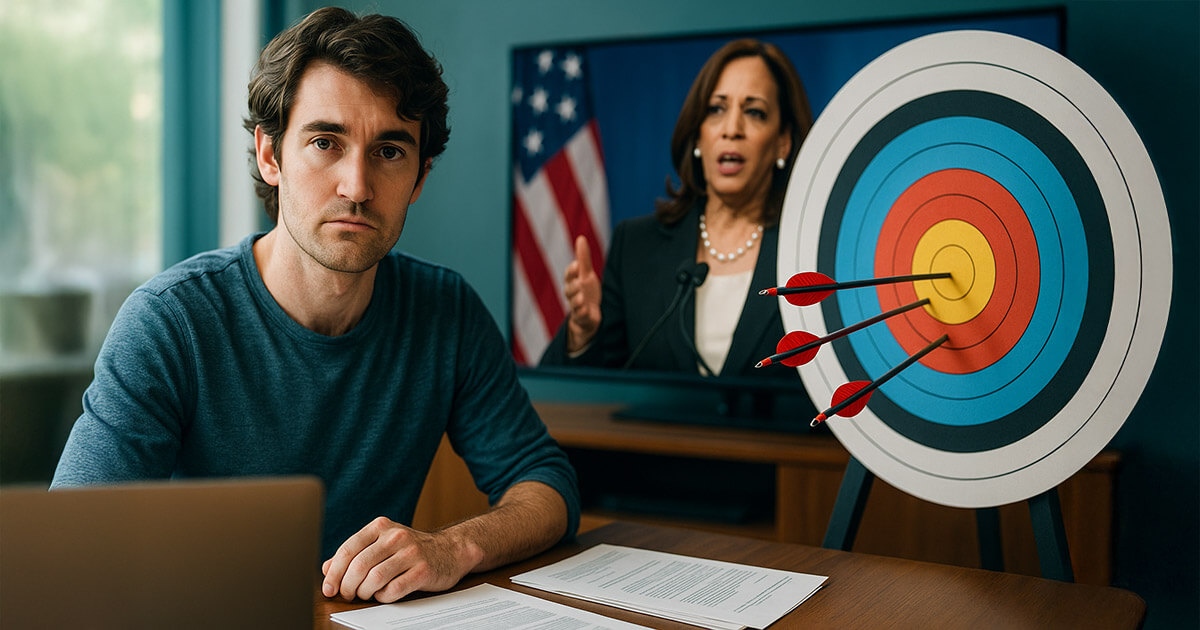

Ross Ulbricht, the individual behind the notorious digital black market Silk Road and a long-time supporter of Bitcoin, swiftly responded to Vice President Kamala Harris after she referred to him as “the fentanyl dealer” in her recent publication. Harris also criticized former President Trump’s decision to commute Ulbricht’s sentence.
Ulbricht clarified that he was never legally accused of selling drugs himself, and fentanyl was not involved in the charges against him.
Harris’s Book Statement Draws Criticism
Ulbricht’s response was direct. He emphasizes that Harris’s statement lacked factual accuracy, suggesting her motive was politically driven, casting Ulbricht and former President Trump in a negative light. Ulbricht tweeted:
“Truth has never been your priority. Your true aim is to make me and President Trump look bad at any cost, right? Don’t be bitter, Kamala.”
The Democratic party has faced accusations of displaying hostility towards the cryptocurrency sector, intensifying regulatory actions via initiatives similar to “Chokepoint 2.0.”
Harris’s characterization of Ulbricht appears to be another illustration of the Democrats’ broader opposition to the transformative potential of crypto.
Ross Ulbricht: The Mind Behind Silk Road
For those less acquainted with the crypto world, Ross Ulbricht developed Silk Road, the well-known online marketplace that leveraged Bitcoin for transactions at a point when most people were unfamiliar with the cryptocurrency.
Launched in 2011, Silk Road facilitated the buying and selling of various items (some legal, many illegal) outside the bounds of traditional regulations.
Ulbricht was apprehended in 2013 and eventually received a life sentence without the chance of parole. Many legal professionals, tech leaders, and privacy advocates considered this sentence to be excessively harsh. His case sparked debate about internet freedom, reforms to the justice system, and the government’s method of addressing emerging technologies.
In January 2025, former President Trump reduced Ulbricht’s prison sentence, allowing him to be released after serving over a decade. The Bitcoin community celebrated this decision as a long-awaited victory for justice. Conversely, others, including Harris, denounced it as imprudent and driven by political considerations.
Silk Road’s Impact on Bitcoin
Regardless of one’s views on Silk Road’s actions, its impact on Bitcoin’s evolution is undeniable. Silk Road provided Bitcoin with its initial practical application, demonstrating that a decentralized, permissionless digital currency could function effectively.
While Ulbricht did not invent Bitcoin, his platform contributed to its transition from an obscure concept to a globally recognized technology. This legacy is complex. Critics highlight that Silk Road fostered illicit activities, while supporters claim it highlighted the power of blockchain in removing intermediaries.
Even now, Ulbricht’s story is frequently brought up whenever inquiries regarding crypto policy and online freedoms emerge.
Ulbricht’s response to Harris aims not only to correct the record but also to emphasize the continued divisiveness of his case, both within the technology sector and on the national political level.
Harris’s choice to portray Ulbricht as a “fentanyl dealer,” despite the lack of supporting charges, underscores the intense narrative battles that accompany presidential politics and high-profile pardons.