
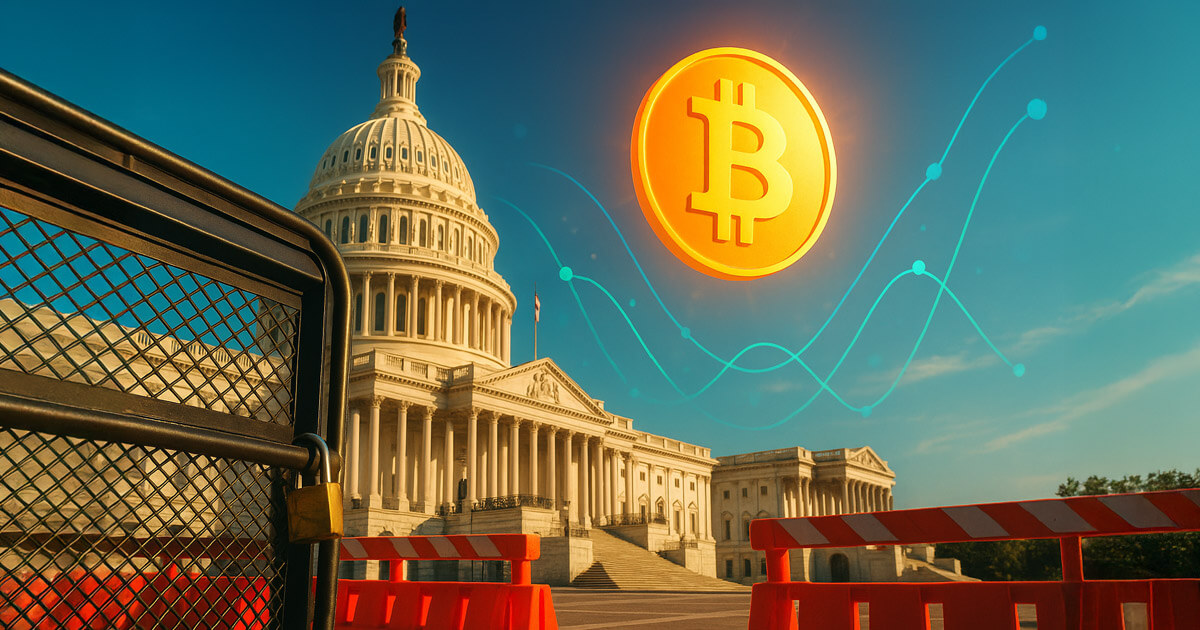

As a crucial policy deadline approaches, Bitcoin’s trading activity reflects market anxieties regarding a potential U.S.
government shutdown. Investors are closely monitoring the situation.
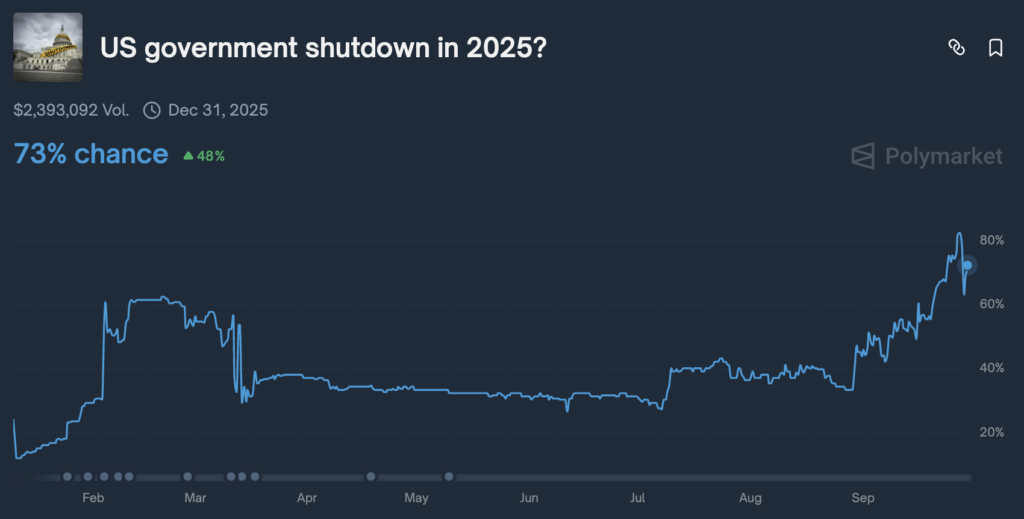
Data from Polymarket, a prediction market platform,
reveals that the likelihood of a government
funding lapse in 2025 surged to between 72% and 82%. This represents a significant jump from approximately 35%
earlier in the month, highlighting the rapidly evolving market sentiment as negotiations intensify.
Polymarket)
The fluctuations in crypto asset values mirrored these macroeconomic concerns. The
price of Bitcoin, for example, experienced a dip from
approximately $112,000 to $108,522 during this period of heightened uncertainty. It subsequently recovered,
surpassing $112,000 as market liquidity stabilized following the weekend.
Ethereum also saw its value decrease, nearing $3,800, before
bouncing back to levels approaching $4,000. Similarly, Solana experienced a decline of over 5% during the same
timeframe. Overall, the aggregate value of the crypto market shrank by over
$170
billion throughout the week. This reflected a general move towards reducing risk and exercising careful
cash management by various investment funds.
Investment funds shifted their holdings into U.S. dollars, short-term Treasury notes, and
stablecoins. This strategy allowed fund managers to mitigate risk associated with longer-term
investments and to manage their portfolios in light of prevailing market valuations as the quarter drew to a
close.
Crypto Exchange Traded Products (ETPs) and Exchange Traded Funds (ETFs) experienced outflows as trading desks
adjusted their positions to reduce market exposure and increase their cash reserves. This pattern has been observed
during past periods of macroeconomic instability, such as weeks marked by significant interest rate decisions or
debt ceiling impasses.
Policy Timing and Market Liquidity are Key for Crypto Performance
The future direction of the market hinges on two critical elements: the availability of market liquidity and the
scheduling of events in Washington D.C. A government shutdown leads to reduced staffing levels at financial
regulatory bodies. This creates uncertainty regarding the timelines for regulatory filings and reviews and disrupts
the flow of crucial macroeconomic data releases used to formulate interest rate expectations.
The resulting lack of information can widen the gap between buying and selling prices for volatile crypto assets. It
can also slow down the reflexive buying on price dips, which typically helps to stabilize order books after
significant market downturns.
Historically, operations at agencies like the SEC (Securities and Exchange Commission) and CFTC (Commodity Futures
Trading Commission) are scaled back to essential functions during government shutdowns. This can lead to delays in
the implementation of new guidance, slow down the review process for exchange rule filings, and disrupt the routine
processing of product modifications.
In 2025, this includes reviews related to proposals for market structure as well as regulatory frameworks for
stablecoins under key legislation such as the Financial Innovation and Technology for the 21st Century Act, the
Clarity for Payment Stablecoins Act, and the Blockchain Regulatory Certainty Act.
Industry groups monitoring these developments anticipate
delays should funding lapse, noting that hearing dates are already being pushed back from late September to tentative
dates in October.
An extended administrative freeze would further prolong uncertainty surrounding the launch of new ETFs and upgrades to
trading platforms. These factors contribute significantly to the overall liquidity of Bitcoin, Ethereum, and other
major cryptocurrencies.
Historically, crypto price behavior during government shutdowns has not mirrored traditional risk-off patterns seen in
equity markets. The S&P 500, for instance, has sometimes experienced modest gains as investors anticipate a surge in
government spending once agencies reopen.
Currently, the value of crypto assets appears to be more influenced by the interplay between regulatory timelines and
funding conditions than by the shutdown itself. How rapidly these timelines are re-established can either shorten or
lengthen market declines.
Barron’s characterized
the current situation as a battle between the preference for holding cash and the argument for Bitcoin as a hedge
against macroeconomic instability. Some investors are awaiting confirmation of further interest rate cuts and economic
data before increasing their exposure to riskier assets.
Tracking Bitcoin’s Reaction
A practical approach to monitoring future movements involves correlating price levels with various scenarios regarding
the duration of a shutdown and the speed at which regulatory schedules are reinstated.
Historically, periods of macroeconomic uncertainty have led to drawdowns of 5% to 15% in Bitcoin and Ethereum prices
before stabilization occurs.
Using this historical range as a guideline, potential downside and recovery trajectories are linked to the length of
agency closures, whether ETF and rulemaking timetables are delayed by days or weeks, and how quickly stablecoin
balances are reinvested into spot markets as price discrepancies normalize.
| Shutdown duration | Illustrative BTC path within 5%–15% drawdown history | Liquidity and flows watchpoints | Policy impact |
|---|---|---|---|
| ~1 week | Pressure toward the lower end of range, then retrace as review queues restart | Stablecoin balances rotate back to spot, ETF outflows slow | SEC and CFTC reviews pause briefly, routine processing resumes within days, hearings slip by days, limited delays for macro data releases |
| ~1 month | Mid-range drawdown risk, choppy rebound as filings and hearings re-queue | Persistent cash preference, wider spreads in altcoin pairs | Agencies operate with essential staff, product filings and exchange rule changes wait, FIT21 and stablecoin bill hearings move to next month, several economic reports delayed which muddies rate guidance |
| ~3 months | Upper-range stress until policy clarity returns, slower base-building | ETF and ETP redemptions extend, basis trades dominate volumes | Approvals and rulemaking freeze for an extended period, ETF launches and venue upgrades paused, enforcement limited to critical matters, multiple data releases missed, congressional calendars reset on return |
Policy obstacles extend beyond price levels, affecting the overall pipeline that shapes market liquidity in the
medium term.
Market participants are closely watching whether key legislative initiatives, such as FIT21’s provisions for market
structure, stablecoin legislation, and proposals for developer safe harbors, face further delays.
A pause would also impact incremental regulatory actions related to DeFi and altcoins, potentially delaying rulemaking
that could address ambiguities and lower risk premiums for listed tokens.
The broader macroeconomic
landscape, including a softening labor market and ongoing discussions regarding the Federal Reserve’s next
steps, adds another layer to portfolio construction as trading desks weigh the strength of the dollar against the
rationale for reinvesting in riskier assets once economic data resumes.
For traders carefully calibrating risk, two sets of indicators help to define the path forward.
Prediction markets provide insights into the near-term policy environment, with probabilities shifting throughout the
day as procedural votes are scheduled.
Liquidity metrics, ranging from ETF flow data to changes in stablecoin supply and basis levels on perpetual futures,
can confirm whether cash is returning to spot markets or remaining in reserve.
The government shutdown decision and the timeframe for reinstating hearings and regulatory filings will determine how
quickly the crypto market regains its depth following the end of the quarter.