

Key Takeaways:
-
More defined rules for digital assets, potentially arising from this week’s highly anticipated joint SEC–CFTC meeting, could inspire greater confidence among investors.
-
A short-term solution to prevent an impending US government closure might lessen worries and give the price of Bitcoin a boost.
-
Figures related to the employment sector and expectations regarding a U.S. Bitcoin Strategic Reserve may provide new impetus toward the $120,000 price point.
Bitcoin (BTC) has climbed back above the $114,000 threshold on Monday, recovering some of the ground lost during the previous week. This recovery is noteworthy as it occurred despite significant withdrawals from Bitcoin ETFs, leading market participants to question whether this upward trend can persist and what factors might push Bitcoin to $120,000.
Approximately $900 million was pulled out of spot Bitcoin ETFs traded within the U.S. last week, causing some unease among traders, especially considering that large, long-term holders sold off 3.4 million BTC. Analysis by Glassnode indicates that roughly 90% of the coins moved were associated with profit-taking, marking the third instance of this behavior in the current cycle, and thus suggesting the potential for “a cooling phase in the near future.”
SEC-CFTC Joint Session, Potential Government Shutdown, and Jobs Data
Three noteworthy events slated for this week could impact how investors feel about Bitcoin. First is a joint discussion on the regulatory landscape for digital assets, co-hosted by the U.S. Securities and Exchange Commission (SEC) and the Commodity Futures Trading Commission (CFTC). SEC Chair Paul Atkins is scheduled to begin the session on Monday.
The gathering in Washington, D.C., is intended to shed light on the processes involved in regulatory testing, listing assets, and overseeing exchanges. The speakers will include Jeff Sprecher, who leads ICE-NYSE; Adena Friedman, the head of Nasdaq; and Terry Duffy, the CEO of CME Group, along with executives from prominent crypto businesses and representatives from JPMorgan, Bank of America, and Citadel.
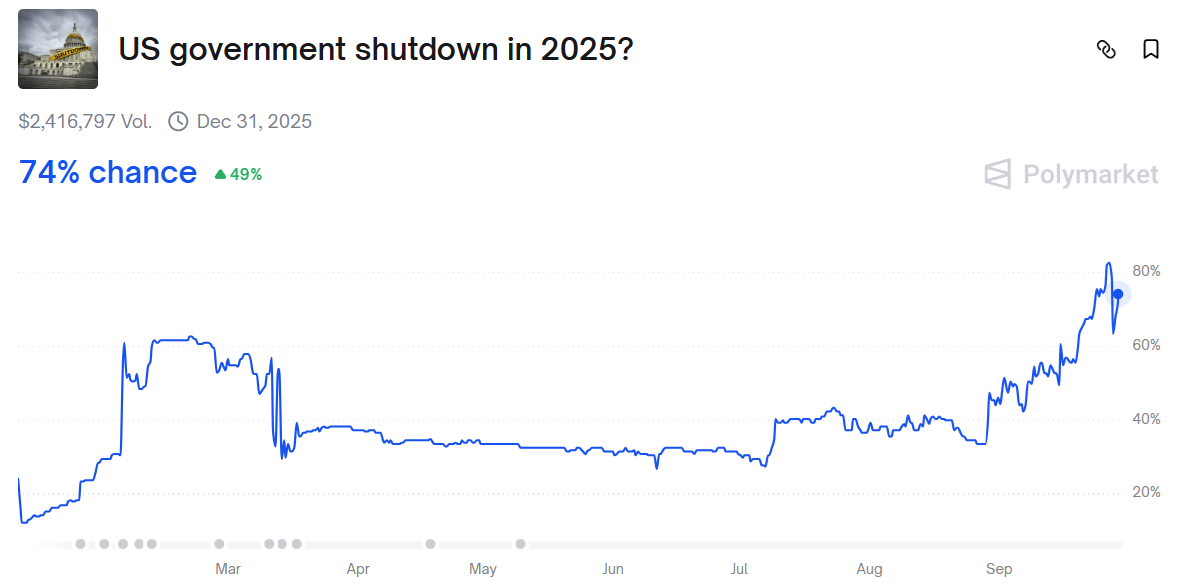
The chance of a U.S. government shutdown on October 1st also poses a potential catalyst for Bitcoin’s price. U.S. President Donald Trump has planned a meeting with leaders from Congress on Monday to try and sidestep the crisis. Should Congress fail to act, thousands of federal employees may face furloughs, and important services, including grant programs for small businesses, could be interrupted.
Bitcoin’s price has historically responded unfavorably when investors’ appetite for risk declines. Approximately $1.7 trillion in “discretionary” funds that support the operations of various agencies is set to expire at the close of the fiscal year on Tuesday. The House of Representatives gave a narrow go-ahead on Sept. 19 to a measure that would finance government agencies through Nov. 21, and final approval now rests with the Senate.
The next key element with the potential to propel Bitcoin toward $120,000 is the data on the U.S. jobs market, which the Federal Reserve is closely monitoring, particularly after core inflation met expectations at 2.9% in August. The U.S. Bureau of Labor Statistics is set to publish the JOLTS survey regarding job openings on Tuesday, followed by the nonfarm payroll report on Friday.
Signs indicating a weakening jobs market could shift investor focus to assets regarded as safer, such as gold and short-term government bonds.
Related: Poland Advances Crypto Legislation Amid Public Concerns
Anticipation Regarding U.S. Strategic Bitcoin Reserves Boosts Confidence
The expectation surrounding plans for a U.S. Strategic Bitcoin Reserve is a further factor supporting Bitcoin’s ability to maintain value above $109,000. Jan3 founder Samson Mow recently stated that the Trump administration is “actively exploring” budget-neutral approaches for obtaining Bitcoin. Certain experts also point to a possible reevaluation of the U.S. Treasury’s gold reserves.
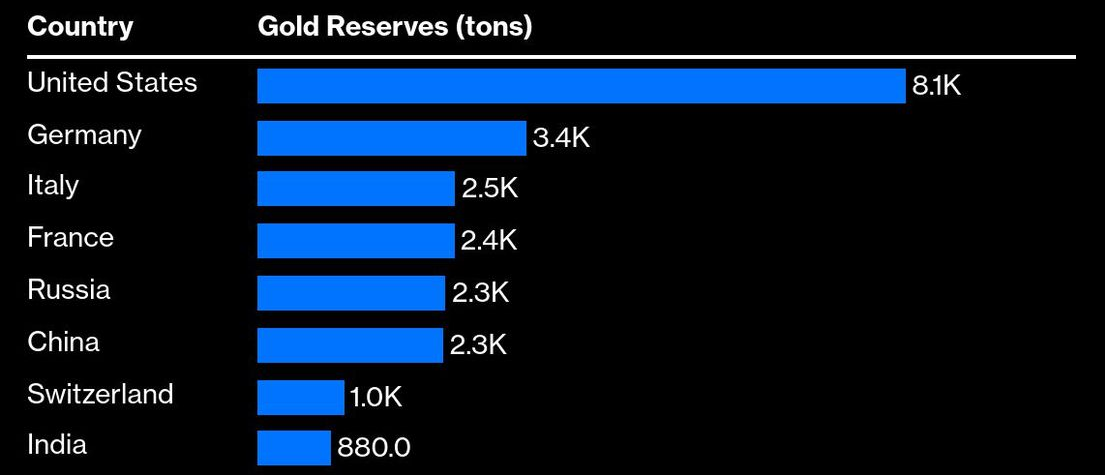
By updating gold’s official price from the $42.22 level established by Congress back in 1973, the U.S. Treasury could potentially unlock close to $1 trillion in credit, although U.S. Treasury Secretary Scott Bessent has dismissed talk of such a measure. Even so, analysts maintain confidence in the government’s capacity to successfully implement a Strategic Bitcoin Reserve in the months ahead.
Major elements that might push Bitcoin higher than $120,000 involve clearer regulatory clarity across the digital asset sector, a provisional deal to head off a potential shutdown of the U.S. government, and lessened risks based on forthcoming U.S. job market data. In the meantime, even the prospect of the U.S. Treasury adding Bitcoin to its reserves gives a level of underlying confidence to the market if these wider factors turn out to be unfavorable.
This material is for informational purposes alone and shouldn’t be treated as legal advice, nor as investment recommendations. The perspectives expressed are solely those of the author and do not necessarily reflect the views of Cointelegraph.