
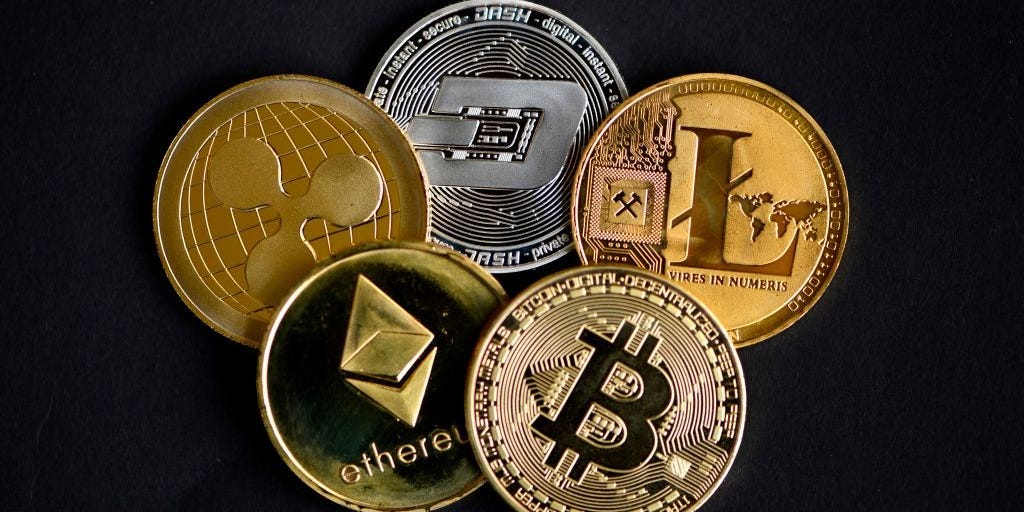
Navigating the world of digital currencies demands a strong stomach, as cryptocurrency values are known for extreme ups and downs.
The cryptocurrency market also presents numerous opportunities arising from inefficiencies not seen in traditional finance due to advanced trading systems.
Justin Chuh, a seasoned senior trader at the digital asset firm Wave Financial, brings experience from traditional finance to this exciting new landscape.
Chuh’s background in foreign-exchange arbitrage positions him perfectly to capitalize on pricing differences throughout the diverse cryptocurrency ecosystem. These variations in digital asset values across different exchanges create opportunities, like the “kimchi premium” observed between South Korean and international exchanges.
In an interview, Chuh discussed his entry into the crypto space, favorite trading tactics, thoughts on the recent market downturn, promising sectors, and valuable insights for traders.
The following has been lightly edited to be more concise and easier to read.
What’s your background, and how did you get involved in crypto?
My expertise lies in traditional finance, focusing on market-making and arbitrage within foreign exchange (FX). I specialized in identifying pricing discrepancies across various currency pairs. The fragmented crypto marketplace, with its varying prices across exchanges, struck me as a new area to utilize my FX knowledge. In late 2017, I launched a “Fund” employing manual cross-exchange arbitrage. However, larger, automated players eventually outpaced me. That’s when I learned about hodling.
Related stories

Business Insider tells the innovative stories you want to know
Business Insider tells the innovative stories you want to know
Joining Wave Financial as a trader was ideal; it meant collaborating with a knowledgeable team within one of the few US-regulated digital investment firms.
When and at what price did you first purchase cryptocurrency?
Relatively late, I bought my first bitcoin (BTC) in November 2017 around $8,000. I bought it to pay a friend who offered me a discount for painting my condo, not as an investment. Initially, I saw it as a private payment method, not a store of value. I then started accumulating for my personal fund.
What’s your outlook on Bitcoin and Ether?
I remain optimistic about both. Beyond retail and institutional investors adopting Bitcoin, the wider public is increasingly accepting digital currencies and distributed technologies as the future. Additionally, growing understanding and trust in Ethereum and smart contracts will likely increase demand for Ether and related tokens.
What duties do you handle at Wave Financial?
As a senior trader, I strategize with different teams regarding our various fund offerings and execute trades for our Treasury and wealth management clients. When a client wants to trade one of our funds or move assets, I ensure we achieve the best possible pricing for both the client and Wave. With over $500 million in assets under management, I’m quite busy!
My role includes more than just watching charts and executing trades. I also communicate with counterparties, manage asset movement, and work with on/off ramps to exchanges and DeFi platforms. As a regulated firm, my activities are closely monitored by our compliance team.
Could you explain some of your preferred crypto trading strategies?
Trading is continuous learning. I’m currently focused on spotting pricing errors, generating yield through various farming methods. I particularly enjoy arbitrage – who doesn’t like guaranteed profits? Also, I sometimes buy assets at a discount by under-hedging. I also engage in yield generation. If asset prices aren’t rising, I still want to be making money.
What digital assets and areas of the crypto market are you most optimistic about?
I’m particularly bullish on smart contract platforms and the Decentralized Finance (DeFi), interoperability, and Web3 sectors. With declining trust in traditional finance, these innovative technologies are attracting attention. These technologies might not dominate completely, but they’re definitely claiming a significant portion of the market. The ecosystems are logical: you need the platform’s currency to utilize DeFi apps, which rely on Web3 oracles.
(Interoperability allows different blockchains to communicate and exchange information, similar to the function of the internet)
How do you perceive recent market corrections? Should investors consider them buying opportunities?
I viewed the recent downturn as a useful removal of weaker participants. The market downturns are attracting attention and might redistribute mining power, while creating opportunities for new entries. I advise only those with a high-risk tolerance to consider “buying the dip”, and only if they understand the rapid and frequent nature of market fluctuations.
What advice can you offer to crypto traders?
Avoid excessive leverage, unless you are certain of what you are doing, which is unlikely. Stop overanalyzing simplistic market signals, and definitely stop investing in Dogecoin (DOGE).