
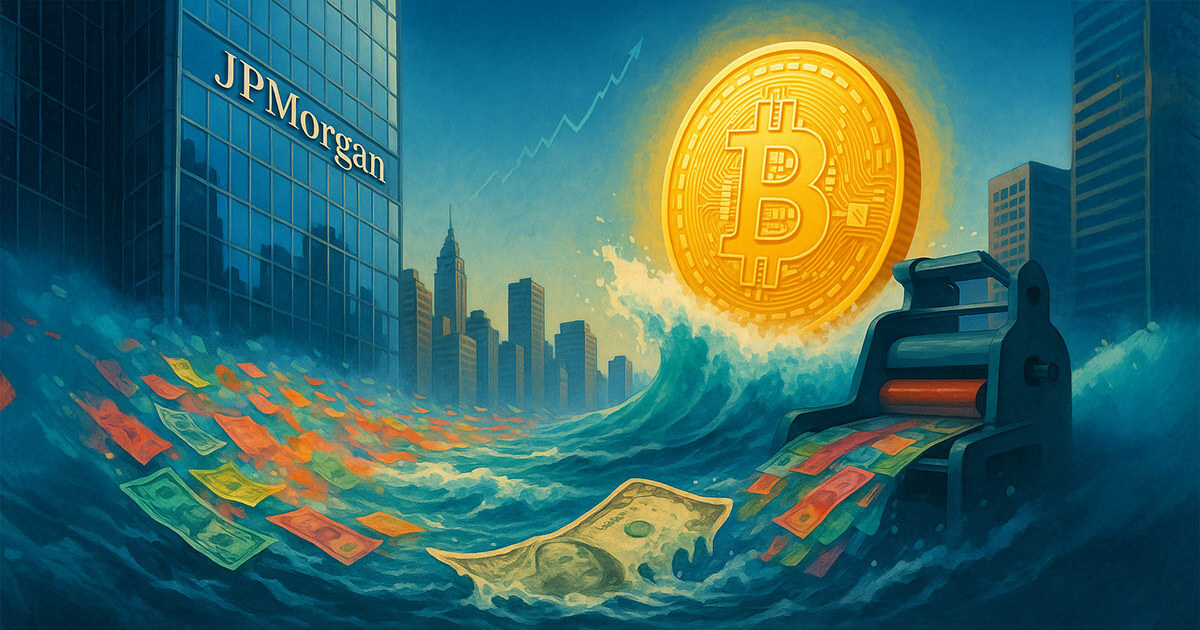

Financial giant JPMorgan Chase is labeling Bitcoin as the go-to investment during times of currency devaluation, signaling a potentially undervalued perspective on its future. Considering Bitcoin’s decade-plus history of uninterrupted operation and increasing adoption, even traditional finance is acknowledging its importance as a reliable store of value when faith in traditional currencies diminishes. The time for hesitant optimism regarding Bitcoin may well be over.
JPMorgan’s Take on Bitcoin as a ‘Debasement Trade’
While Wall Street is known for its nuanced language, JPMorgan’s recent statements are remarkably straightforward. By identifying Bitcoin as the “debasement trade,” they suggest to their clientele that, given the current environment of economic stimulus, massive government debt, and low interest rates alongside persistent inflation, holding traditional assets like cash or bonds may be a losing strategy. Quoting Marty Bent, founder of TFTC, highlights this sentiment:
“You are not bullish enough.”
This isn’t purely about speculation; it’s about safeguarding wealth. As the purchasing power of the dollar gradually erodes, Bitcoin’s fixed supply and decentralized nature position it as an ideal solution for the current economic landscape.
With central banks employing unconventional monetary policies and the U.S. government consistently operating with annual deficits exceeding $2 trillion, “protecting assets” increasingly means investing in digitally scarce resources rather than relying solely on conventional blue-chip stocks.
If JPMorgan’s major clients are accumulating Bitcoin, it’s likely because they anticipate ongoing currency devaluation, a trend that rate hikes or fiscal promises alone may not be able to reverse.
Growing Out of Debt: A Questionable Strategy
President Trump recently suggested that the U.S. can “grow [itself] out of that debt.” While a positive outlook is inherent in politics, economic growth alone may not be enough to counteract trillion-dollar deficits. Economic stimulus packages appear during each crisis, interest rate reductions support markets while contributing to underlying inflation, and every solution appears to create new problems.
Amidst this complex financial theater, Bitcoin’s relevance quietly strengthens. Each round of monetary stimulus, every instance of debt-fueled spending, and every government shutdown that disrupts economic data collection serves as a catalyst for Bitcoin’s growth.
As Ecoinometrics points out, the fourth quarter has historically been a favorable period for Bitcoin. This can be attributed to factors like year-end portfolio adjustments, investors seeking higher returns for bonus income, and institutions anticipating central bank policies.
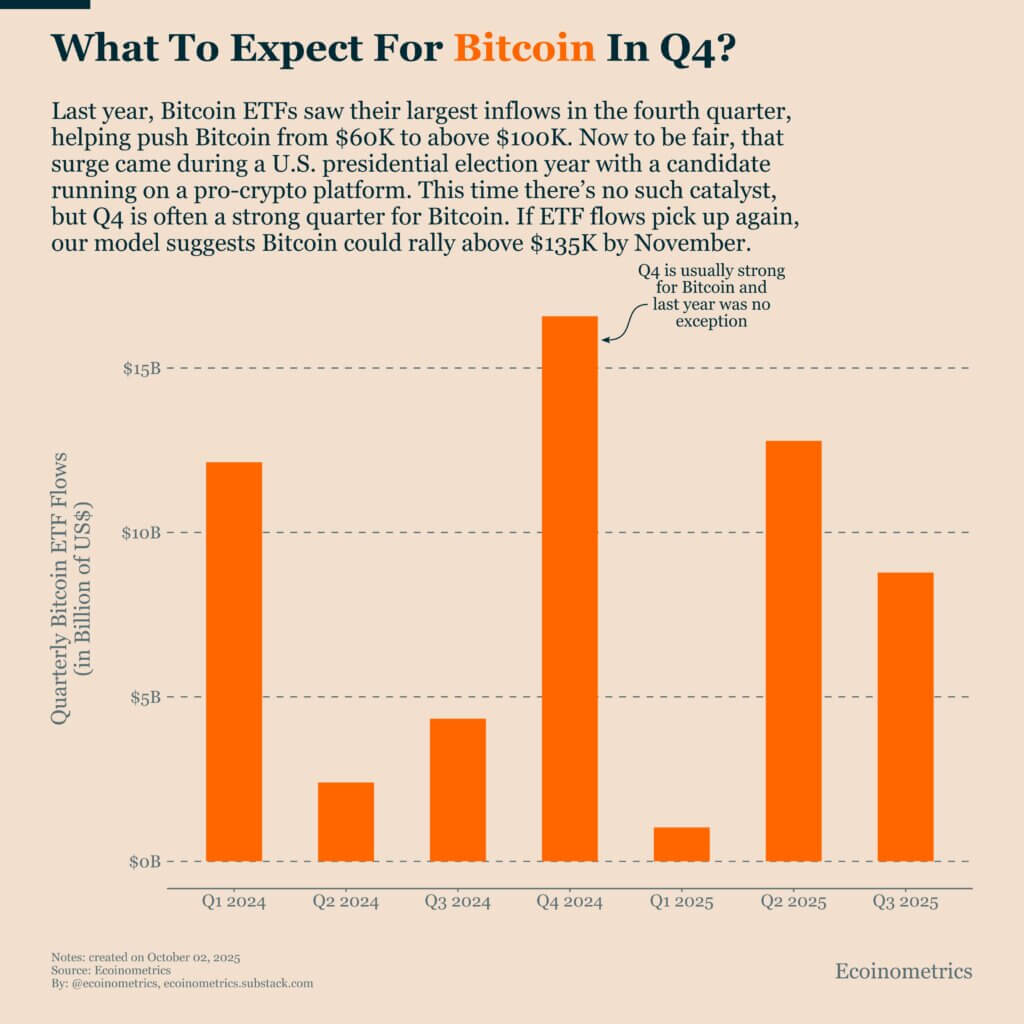
Last year, the introduction of ETFs helped push the price from $60,000 to above $100,000. Should similar trends develop, Bitcoin could reach $135,000 per coin by the end of the year.
Furthermore, forecasts from financial analysts are noteworthy. Citigroup predicted a Bitcoin price of $133,000, while JPMorgan Chase estimated $165,000 based on Bitcoin being undervalued compared to gold. Standard Chartered projected an even higher price of $200,000. Matt Hougan, CIO of Bitwise, commented:
“Q4 is going to be fun.”
Where Big Picture Economics Meets Market Momentum
Bitcoin is becoming more than a speculative asset. It’s rapidly establishing itself as a crucial hedge against currency depreciation, presenting an attractive risk-reward profile in a market heavily reliant on liquidity.
Last year’s surge in ETF adoption led to Bitcoin’s most substantial quarterly gains, exceeding the $100,000 threshold. Given the ongoing U.S. deficit spending and anticipated interest rate cuts in 2025, a similar pattern could emerge, especially with Bitcoin’s fixed supply of 21 million.
The key takeaway: current assessments may not fully appreciate Bitcoin’s potential. For almost two decades, Bitcoin has proven to be more dependable and transparent than established financial institutions.
JPMorgan’s view of Bitcoin as a fundamental defensive strategy represents a vote against the traditional financial system.