
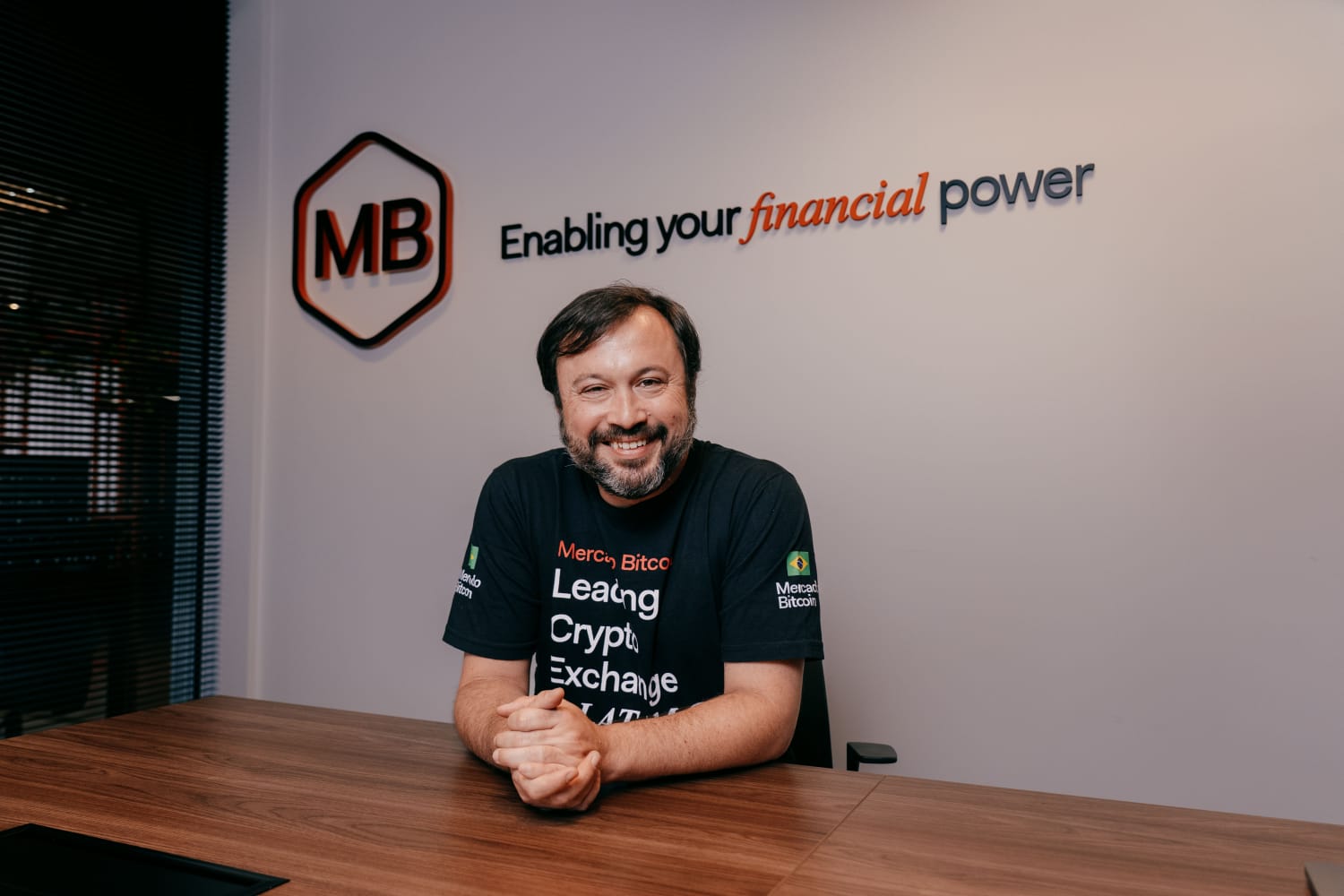
After a dozen years in the digital currency exchange business, Mercado Bitcoin has set its sights on a new identity.
The Sao Paulo based business is evolving, placing less emphasis on digital currency price trends and trading pairs. Instead, it is highlighting Brazil’s PIX payment system through the central bank, digital fixed-income products, and more efficient international transfer options.
During the DAC 2025 conference, Daniel Cunha, head of corporate development at Mercado Bitcoin, told CoinDesk that the company is striving to create an all-in-one application for Brazilians to handle their finances. The goal is to offer a “super app” experience covering spending, savings, and investments.
However, the term “super app” may not completely encapsulate their strategy. The company’s leadership favors the term “financial hub,” suggesting a blend of conventional finance and blockchain technology. This allows users to benefit from both systems without needing specialized expertise.
“The true revolution comes when the technology fades into the background,” Cunha told CoinDesk. “Customers are more interested in rates, risks, and maturity dates than the specifics of blockchains and tokens,” he stated, referencing the exchange’s digital fixed-income offerings.
‘Blockchain Without the Fuss’
This philosophy has significantly altered Mercado Bitcoin’s approach to user interaction. The company is now focused on showcasing the practical benefits of its services, rather than using complicated digital currency language. A key change was eliminating the term “tokenization” from customer-facing materials, according to Cunha.
“We experimented with various approaches,” Cunha said. “When we shifted from ‘token’ to ‘digital fixed income,’ we saw a significant increase in adoption.” The objective is to offer a product that leverages blockchain technology behind the scenes, while maintaining a user interface that’s easily understood by the average person.
Essentially, Mercado Bitcoin believes that “invisible blockchain” represents the next step in financial evolution.
“We anticipate many people will use blockchain technology without realizing it,” the company stated. “That’s the point where we know the revolution has truly arrived.”
The firm’s primary blockchain-based investment products are centered on digital private credit, an area they believe is underserved and presents a significant opportunity for innovation in Brazil.
According to Chainalysis’ Global Digital Currency Adoption Index, Brazil is among the top five countries for retail digital currency adoption. To address a prevalent challenge in the country, Mercado Bitcoin is developing a remittance service based on stablecoins.
A New Direction Away From Pure Trading
Despite these new efforts, Mercado Bitcoin’s primary source of revenue remains digital currency trading. However, this is changing.
Trading once accounted for 95% of the company’s revenue. Currently, that figure has decreased to approximately 60%, with the remaining portion coming from payments, custody services, digital investments, and asset management. Cunha projects that trading will eventually account for less than 30% of the company’s income.
The company is also expanding into new markets. They now have a presence in Portugal and are developing institutional channels in the United States, with the goal of connecting capital and investment prospects internationally.
Mercado Bitcoin, with a significant proportion of its managed assets belonging to small and medium sized enterprises, anticipates exceeding 3 billion reais ($563 million) in digital credit issuance by the end of the year. Approximately 20% of the assets under custody on the platform are now digital real-world assets, a substantial increase from near zero a few years ago.
This strategic shift aligns with a broader industry trend towards building “financial super apps.” Brian Armstrong, CEO of Coinbase, has expressed his ambition for Coinbase to evolve into a digital currency-powered “super app” offering a complete suite of financial solutions.
Beyond digital currencies, fintech companies like Revolut and Paytm are combining payments, lending, and investment features, drawing inspiration from the comprehensive models of WeChat and Alipay, which integrate social, financial, and other functionalities.
Explore further: Mercado Bitcoin Plans to Digitize $200M in Real-World Assets on XRP Ledger