
Mark Rosewater’s personal favorite Magic: The Gathering expansion is Ravnica from 2005, lauded for its perfect balance among the game’s five factions. Following closely is Innistrad, the 2011 set celebrated for transforming drafting. Rounding out his top three is Invasion, a landmark release from October 2000 that revolutionized the entire game.
“I consider Invasion the dawn of Magic design’s third era,” Rosewater shared in an interview. “It achieved immense popularity.”
At MagicCon, I met with Rosewater to discuss Invasion. This block, consisting of Invasion, Planeshift, and Apocalypse, uniquely blended narrative and gameplay, reshaping Magic: The Gathering in fundamental ways.
Two Game-Changing Mechanics from Magic: The Gathering
Prior to Invasion, expansions generally consisted of a couple of mechanics, a theme, and a setting inspired by real-world mythology. Invasion took this formula and enhanced it by making all these elements thematically connected.
According to Bill Rose, the lead designer for Invasion, the core theme was multicolored cards, which they playfully referred to as “gold” cards. While not a completely new concept, multicolored cards had become increasingly scarce. The team deliberately reduced their presence in earlier sets to generate excitement for Invasion.
“We were building up Invasion to be the definitive multicolor set,” Rosewater explained.
With the main idea set, Rosewater, Rose, and Mike Elliott convened at Lake Tahoe (Rosewater’s family vacation home) for a brainstorming session. This retreat yielded two significant mechanics that would influence Magic for decades: split cards and kicker costs.
Split cards were the more radical concept, facing considerable internal resistance. Because Invasion championed the blending of Magic‘s five colors, split cards – cards divided into two distinct spells – proved an innovative way to express this theme.
“Invasion centered around allied colors, and split cards were a natural fit,” Rosewater noted. “Bill loved them, Mike hated them, but majority rules. Richard Garfield himself approved. Many others on the team were less enthusiastic.”
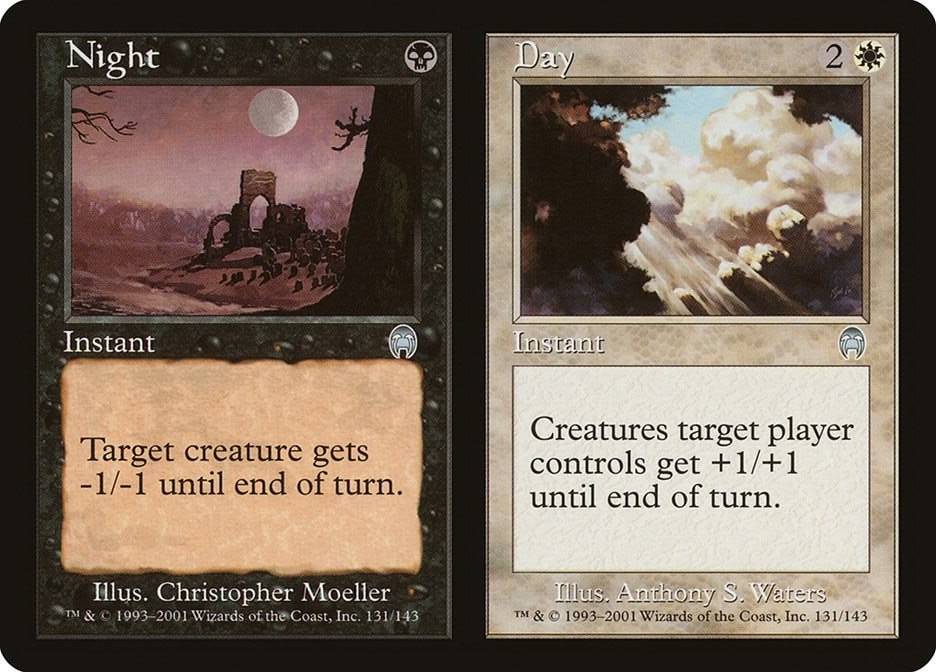
The inspiration for split cards came from Unglued, a humorous set known for bending Magic‘s rules. One of the set’s highlights was BFM (Big Furry Monster), a creature so enormous it required two cards to represent. Though players loved BFM, Unglued‘s sales fell short, leading Wizards of the Coast to cancel the sequel. Rosewater adapted the concept to make split cards.
Despite resistance, Rosewater fought to include split cards in the set. The goal was to surprise players, and despite some leaks, the plan worked.
“At the prerelease, I held my daughter while watching people open packs,” Rosewater recalled. “One player revealed a split card, his eyes widened, he turned it sideways, and I saw the realization dawn. His grin made all the struggle worthwhile.”
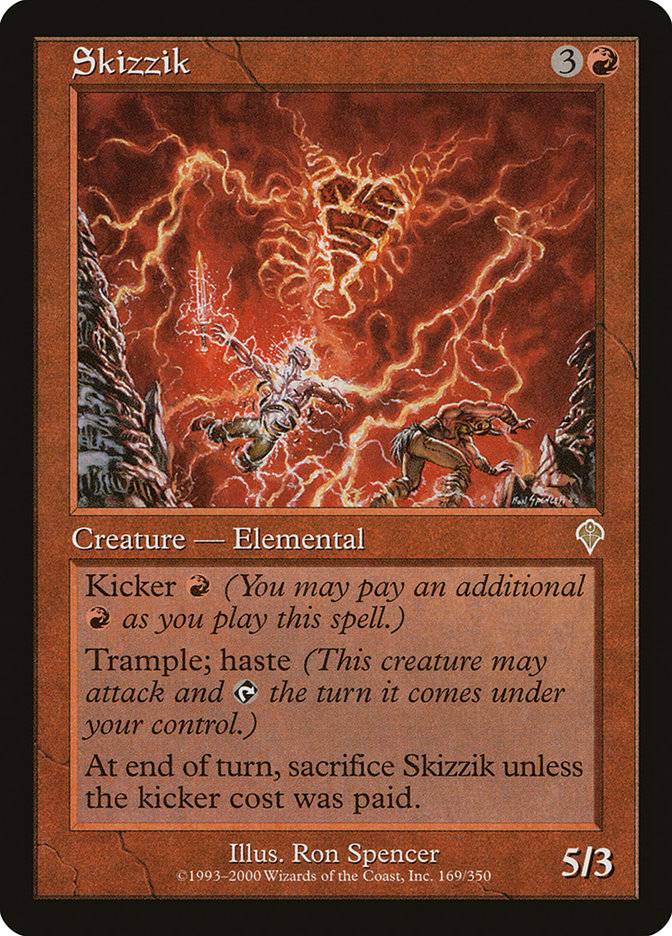
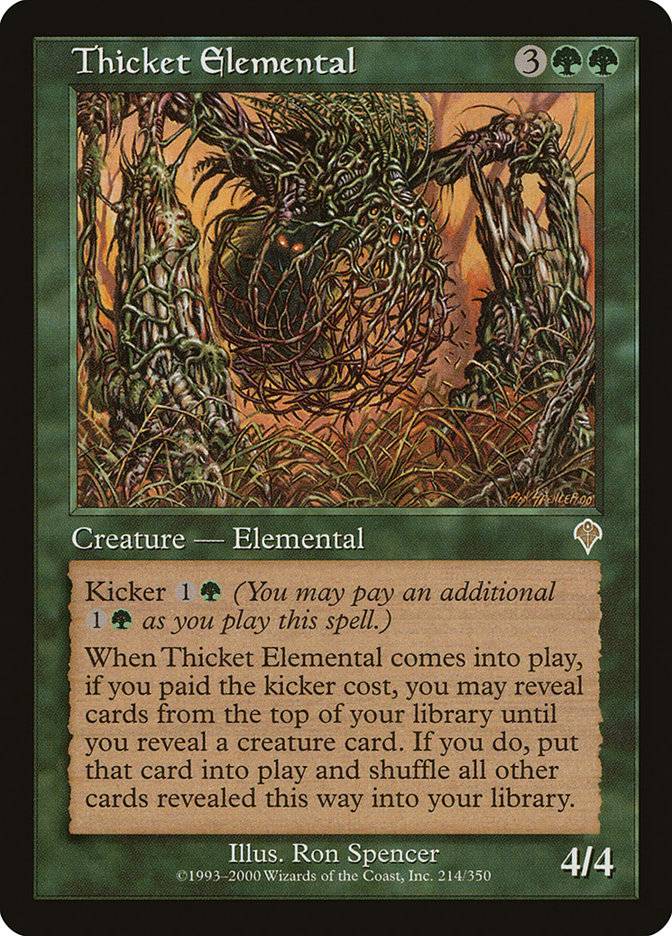
The kicker mechanic enhanced Invasion‘s multicolored aspect in a more subtle manner. Based on the “buyback” mechanic, kicker enables spells to have greater effects when mana is added to the spell’s cost.
“It complemented multicolor well, because spells can be kicked with other colors,” Rosewater stated. “Most Invasion kickers remained within a single color, but the possibility was there.”
Both split cards and kicker have become fundamental elements of Magic: The Gathering, appearing frequently on new cards. Rosewater calls these “deciduous” mechanics, like trample or flying. We tend to take them for granted.
While Invasion had several innovative ideas, its most significant innovation occurred with the release of Apocalypse.
Allied Colors vs. Enemy Colors
Magic: The Gathering‘s color wheel organizes the five core elements (red, green, white, blue, and black) in a specific sequence. The position of each color is important. Colors near each other are “allies,” while non-adjacent colors are “enemies.” While today, all colors interact nearly equally, it wasn’t always this way before the set Apocalypse was released.
“Allied colors tend to be stronger than enemy colors,” Rosewater said. “There was more support for allied colors.”
He estimates that, before Invasion, there were fewer than 50 multicolored cards in total for each enemy combination, sometimes even less than 30.
“Enemy colors were the neglected sibling,” Rosewater said. “The chance for them to shine was exciting.”
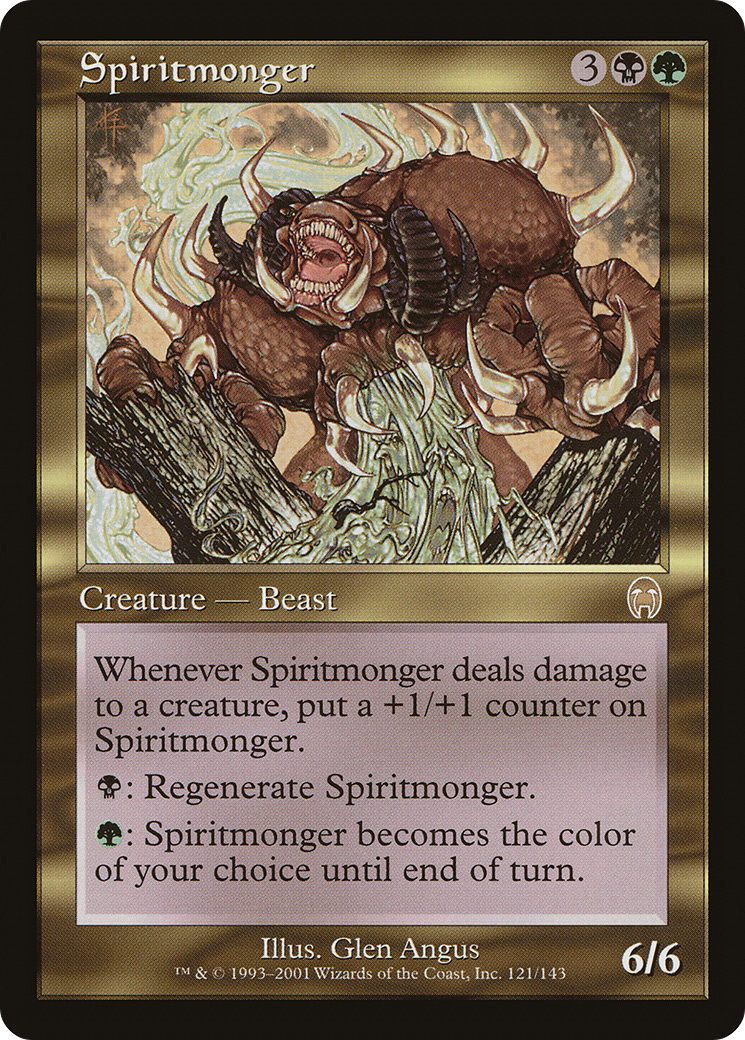
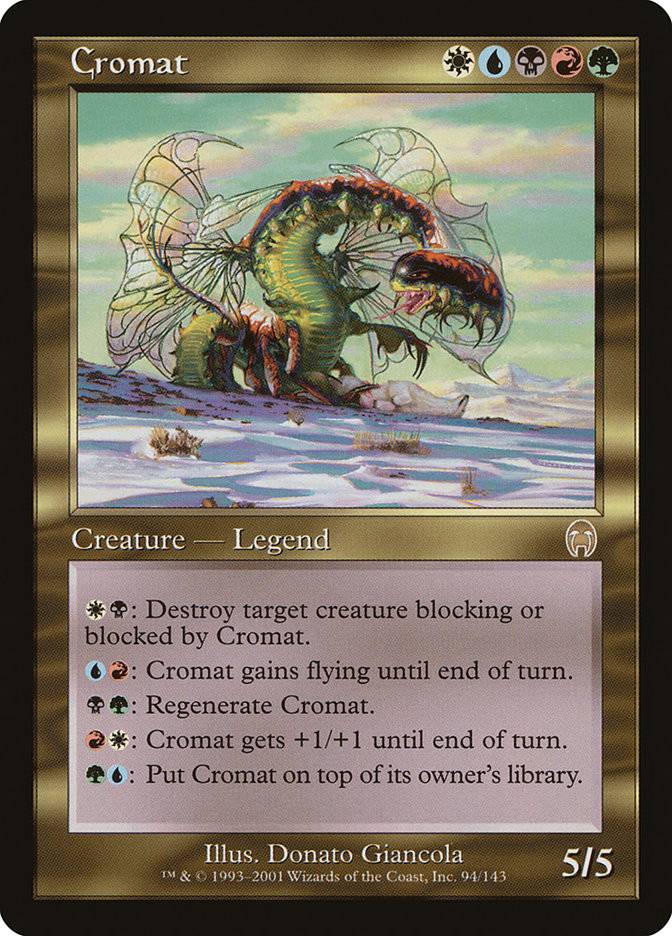
Wizards of the Coast initially planned to incorporate enemy-color gold cards into the core Invasion set. Ultimately they delayed the release until Apocalypse. This was yet another innovative concept. (What if we saved some of our concepts for the second and third sets of a block, instead of using them all right away?) This strategy also resolved another issue.
“One of the challenges of playing with 10 color pairs was sheer volume,” Rosewater explained. “What if we started with a reduced set?”
Apocalypse‘s enemy-color cards represented another surprise for the Invasion block (something that amazed me at the time), and whether players were new to Magic or long-time veterans, it was a welcome change.
Mike Turian, a competitive Magic player who later worked at Wizards of the Coast, told reporters the set felt “revolutionary” upon its release.
“It was cool and dynamic,” Turian said. “Because it was a multicolored set, it allowed players to build five-color decks. This had not been seen before.”
Adding Narrative Depth to Magic: The Gathering
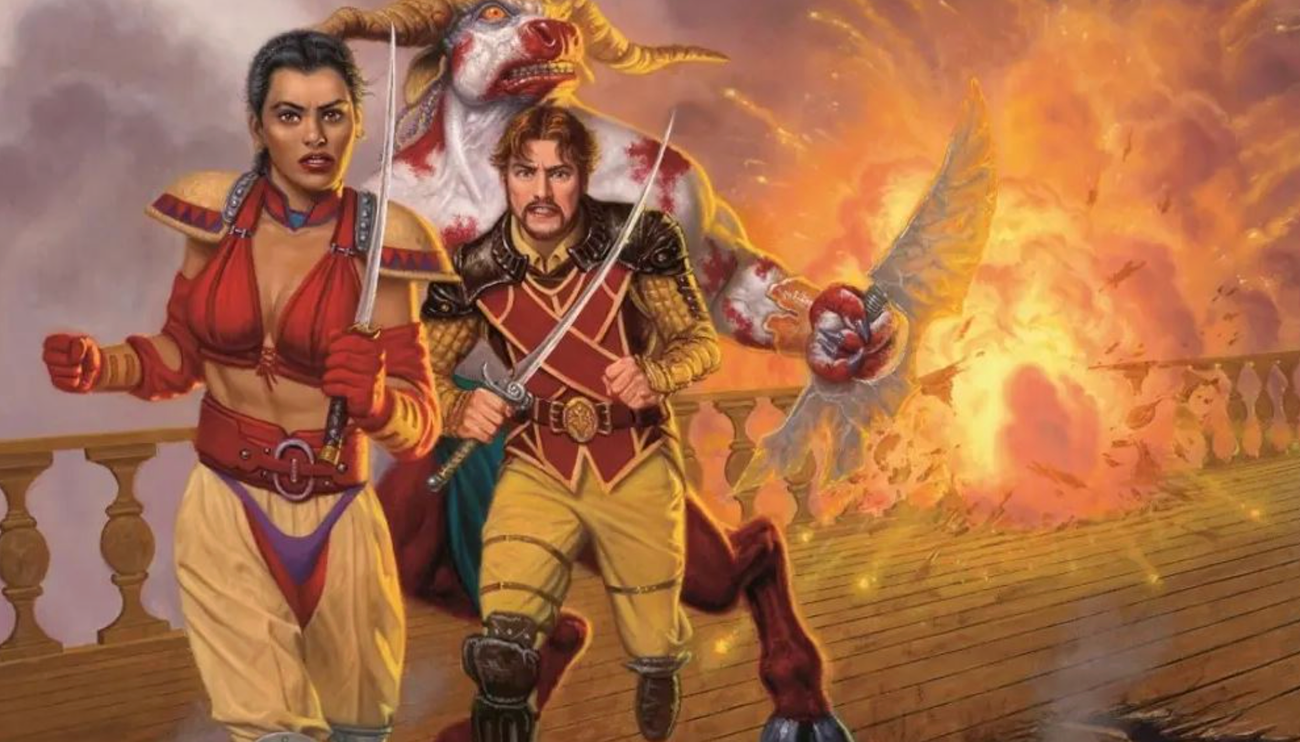
Invasion also revolutionized Magic by giving the game an overarching story. Rosewater, a former writer for “Roseanne,” always felt that the game was missing a cohesive narrative.
The team decided to center this narrative around the crew of the Weatherlight, a flying ship introduced in a set by the same name from 1997. The Weatherlight and its crew traveled between different locations on various missions, providing Magic with a recurring cast long before the Planeswalkers. Magic already had recognizable characters such as Urza, an influential wizard, and his brother, Mishra. However, the idea of a multi-year narrative connecting the expansions in the same manner that TV show seasons are connected was unprecedented.