

Long-term demand for cryptocurrencies and other assets could see significant growth driven by worldwide population trends and increased financial prosperity throughout the 21st century.
The combination of an aging global population and improved overall economic output globally is projected to lead to a demographic with more disposable income available for investment, fueling the demand for diverse assets including digital currencies.
According to a study by the Federal Reserve Bank of Kansas City, this upward trend in asset demand is anticipated to continue until at least the year 2100. The report, released on August 25th, suggests that the aging global population will sustain a continued upward trajectory of asset demand.
“Based on projections regarding population changes, our analysis indicates a potential increase in asset demand by an estimated 200% of GDP between the years 2024 and 2100.”
The research further indicates that this phenomenon may result in an ongoing decrease in real interest rates, which could further incentivize investment in alternative asset classes such as Bitcoin (BTC).
Bitcoin’s perceived value may align with gold within the next 75 years
Despite current perceptions of cryptocurrencies as higher-risk investments, increasing clarity in regulatory frameworks could lead to broader acceptance among older demographics. Gracy Chen, CEO of Bitget, a cryptocurrency exchange, believes that Bitcoin (BTC) could be valued similarly to gold within the next three-quarters of a century.
Data from a report published by crypto payment provider Triple-A indicates that as of December 2024, individuals aged 24-35 represented approximately 34% of global cryptocurrency holders.
While the crypto market remains subject to volatility, Chen explained to Cointelegraph that ongoing regulatory developments and the introduction of institutional investment products like ETFs may increase Bitcoin’s appeal among older investors.
“The ongoing development and maturation of crypto regulations will likely play a significant role in driving future demand for this asset class.”
Chen further suggested that growing “government support” and Bitcoin’s established status as a viable store of value will contribute to its increasing acceptance among older generations, predicting they will “come to value Bitcoin as much as they have come to value gold within a 75-year period.”
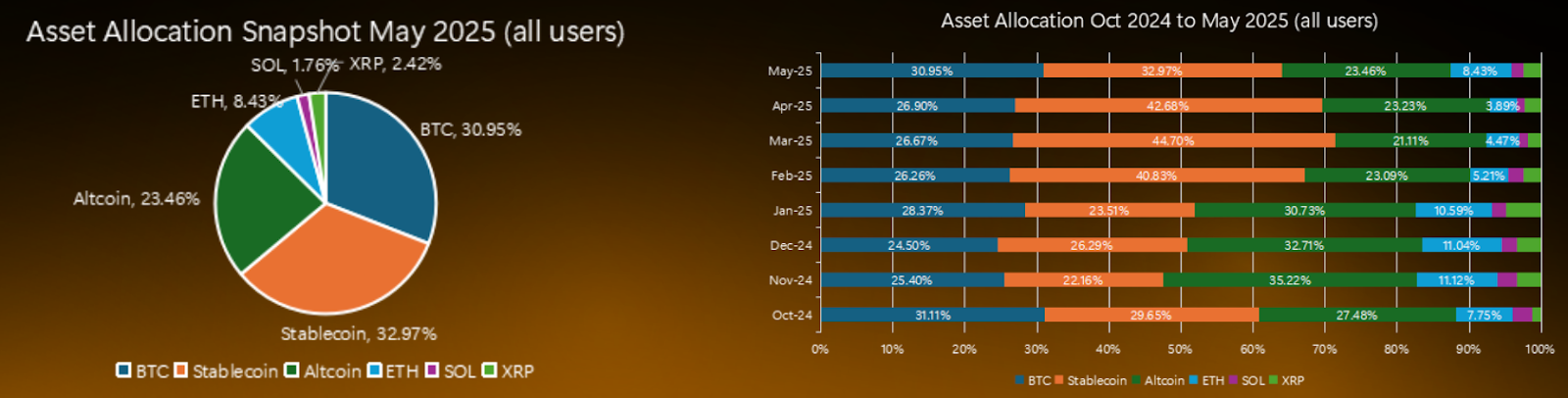
Bitcoin now comprises roughly one-third, or 30.95%, of investor portfolios as of May, representing a significant increase from 25.4% in November 2024.
Increased wealth contributes to crypto diversification
Analysts from the Bitfinex cryptocurrency exchange suggest that growing global affluence is likely to foster a greater willingness to take risks and diversify into newer asset classes, including cryptocurrencies.
“As personal wealth increases, so does the tendency to diversify into emerging assets, as risk tolerance tends to develop,” the analysts stated to Cointelegraph. “We anticipate that higher levels of wealth will translate into increased demand for cryptocurrencies, especially as investors with long-term investment strategies become more receptive to investing in Bitcoin.”
They further noted that younger investors, being more technologically adept, “are more likely to view altcoins and emerging crypto projects favorably, owing to their greater comprehension of technology and higher risk appetite.”
Magazine: Tezos co-founder Arthur Breitman describes Bitcoin as ‘funny internet money’ during times of crisis