

The practice of representing physical assets as digital tokens, known as Real-World Asset (RWA) tokenization, experienced a significant upswing in the first half of 2025. This surge is largely attributed to increased clarity in regulations, which encouraged wider acceptance of financial products built on blockchain technology.
Real-world asset tokenization involves creating digital tokens on a blockchain that represent ownership of things like property, commodities, or other financial instruments. This increases accessibility and trading options for investors.
During the initial six months of 2025, the RWA market expanded by over 260%, exceeding a total value of $23 billion. A report from Binance Research, shared with Cointelegraph, revealed that the market started the year at $8.6 billion. according
Tokenized private credit dominated the RWA market’s growth, making up approximately 58% of the total market share. Tokenized US Treasury debt followed, accounting for 34%.
“As legal and regulatory structures become better defined, the industry is well-positioned for further expansion and increased engagement from major players,” the report stated.
Related: Blockchain and AI could fuel a $3.5 Trillion DePIN market expansion by 2028: WEF
While no specific regulatory framework exists for RWAs and the US Securities and Exchange Commission (SEC) considers them securities, the sector benefits from regulatory advancements in the broader cryptocurrency landscape.
On May 29, the SEC released new guidelines concerning cryptocurrency staking. Alison Mangiero, head of staking policy at the Crypto Council for Innovation, characterized this development to Cointelegraph as a move toward “more reasonable regulation” and a noteworthy victory for the crypto industry.
The industry is currently awaiting a full vote in the Senate on the Guiding and Establishing National Innovation for US Stablecoins (GENIUS) Act, which seeks to establish clear standards for how stablecoins are backed.
Other market observers have suggested that the growth of the RWA market can be attributed to Bitcoin’s (BTC) periods of price stability. Investors may have seen RWAs as a more reliable investment option with predictable returns during these times.
Corporations Embrace Bitcoin: Driven by Fear of Missing Out
A renewed sense of urgency, often referred to as “FOMO” (fear of missing out), is motivating a growing number of corporations to integrate Bitcoin into their financial reserves.
According to data from BitcoinTreasuries.NET, at least 124 publicly traded companies now hold Bitcoin as part of their corporate treasury. according
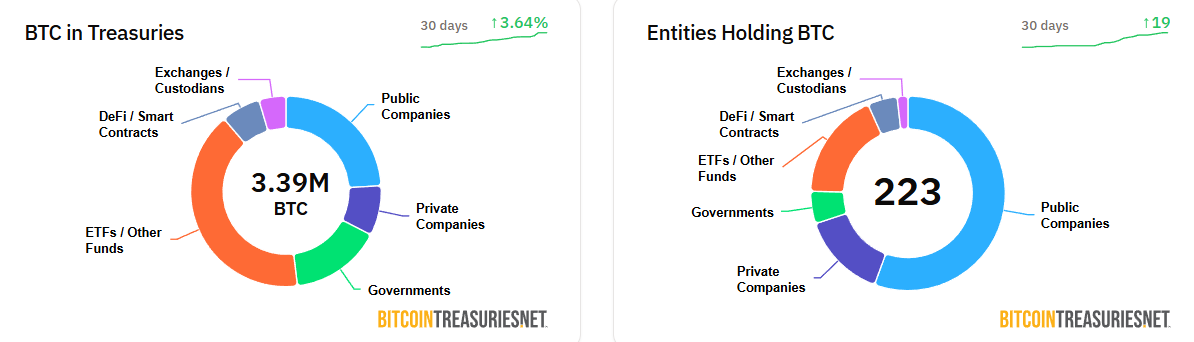
While crypto market activity might slow during the summer months, Binance Research indicated to Cointelegraph that broader economic trends and regulatory developments will be the primary determinants of how quickly companies adopt Bitcoin. They further stated:
“Corporate Bitcoin adoption is being fueled by strategies for long-term balance sheet management, diversification of treasury assets, and capital-raising initiatives.”
Researchers anticipate that the long-term investment horizon will likely continue to drive corporate adoption of Bitcoin, rather than “short-term liquidity or seasonal market dynamics.”
Magazine: Crypto Regulation: A Global Overview of Legislative Changes in 2025