

The digital asset market achieved a new high point, exceeding $4.2 trillion this October. Yet, signs of potential instability are surfacing despite the widespread optimism.
Analysts are raising concerns about excessive borrowing, heightened levels of market exuberance, and significant profit-taking by large holders. These factors suggest that the market’s recent gains may be vulnerable.
1. Elevated Borrowing Suggests Weakening Stability
Data indicates a record surge in total open interest, reaching $233.5 billion, even as regular trading volumes decline, based on Coinglass data.
Sponsored
Sponsored
This suggests a preference for using derivatives and margin to amplify short-term price swings rather than making direct investments.
According to CryptoQuant, the Estimated Leverage Ratio (ELR) on Binance has risen to 0.187, marking its highest level since July. This metric reflects the average amount of leverage utilized by traders on the platform.
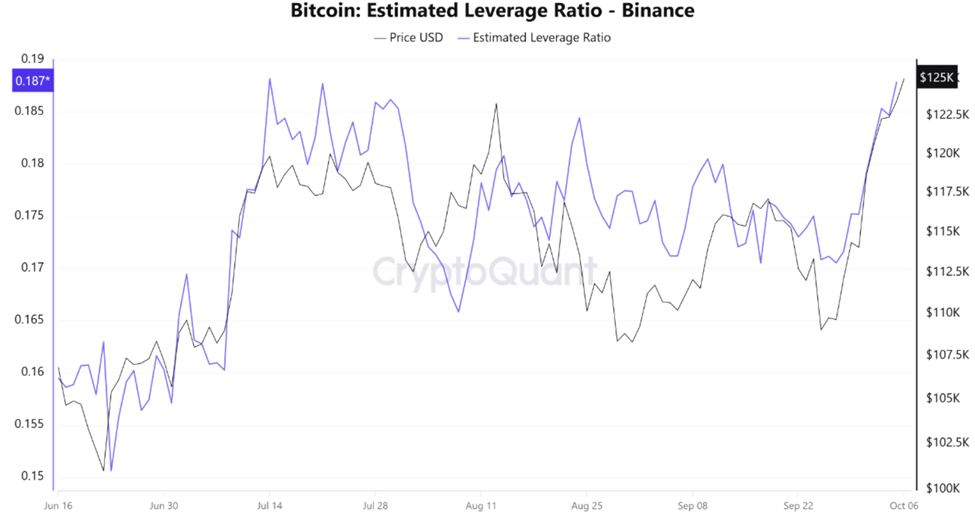
An analyst at Arab Chain observed that this increase highlights an elevated appetite for risk within the market as Bitcoin approaches unprecedented levels.
Historically, when leverage surpasses the 0.18–0.20 range, a market correction typically follows. This is because sharp price drops can trigger widespread liquidations.
Individual investors are largely fueling this trend, aiming to profit from the ongoing upward momentum, while institutional players seem to be lowering their leverage to safeguard capital. This divergence suggests a market driven by short-term gains on increasingly precarious foundations.
2. Extreme Optimism Reaches a Climax
The Fear and Greed Index has climbed to 70, placing the market firmly within a “greedy” state.
Sponsored
Sponsored
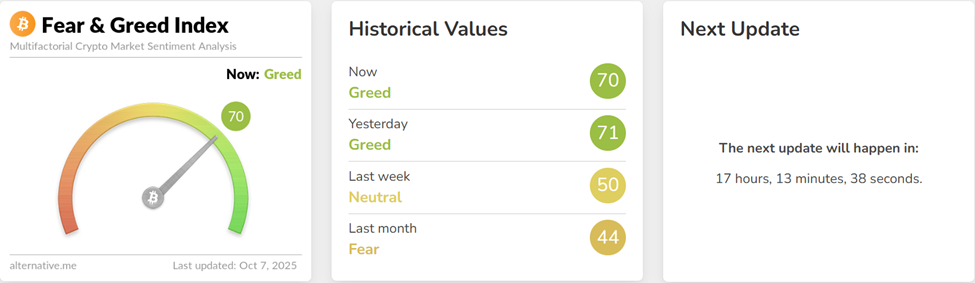
While reflecting optimism, such levels often indicate a point of exhaustion where traders become overly confident.
Readings above 70–80 have historically preceded cooling periods, suggesting current sentiment may be unsustainably high.
3. Early Adopters Cashing In
On-chain data reveals that long-term holders, commonly known as “OG whales,” have begun shifting and selling substantial amounts of Bitcoin.
Maartunn, another CryptoQuant analyst, reported that both new and veteran whales secured over $800 million in profits during the initial three days of October.
Sponsored
Sponsored
Furthermore, 15,000 BTC, estimated at $1.88 billion, were moved to exchanges, signaling large players shifting their assets.
Separately, Lookonchain revealed that as Bitcoin reached a new peak above $126,000, a dormant wallet transferred 100 BTC ($12.5 million) after a 12-year period of inactivity.
“A Bitcoin OG just moved 100 BTC ($12.5M) to 2 new wallets after 12 years of dormancy. He originally received 691 BTC ($92K then, now $86M) 12 years ago, when BTC was just $132,” the post stated.
The activation of old wallets during market rallies often suggests that experienced investors are locking in profits, a pattern that has historically preceded market downturns.
4. Potential for a Stronger Dollar
While the digital asset market surged 12% above its 2024 highs, the US Dollar Index (DXY) declined by a similar amount but is now showing signs of recovery.
Sponsored
Sponsored
Analysts like Axel Adler and The Great Martis caution that the dollar might regain strength due to economic challenges in Europe and continued fiscal uncertainties in the United States. A stronger dollar typically puts downward pressure on riskier assets, including digital currencies.
“The dollar index rose above 98 as investors assessed the economic implications of the ongoing government shutdown,” Adler noted.
Similarly, Daan Crypto Trades suggests that the depreciation of the dollar might have contributed to the digital asset rally. If the dollar recovers, this supportive factor could quickly dissipate.
5. Echoes of the Dot-Com Era
Billionaire investor Paul Tudor Jones drew parallels between the current digital asset market and the dot-com bubble of 1999. While he acknowledged Bitcoin’s continued appeal, his comparison highlights the risk of a speculative peak.
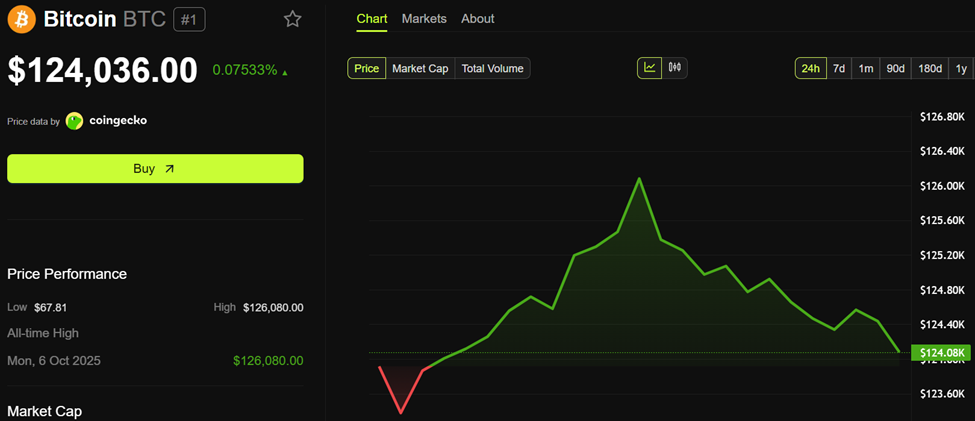
With Bitcoin’s price nearing $126,000 and market sentiment reaching extreme levels, the concern is not about the strength of digital assets but whether they are *too* strong.
Historical patterns suggest that when excessive optimism, high borrowing, and profit-taking by large holders coincide, a market correction often precedes the next phase of growth.