


Amidst the evolving landscape of U.S. macroeconomic conditions, both Bitcoin and gold are emerging as frontrunners, surpassing the performance of other major asset categories this year.
The price of gold has seen a substantial increase, climbing by 48% since the beginning of the year, and hitting unprecedented highs near $4000. Bitcoin, meanwhile, has experienced gains exceeding 30% during the same period, breaking past a $126,000 ceiling. Notably, this year marks a unique occasion where both assets simultaneously top the charts in terms of annual returns.
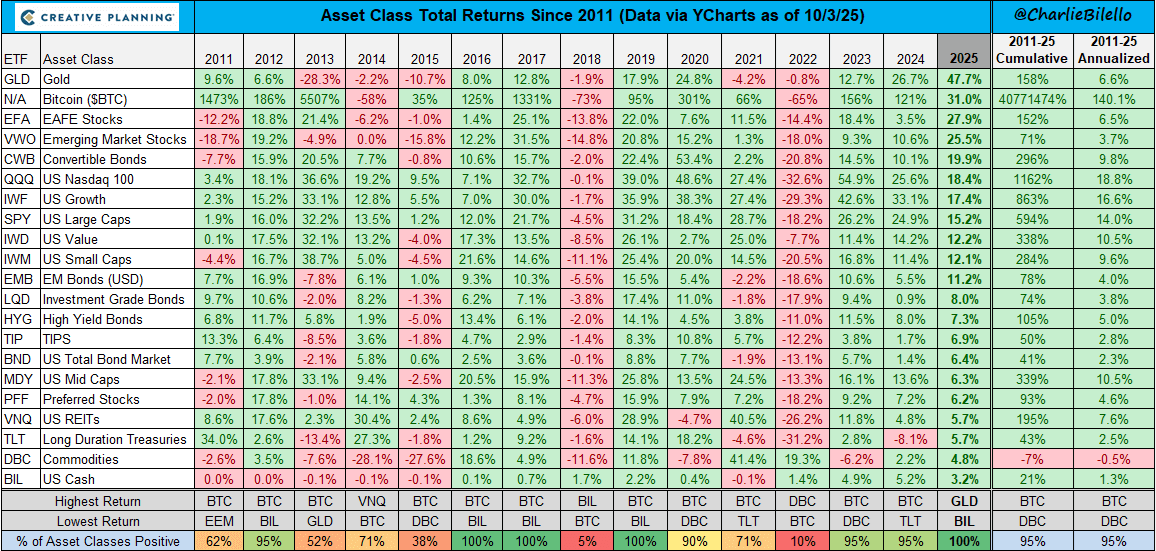
The surge in popularity for both gold and Bitcoin can be attributed to similar driving factors. Investors are seeking secure havens as U.S. economic policy faces mounting challenges, and as anticipation builds for potential interest rate reductions by the Federal Reserve.
As the U.S. government navigates rising debt levels and the potential for government shutdowns, investors are increasingly allocating capital to assets deemed capable of maintaining purchasing power.
Insights from Ecoinometrics, a platform specializing in macro analysis, support this viewpoint.
Their analysis indicates that while Bitcoin demonstrates superior overall returns, gold maintains a stronger performance when evaluated based on risk-adjusted returns.
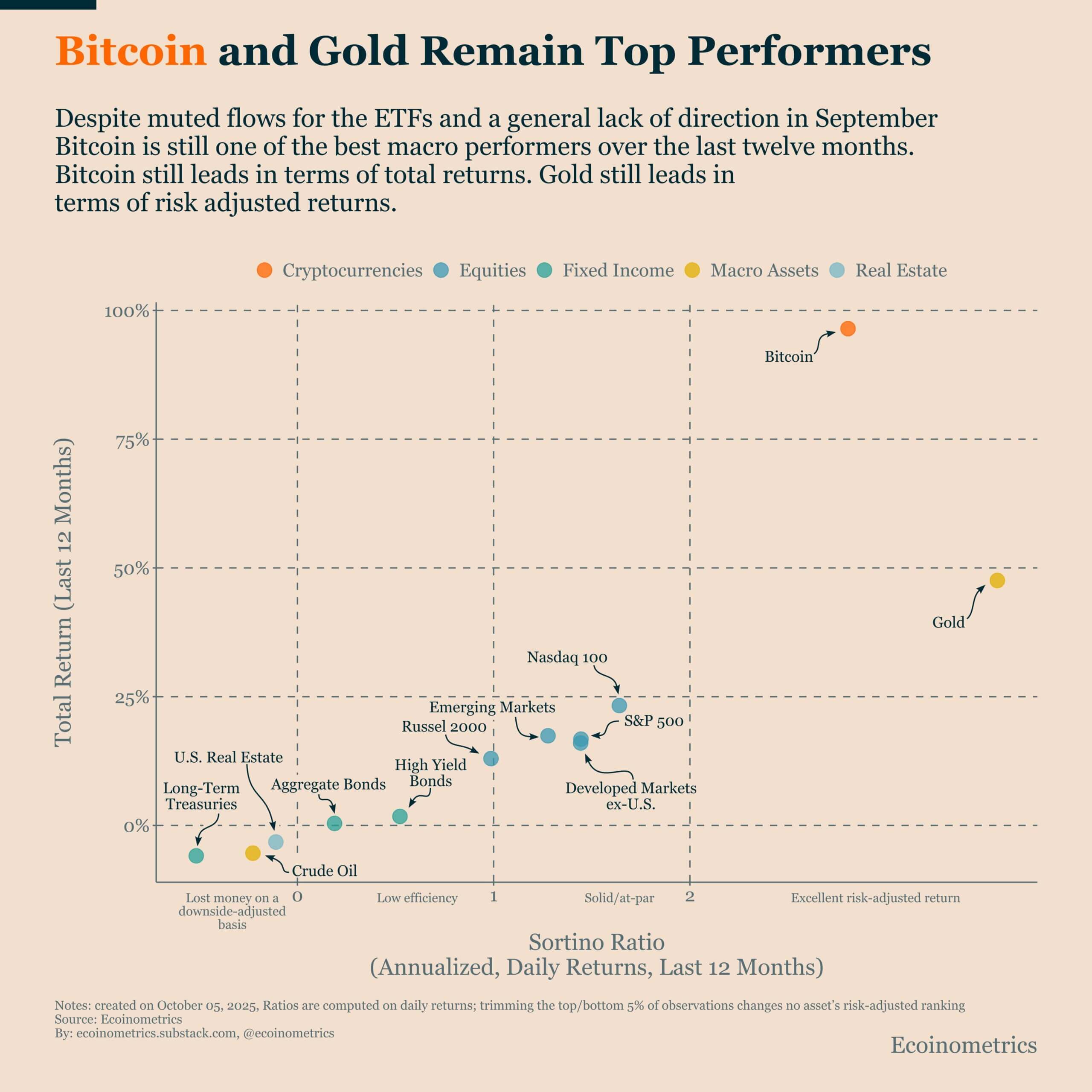
The firm highlights that this trend has persisted for the last couple of years, underscoring a growing inclination toward tangible assets as U.S. national debt increases, and fiscal dominance takes hold as the new normal.
The analysts at Ecoinometrics further suggest that investors placing their bets on Bitcoin and gold are essentially implementing a strategy to protect against the gradual devaluation of fiat currencies.
Bitcoin’s Potential to Overtake Gold in the Future
While both assets currently enjoy positive market recognition, there is increasing discussion around the potential for Bitcoin to eventually surpass gold in value and prominence.
In a statement posted on X (formerly Twitter) on October 7th, Matthew Sigel, who leads digital asset research at VanEck, suggested that Bitcoin’s market capitalization could reach half of gold’s following the upcoming halving event in April 2028. Bitcoin halving, which happens approximately every four years, reduces the rate at which new Bitcoins are created, thus curbing supply and often triggering price increases assuming steady demand.
Sigel emphasized the growing preference among younger demographics, especially in developing economies, for Bitcoin as a superior means of preserving value compared to gold. He also mentioned that gold’s intrinsic value is predominantly attributed to its status as a store of wealth, rather than demand for industrial or jewelry applications.
If Bitcoin manages to strengthen its standing as a preferred asset, it is poised to experience considerable market expansion. Based on gold’s current record price, Sigel estimates a hypothetical equivalent value of $644,000 per Bitcoin.
Notably, many seasoned professionals in the investment space share this optimistic outlook.
Dave Weisberger, founder of CoinRoutes, contends that Bitcoin’s “true bull market” is yet to begin, when weighed against the performance of gold.
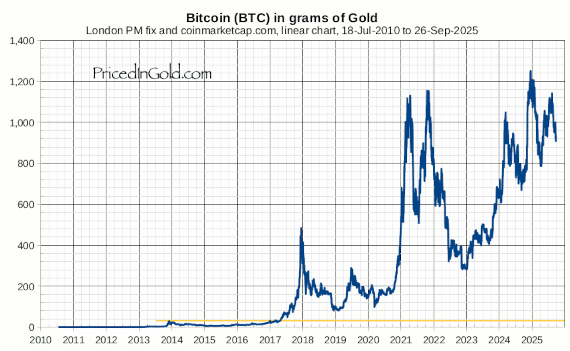
He anticipates that Bitcoin will outshine gold in subsequent market cycles, further solidifying its role as the leading form of “hard money”.
Weisberger conveyed:
“When the real Bitcoin bull market starts, you will know it from the expressions of disbelief that echo around this platform… Until then, Bitcoin WILL garner its share of increasing global liquidity, but the real fireworks are in the (unpredictable) future.”
Similarly, David Marcus, formerly the president of PayPal, remarked that if Bitcoin were to be valued equivalent to gold, its fair market value would be upwards of $1.3 million per unit.
Their optimism hinges on Bitcoin’s inherent technological benefits when contrasted against physical gold.
Unlike gold, Bitcoin operates digitally, permits division into smaller units, and can be transferred internationally without intermediaries. It provides programmable capabilities, facilitating innovative financial applications that traditional commodities cannot achieve.
While the global economy still largely relies on government-backed currencies, geopolitical shifts and a growing skepticism towards fiat money could gradually elevate Bitcoin to a role similar to gold’s century-old position as a widely accepted store of wealth.