

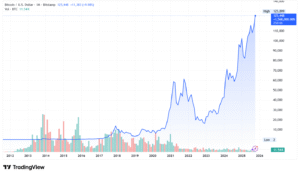
Bitcoin achieved a remarkable milestone on October 6, 2025, soaring to a peak of
$126,279 USD
on the Coinbase BTC/USD trading pair. This surge in value was primarily fueled by substantial investments flowing into Bitcoin exchange-traded funds (ETFs), coinciding with a temporary shutdown of the U.S. government.
This upward trend underscores the growing confidence investors have in the digital asset space. Despite economic uncertainties,
Bitcoin
continues to draw interest from both large institutions and individual investors. Market analysts have noted that daily inflows into Bitcoin ETFs reached hundreds of millions of dollars, directly contributing to the cryptocurrency’s new record high.
The ascent of Bitcoin also mirrors a broader shift occurring within financial markets. Investors are increasingly viewing Bitcoin not merely as a speculative asset but as a protective measure against potential inflation and governmental instability. As one expert noted, “Bitcoin’s capacity to withstand macroeconomic pressures enhances its position as a form of digital gold.”
The $126K Question: Decoding Bitcoin’s Rapid Ascent
Bitcoin’s recent surge past the $126,000 mark can be attributed to several key factors.
Firstly, institutional demand has returned with considerable force. The availability of spot Bitcoin ETFs in the United States has simplified Bitcoin acquisition for large investors, removing the complexities associated with digital wallets and exchanges.
During recent trading sessions, U.S.-based spot Bitcoin ETFs collectively recorded approximately $307 million in inflows in a single day. Notably,
BlackRock’s
iShares Bitcoin Trust (IBIT) accounted for $177 million of this total. These figures indicate significant confidence from major players such as asset managers, pension funds, and hedge funds.
Secondly, the U.S. government shutdown prompted some investors to seek refuge in alternative asset classes. When governmental functions are disrupted or economic instability looms, investors often look to decentralized assets like Bitcoin as a means of preservation.
Finally, market momentum itself is a significant driver. As prices increase, new buyers are drawn in, creating a cycle that further propels Bitcoin’s value.
Despite the enthusiasm, analysts caution that considerable volatility remains. Sharp downward corrections are still possible as traders secure profits or as market conditions evolve.
The Environmental Side of Bitcoin
While price increases are welcome to investors, they also draw attention again to the environmental implications of Bitcoin.
Mining Bitcoin
requires significant energy, leading to a substantial carbon footprint.
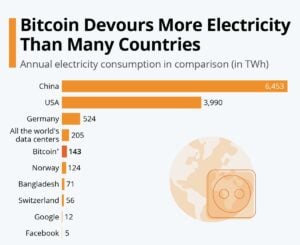
Estimates suggest that the Bitcoin network expends approximately
175 to 180 terawatt-hours (TWh)
of electricity annually. This energy consumption is comparable to the yearly usage of entire countries, such as the Netherlands or Argentina, and even surpasses that of Norway.
This level of energy consumption results in around 98 million tonnes of CO₂ emissions annually, which is roughly equivalent to the total annual emissions of some smaller developed nations.
-
Each Bitcoin transaction can generate hundreds of kilograms of CO₂ (
672 kg of CO₂
), similar to driving a gasoline-powered vehicle for over 1,000 miles.
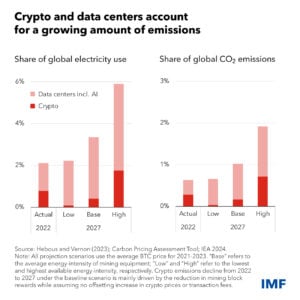
Globally, data centers and crypto mining combined now account for approximately 2% of global electricity usage, with their emissions contributing to nearly 1% of the world’s total carbon output. Should mining continue to expand, this percentage may increase, raising concerns regarding the sustainability of such growth within a
net-zero
future.
Beyond the Blockchain: The Undisclosed E-Waste Issue
The ecological consequences of Bitcoin extend beyond mere electricity consumption. The mining process requires specialized, high-performance machines called ASICs (Application-Specific Integrated Circuits), the manufacturing of which consumes significant resources and energy.
The operational lifespan of mining hardware is relatively short, typically lasting only one to two years. As newer, more efficient models emerge, miners are compelled to replace older equipment, resulting in a consistent output of electronic waste (e-waste).
A study from the
United Nations University
projects that worldwide e-waste generation could exceed 75 million tonnes annually by 2030, with crypto mining contributing to this growing problem.
The fabrication of these machines relies on rare minerals like
lithium
,
nickel
, and
copper
. The extraction and processing of these materials can be environmentally damaging, impacting local ecosystems and generating hazardous waste. Manufacturing activities can account for up to 80% of a mining system’s total lifecycle environmental impact.
Therefore, the environmental cost of Bitcoin begins accumulating even before a single coin is mined.
Bitcoin’s Journey Toward Renewable Energy
In response to environmental concerns, a segment of the Bitcoin industry is actively transitioning to
cleaner energy sources
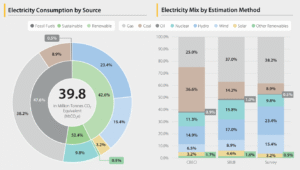
. Reports suggest that by mid-2025, approximately
52%
of Bitcoin’s power will come from renewable or low-carbon resources, such as
hydropower
,
wind power
, and
solar power
.
Certain mining operations are now strategically located near
renewable energy
facilities, leveraging excess energy that would otherwise be unused. Others are purchasing
carbon credits
or participating in initiatives to compensate for their emissions.
For instance, miners in Iceland and Norway predominantly use
geothermal
and hydropower, resulting in some of the cleanest operations globally. In Texas, a U.S. mining hub, some companies operate flexible systems that reduce operations during peak electricity demand to support grid stability.
However, it is important to note that not all mining is environmentally friendly. Many locations, such as in Kazakhstan and within certain regions of the U.S., still rely on coal or
natural gas
. These differences complicate the accurate assessment of the overall carbon footprint of the Bitcoin network.
Regulatory Intervention: Can Bitcoin Meet Green Standards?
As Bitcoin’s popularity increases, pressure from regulatory bodies and ESG-conscious investors also rises. The call is for greater transparency regarding Bitcoin mining processes and associated carbon emissions.
Some governments have considered imposing bans or restrictions on mining activities in areas with high emissions. However, such bans may incentivize miners to move to regions with less environmentally friendly energy policies, paradoxically increasing global emissions. This is known as carbon leakage.
A more balanced approach might involve implementing a
carbon tax
on energy use in mining operations. A report by the
International Monetary Fund (IMF)
suggested that a modest tax – around $0.05 per kilowatt-hour – could reduce emissions and create revenue for governments.
Additionally, frameworks for carbon intensity labeling are under consideration, which would assign each cryptocurrency a score representing the cleanliness of its energy sources. This could help investors make more environmentally sustainable choices in their digital asset portfolios.
Institutional investors are also pushing for improved disclosure, requiring mining companies to report on energy sources, total consumption, and mitigation efforts. Without this information, Bitcoin might not align with investment portfolios guided by ESG principles.
A Pivotal Moment for Bitcoin’s Future
Bitcoin’s price surpassing $126,000 marks a significant achievement for the digital currency. It confirms the enduring investor interest and its growing integration into the global financial framework.
However, the environmental implications are becoming increasingly apparent. For Bitcoin to participate in a sustainable economy, the industry must:
-
Adopt cleaner energy sources.
-
Enhance mining efficiency to reduce energy consumption per transaction.
-
Extend the lifespan of hardware and improve recycling efforts.
-
Improve transparency in emissions reporting.
-
Collaborate with regulators on appropriate
climate policies
.