
Cryptocurrency markets experienced a significant downturn on Wednesday, resulting in the overall market capitalization shrinking to $4.1 trillion. This represents a decline of over 2.50% within the last 24 hours. Simultaneously, the Crypto Market Fear & Greed Index registered a substantial shift in investor sentiment, decreasing from a “greed” level of 70 to 60 within a single day.
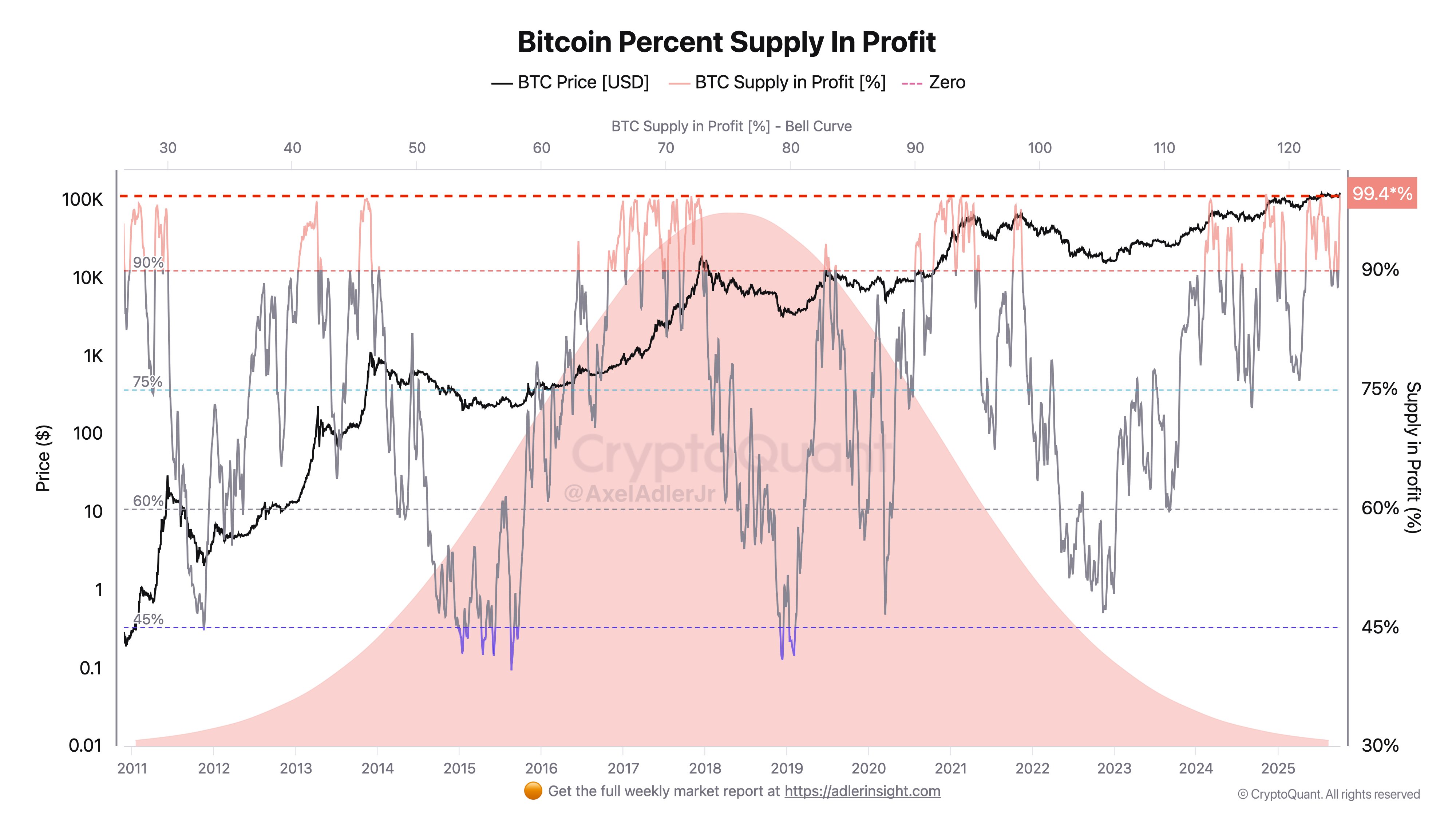
Bitcoin (BTC) is facing selling pressure after recent highs, dropping by more than 4% to $121,257, a pullback from its all-time high of $126,200. Ethereum (ETH) decreased by 7% to $4,436, witnessing a greater number of liquidations compared to Bitcoin over the preceding 24 hours. Experts believe this pattern commonly surfaces during periods of exuberance, where extensive profitability contributes to increased profit-taking and heightened market vulnerability.
Leading altcoins such as XRP, Solana (SOL), Cardano (ADA), and Hyperliquid (HYPE) all saw declines ranging from 5% to 10% within the last day. Popular meme coins like Dogecoin (DOGE) and Pepe Coin (PEPE) fell by over 7%, while Shiba Inu (SHIB) is attempting to maintain its current levels after a 5% decrease. Smaller altcoins like DoubleZero (2Z) and Plasma (XPL) experienced larger drops, falling by approximately 19% and 13%, respectively.
Profit Booking Triggers Cryptocurrency Market Dip
The market downturn was primarily caused by widespread profit-taking among traders employing high leverage. The conditions that led to this, included substantial inflows into Bitcoin ETFs, a resurgence in demand across both spot and derivatives markets, and an increase in on-chain activity, which cumulatively placed many investors in a position to realize profits. Furthermore, unrealized profits held by short-term investors climbed to 10%, a signal often followed by significant selling activity.
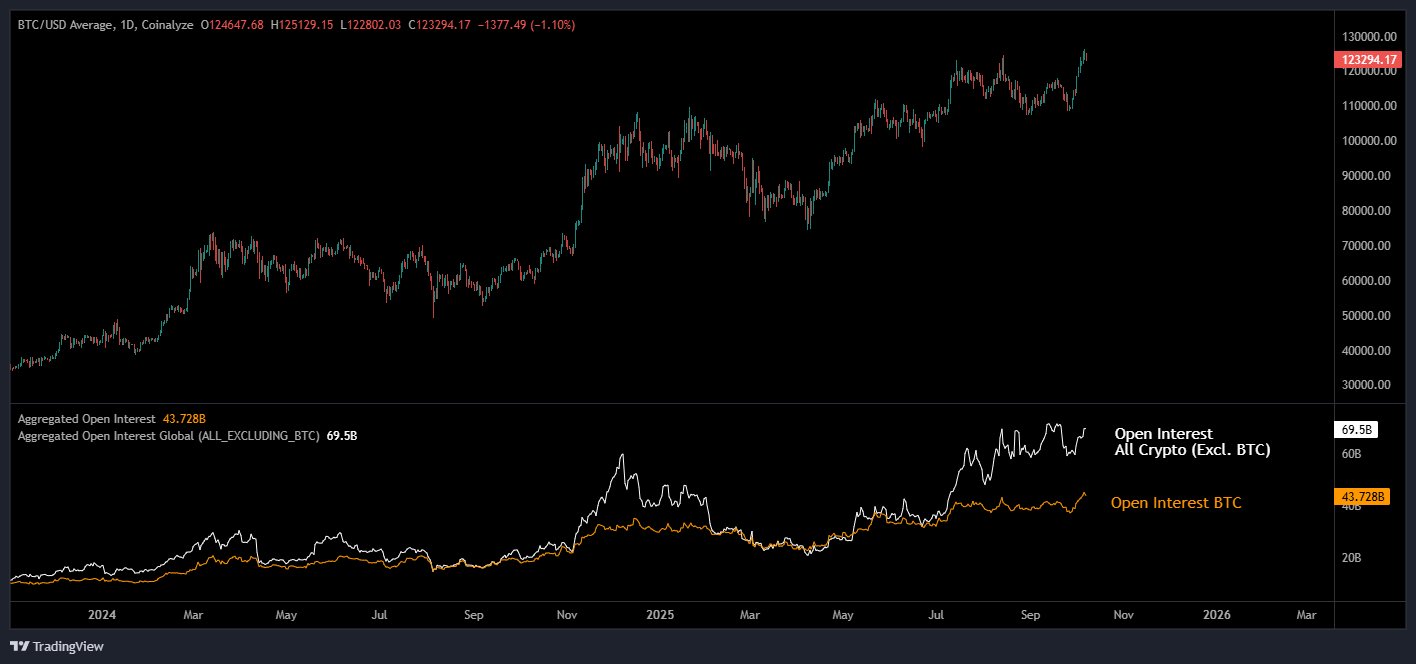
Open interest in Bitcoin and Ethereum reached new peaks during the recent cryptocurrency market uptrend. According to on-chain analyst Maartunn, similar setups in December were followed by a period of consolidation and then a 30% correction across the broader cryptocurrency market.
Data indicates that long-term holders and whales are also reducing their positions. Data from Onchain Lens reveals that a long-term Bitcoin holder transferred 3,000 BTC to Hyperliquid and began converting it to USDC. This whale has currently sold approximately 960.57 BTC for $116 million and still holds a substantial 46,765 BTC, valued at $5.7 billion.
The current retracement is evaluating the market’s stability and serves to reduce excess leverage. Market observers are closely watching where buying interest reappears and whether existing support levels can stimulate new demand, especially as certain experts have forecasted a potential new all-time high of $135,000 for Bitcoin.
Significant Liquidations Observed Across Bitcoin, ETH, XRP, SOL, DOGE, and XPL Markets
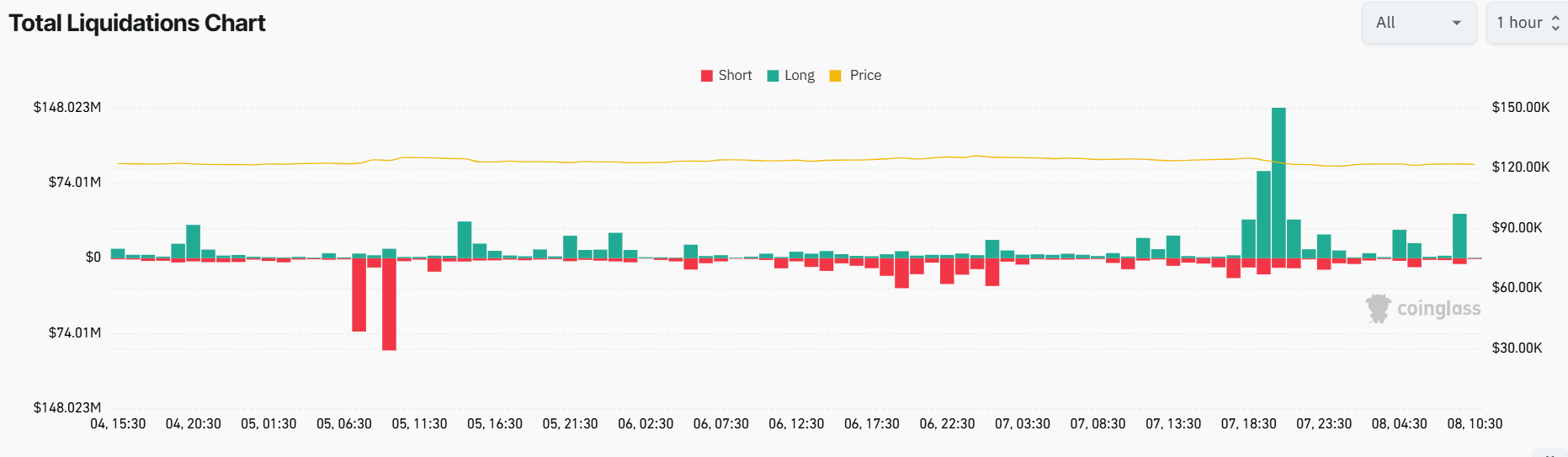
The cryptocurrency market recorded liquidations totaling $700 million, according to data provided by Coinglass. Notably, liquidated positions included around $550 million in long positions and $150 million in short positions within the last 24 hours.
The liquidations is turning into a bigger number amid no signs of buy-the-dip, with over $150 million in long positions experiencing liquidation in a single hour.
Over 180,000 traders faced liquidation in the past 24 hours, with a single BTC-USDT swap order on the OKX exchange accounting for $8.74 million. The largest liquidations, contributing to the broader cryptocurrency market decline, were observed in ETH, BTC, SOL, XRP, DOGE, XPL, WLFI, ASTER, BNB, AVAX, and HYPE.
Cryptocurrency Market Weakens Before Release of FOMC Meeting Minutes
The 10-year US Treasury yield is currently stable at approximately 4.13%, following a decline in previous trading sessions, as investors anticipate the release of the FOMC Minutes and upcoming statements from Federal Reserve officials, including Jerome Powell. Current market expectations suggest a further 25 basis point reduction in the Fed’s benchmark interest rate later this month.
Concurrently, the U.S. Dollar Index (DXY) is climbing towards 99, reaching its highest level in two months after recent declines. The situation arises amid growing uncertainty regarding the ongoing US government budget negotiations and general global instability, factors that have bolstered demand for safer investment options.