


A surge in institutional interest is fueling the Bitcoin market, with spot exchange-traded funds (ETFs) projected to funnel between $5 billion and $10 billion into the ecosystem each quarter.
This influx of new capital is contributing to a decrease in available Bitcoin, reinforcing its long-term positive outlook.
According to Bitwise CTO, Hong Kim, who referenced data from Farside Investors, stated that ETF inflows are becoming a consistent and predictable phenomenon. He described it as “a secular trend”, emphasizing that even the typical four-year market cycles may not interrupt it, and predicting that “2026 will be a positive year.”
These financial inflows indicate a fundamental change in the way mainstream finance engages with Bitcoin. Previously considered speculative, the leading cryptocurrency is now integrated through regulated investment tools, resulting in stable and continuous liquidity.
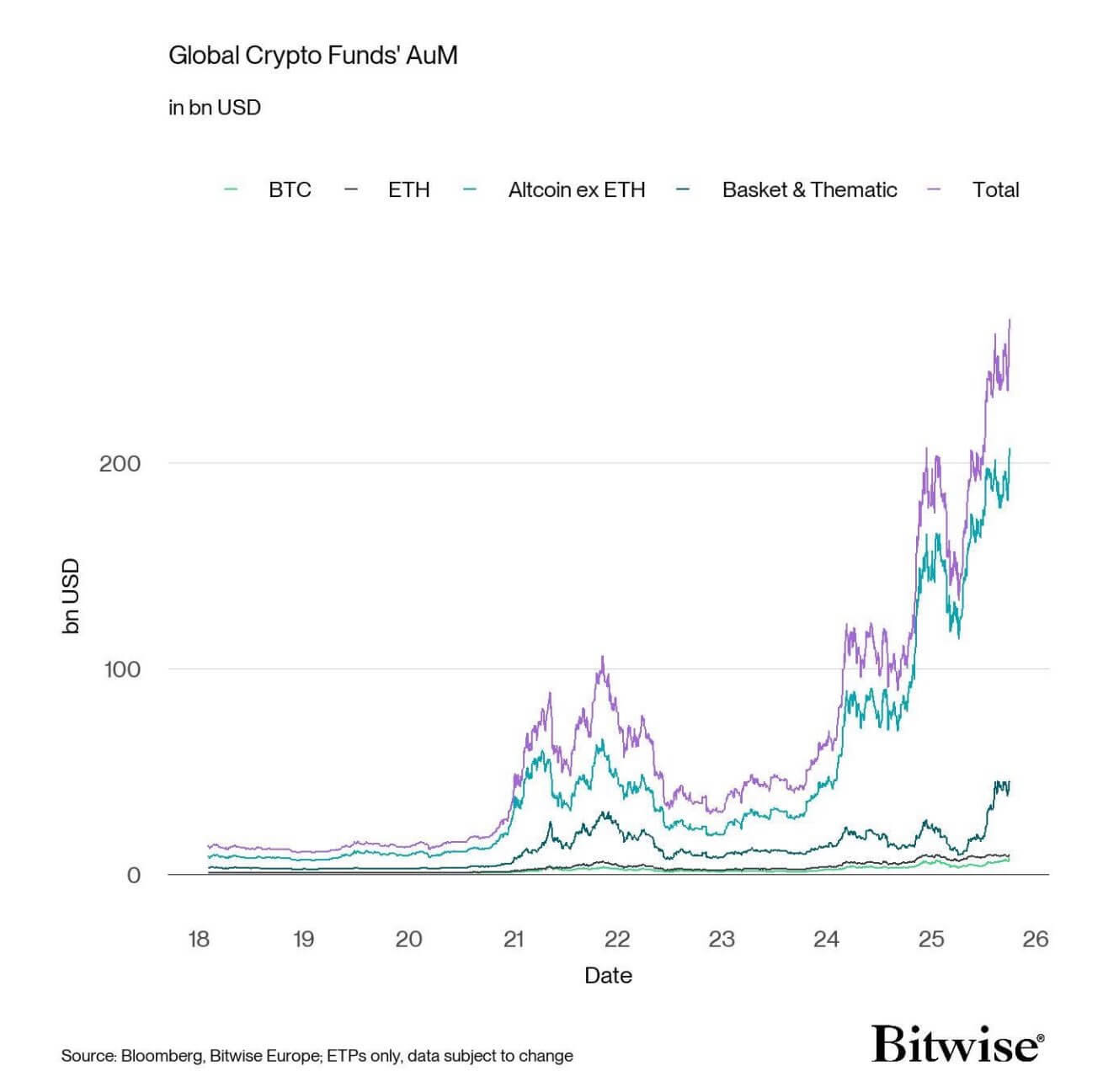
Consequently, total assets managed by global crypto funds, including those focused on BTC and Ethereum, have surpassed $250 billion. This milestone highlights the conviction of institutional investors in including digital assets within well-rounded portfolios.
ETF Demand Exceeds Newly Minted Bitcoin
The consistent stream of institutional funds isn’t just pushing prices upward; it’s also changing the basic economics of Bitcoin’s supply.
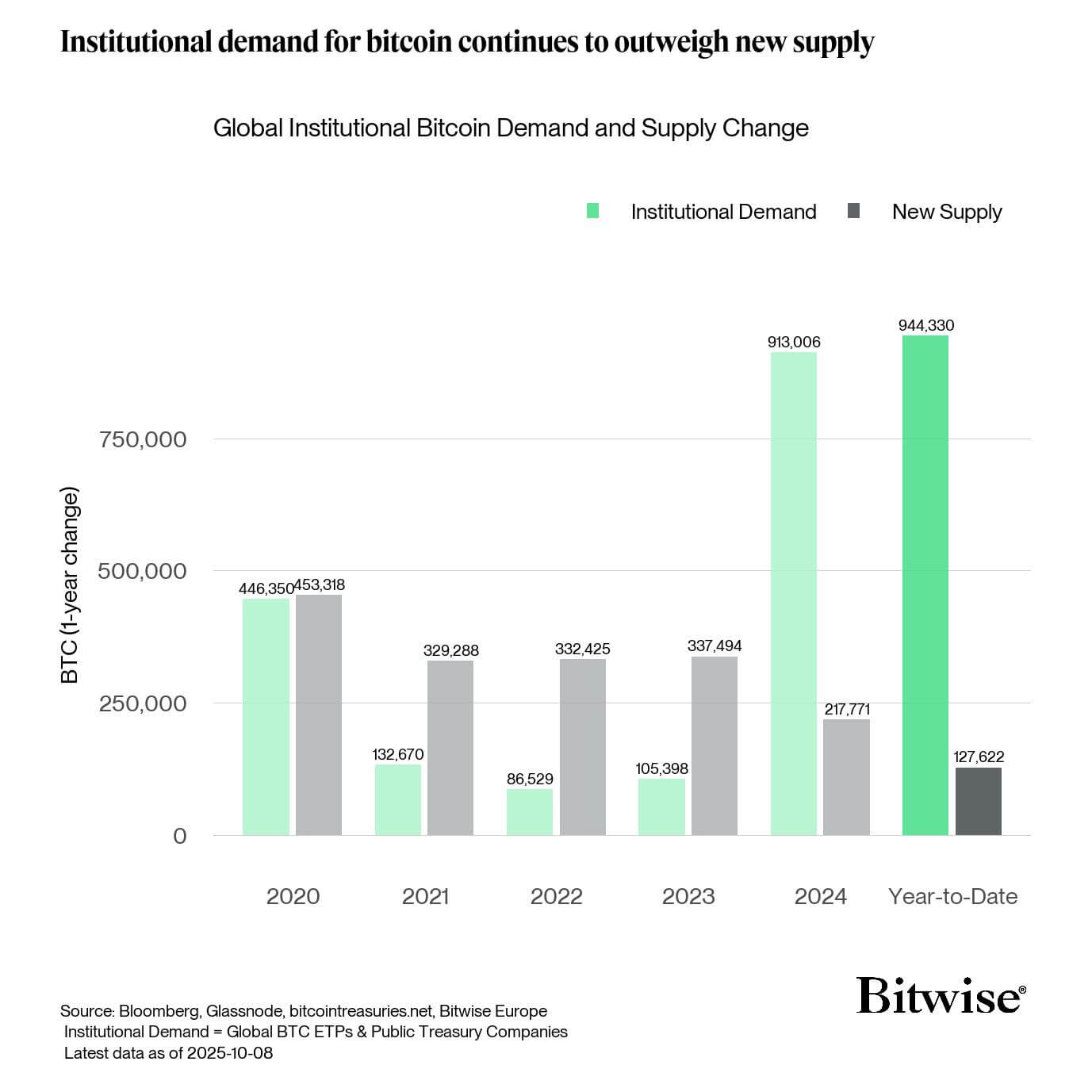
Bitwise’s European Head of Research, André Dragosch, reported that institutions have acquired 944,330 BTC in 2025. That’s more than the 913,006 BTC they acquired in all of 2024.
For comparison, Bitcoin miners have only generated 127,622 BTC this year. That means institutional buyers are scooping up Bitcoin 7.4 times faster than new Bitcoins are being created.
This disparity stems from the US Securities and Exchange Commission’s (SEC) 2024 decision to greenlight spot Bitcoin ETFs after prolonged deliberation.
This approval initiated a significant market transformation. Demand from regulated investment funds suddenly outstripped the available supply, reversing a previous trend from 2020 to 2023 where low institutional participation was due to regulatory uncertainty.
BlackRock’s entrance with the iShares Bitcoin Trust became a standard and led other companies to follow suit. The trend has continued into 2025, supported by more encouraging signals from US policy and wider recognition of Bitcoin for treasury reserves.
Select entities, including those with ties to government sectors, are now holding Bitcoin directly on their balance sheets, highlighting Bitcoin’s increasing legitimacy among institutions.
With nearly a quarter of the year left and inflows demonstrating no signs of abating, experts predict the Bitcoin supply constraints will become even more acute.
The escalating difference between new Bitcoin production and demand underscores the profound change that ETF-driven investment has brought to the market’s core principles, turning Bitcoin from a speculative asset to a globally recognized financial instrument with consistent institutional demand.