
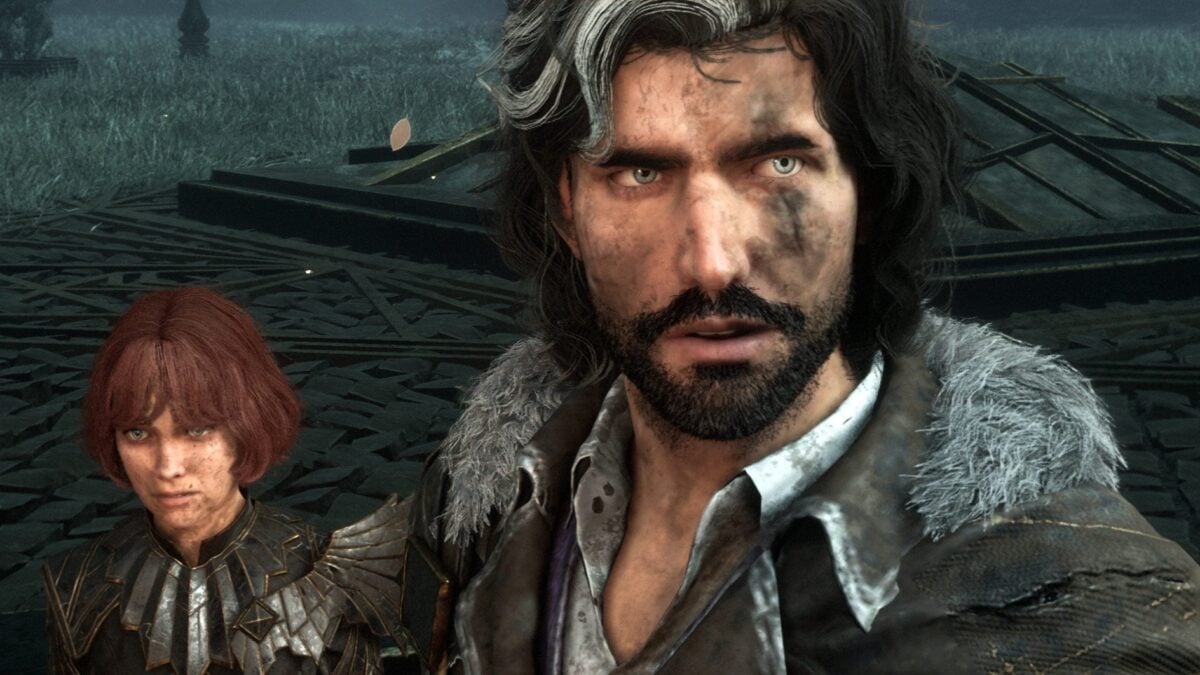
One curious effect of modern fandom’s fixation on “canon” is the heightened scrutiny now applied to stories with ambiguous endings or player choices. Many video games center around player agency, from selecting weapons to making tough sacrifices. However, with the internet’s tendency to catalog every event in detailed wikis, simply making choices and experiencing their consequences isn’t always enough. Some players seek validation, desiring games and their creators to definitively declare them “right.” Clair Obscur: Expedition 33, while not solely focused on choice, presents a pivotal decision at its conclusion that dramatically alters the narrative. Since its April release, players have debated the merits of each outcome. However, with a sequel on the horizon and some seeking definitive answers, Sandfall Interactive, the developers, have clarified that neither ending is the “correct” one.
Clair Obscur features two distinct endings, determined by the player’s choice to play the final encounter as either Maelle, the painter, or Verso, the painted representation of her late brother. In a conversation with Lits Play, Jennifer Svedberg-Yen, the lead writer of Clair Obscur, emphasized the validity and intentional design of both endings. Neither was intended as the “lesser” or “incorrect” path.
“I consistently tell everyone that there’s no ‘correct’ ending, no ‘canon’ ending, no ‘official Sandfall’ ending,” Svedberg-Yen explained. “Both endings exist for a purpose; we deliberately included them, designing them meticulously. Neither is flawless. Both evoke heartbreak in unique ways. Each has elements that bring joy, moments where you desire a happy resolution for these characters, yet each also carries its own price. This reflects reality; often, one person’s happiness comes at a cost. Perfection is rare. We aimed to showcase both perspectives of the story.”
Svedberg-Yen’s points are valid. The debate surrounding the morally correct choice is a separate issue. Personally, the Maelle ending resonated thematically, while acknowledging that the Verso choice likely offers greater closure. Each has its advantages and disadvantages, and the enduring discussions that choice-driven games spark are part of their appeal. However, the modern inclination to seek a “correct” answer, endorsed by either the game itself or the developers, can diminish these discussions.
This tendency often stems from players’ attachment to their personal “canon.” When a sequel, like Infamous Second Son, builds upon one of its predecessor’s endings, it raises questions about the discarded choice. Why was it included if it would be disregarded? What does this imply for players who selected the alternative? Were they wrong? Was all deliberation about the morality or value of that choice futile? This question looms over the next Mass Effect installment. BioWare faces the challenge of creating a fifth game in the Milky Way that either accommodates all of Mass Effect 3’s significant ending choices or selects one and advances the timeline accordingly.
BioWare provides an interesting case study, as their Mass Effect and Dragon Age communities frequently use “canon” to describe choices that are defaulted when players don’t import a previous save. Yet, the studio itself doesn’t adopt this perspective. They have even indicated they would prefer to avoid acknowledging a decision in a sequel like Dragon Age: The Veilguard rather than contradict it. This allows players to feel that their world state remains valid, even if its consequences aren’t prominently displayed in every game.
Perhaps my perspective is shaped by early experiences filling in the gaps that developers left open in roleplaying games. I’ve never sought confirmation from games that my choices were “right.” The need for a game or developer to validate your actions suggests that making decisions is about conforming to the developers’ “true vision,” rather than expressing your own agency within the narrative. I approach roleplaying as an opportunity for self-discovery. This is why I often create myself in character creators. These are my stories, and I will write them as I see fit. I prefer developers to avoid patting me on the head and affirming that everything I did was “correct” or aligned with canon; that’s not the point, and it shouldn’t influence our decision-making.
Perhaps the ambiguity about “what really happened” is overwhelming for some. For me, the flexibility, the coexistence of possibilities, and my ability to influence the direction of the narrative is the most appealing aspect of player autonomy. The greatest choice-based games are the ones we continue to debate for years, not the ones where developers retroactively declare a “one true choice.” Hats off to Sandfall Interactive and Svedberg-Yen for standing by the choices they offered players, rather than yielding to a perceived notion of “canon.” I hope they maintain this approach in the inevitable sequel.