
Stay informed! Get the crucial Texas news delivered daily with
The Brief,
the Texas Tribune’s essential newsletter.
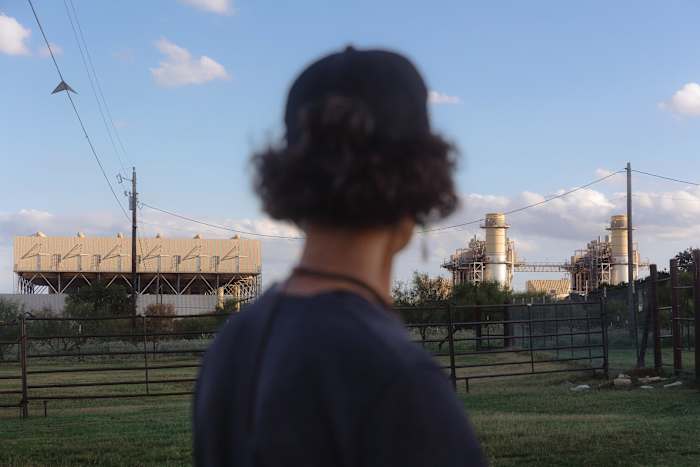
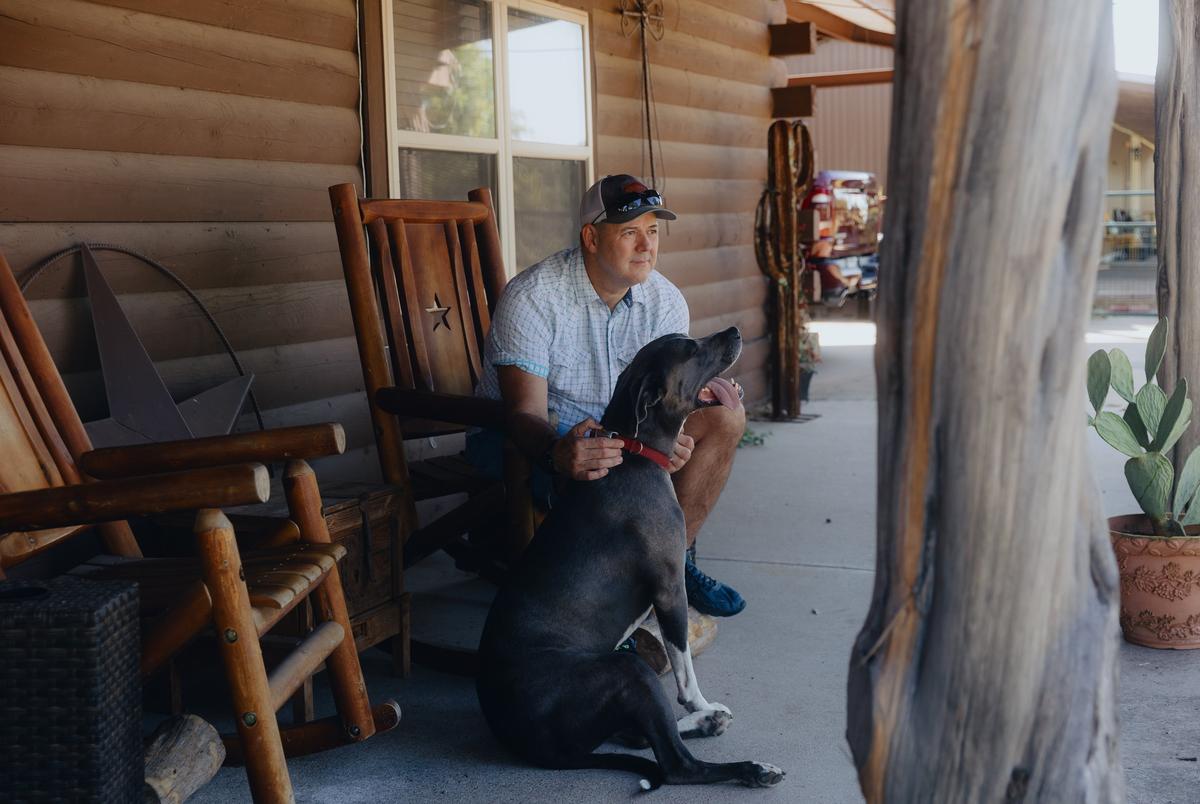
HOOD COUNTY – Danny Lakey and his wife cherish the memories of peaceful evenings spent on their porch, watching the Texas sunset beyond the grazing cattle on the adjacent ranch.
This tranquil country existence was their aspiration when they purchased their log cabin nestled amidst the Hood County woodlands southwest of Fort Worth back in 2021. Danny Lakey proudly refers to their property as their “personal haven,” a place where they share their land with more livestock than neighbors.
However, since the arrival of a bustling cryptocurrency mining facility approximately a half-mile away in 2023, those porch visits have become less frequent. Nearby residents share a similar experience, reporting a decline in outdoor activities due to what many describe as a persistent and disruptive “roar.”
The sound has been likened to an airplane perpetually in flight or a lawnmower that never ceases its operation. One county official described the annoyance as akin to “sleeping with a leaf blower running right next to your head.” Regardless of the comparison, the consensus remains the same: the noise is incessant.
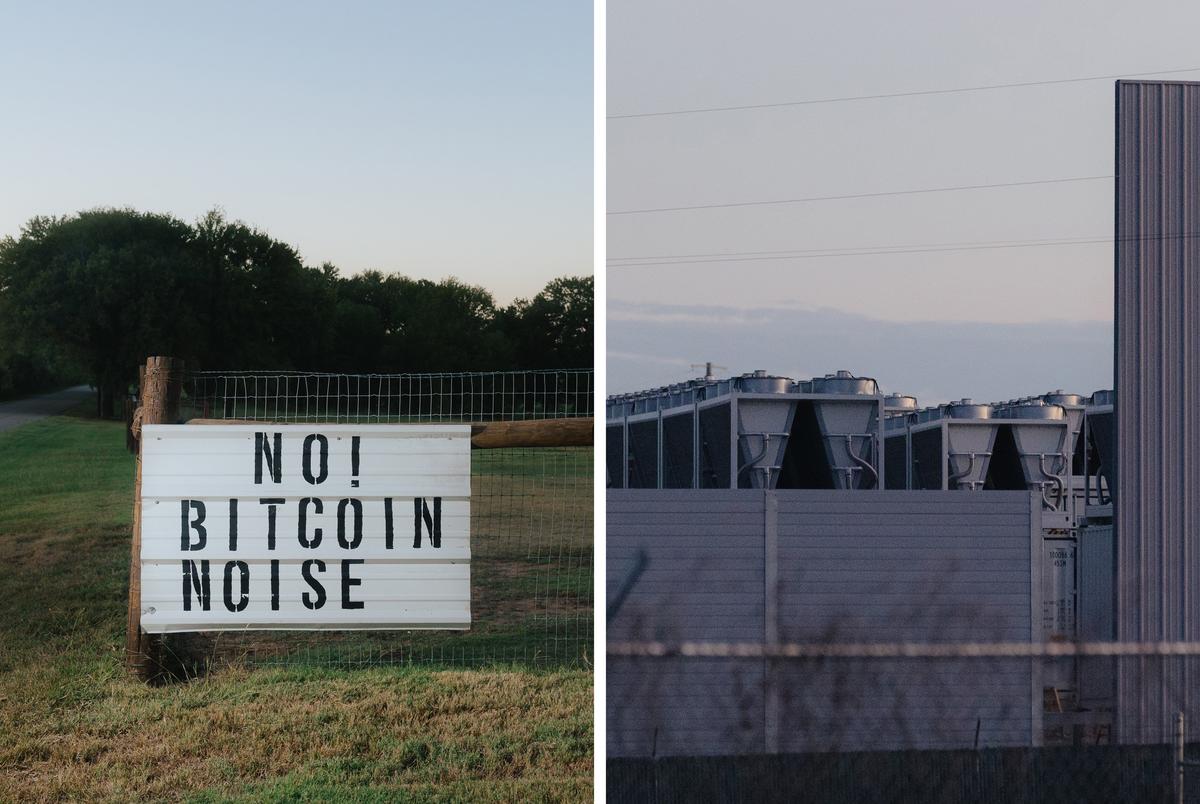
This noise emanates from a vast array of cooling fans working in unison, regulating the temperature of
almost 60,000 processing units
that relentlessly mine bitcoins, the dominant form of cryptocurrency. The facility, which began operations in 2022, houses its computer systems in rows of containers, each comparable to a mobile home, situated less than 100 yards away from the residences of numerous families.
Local inhabitants claim they have repeatedly urged MARA Holdings, or Marathon, the company that owns the facility, to address the noise issue. The Florida-headquartered organization responded last year by constructing an extended sound barrier, reaching 2,000 feet long and 24 feet high, and by substituting some of its conventional cooling fans with an
immersion cooling system.
However, people living nearby assert that these measures have had minimal impact on reducing the disruptive noise. Using decibel meters, they have recorded sound levels reaching just below the
state’s established limit of 85 decibels, a volume equivalent to a kitchen blender or garbage disposal.
Driven by their frustration, community members are now implementing an ambitious plan to dampen the racket: establishing their own municipality. Danny Lakey and other local figures have spearheaded a campaign to gather sufficient signatures to support incorporation. In November, residents will vote on whether to create the City of Mitchell Bend, named in honor of Mitchell Bend Highway, the primary thoroughfare that connects the local area.
Should the roughly 250 registered voters approve the proposal, the new City of Mitchell Bend would encompass two square miles, accommodate approximately 600 inhabitants, and feature a single stop sign.
Credit: Shelby Tauber for The Texas Tribune
Incorporation would empower the community to enact a noise ordinance, with the hopes of compelling the $5 billion cryptocurrency company to reduce its volume. Residents initially appealed to the county commissioners to establish noise limitations, but in Texas, counties are not authorized to enact noise control measures; this authority rests solely with the state and its municipalities.
This situation mirrors a growing trend across Texas, as increasing numbers of cryptocurrency facilities
and data centers
establish operations in rural areas. These areas attract companies thanks to the encouragement of state officials, along with the availability of expansive land, less stringent regulations, and enticing tax incentives. In contrast to certain other states,
Texas does not impose taxes
on the earnings of crypto businesses. Furthermore, Texas boasts lower electricity costs.
Marathon, which operates at least three other cryptocurrency facilities within Texas, is fiercely advocating for its presence in Hood County. The company sent an official communication to the county judge in August,
requesting the invalidation
of the ballot initiative, alleging that some individuals who endorsed the petition lived outside of the proposed city boundaries.
In a written statement provided to The Texas Tribune, Marathon commented that it is “cognizant that certain residents are attempting to establish a new town in what appears to be an endeavor to adversely affect its Granbury facility,” referencing the nearby county seat.
The corporation emphasized its economic contributions to the community, stating, “MARA has a demonstrable history of fostering employment opportunities and generating tax revenues within the communities where we operate. We have invested more than $1.2 billion in our Texas operations, contributing substantial amounts in local tax revenues and supporting local schools and nonprofit organizations. We are dedicated to upholding our health and safety standards at the Granbury data center and being responsible members of the community.”
Credit: Shelby Tauber for The Texas Tribune
The dispute with Marathon has also created division within the community, as residents weigh the pros and cons of forming a city. Many individuals chose to relocate to the countryside to escape not only excessive noise but also urban regulations.
“We are staunchly conservative and greatly value our freedom,” declared Lakey, referring to his predominantly Republican community. “The primary resistance we are encountering regarding incorporation originates from those who are concerned that a new municipality will seek to enforce numerous regulations. They are deeply rooted Texans, meaning they believe in the principle of not dictating how people manage their private land.”
He, along with others, asserts that this predicament has arisen not solely due to the annoyance caused by the disturbance, but also due to residents’ claims that the clamor disrupts their sleep and contributes to various health complications, including hearing impairment, dizziness, headaches, and elevated blood pressure.
“We are frustrated that multi-billion-dollar corporations are encroaching and diminishing our quality of life,” Lakey conveyed to County Judge Ron Massingill during an August commissioners court session. “However, we are honing our ability to confront such formidable adversaries.”
How Texas Became a Cryptocurrency Hub
Texas’ extensive rural landscapes have increasingly attracted cryptocurrency enterprises.
Following
China’s ban on cryptocurrency mining in 2021,
many organizations migrated to the United States. Governor Greg Abbott publicly welcomed entities in search of a new location, announcing on
X (formerly Twitter):
“Texas is receptive to the cryptocurrency sector.”
Currently, Texas houses
at least 27 Bitcoin mining facilities,
as reported by the Texas Blockchain Council, establishing it as the leading
cryptocurrency mining
destination globally. The installations situated in
Rockdale
and
Corsicana
rank as the two largest worldwide.
In 2023, as indicated by the
Texas Comptroller’s office,
cryptocurrency mining operations across the state utilized approximately 2,717 megawatts of electricity, sufficient to power around 680,000 households. This consumption significantly exceeds that of any other region in North America, with Georgia holding a distant second place at 525 megawatts.
State authorities have embraced cryptocurrency firms due to the tax revenue and employment opportunities they generate. Carol Haines, Senior Vice President at Core Scientific, a digital infrastructure provider, noted that the industry infused $4 billion into the state’s economy and supported 12,000 jobs in the past year during a
Texas Tribune panel.
She also indicated that Texas presently accounts for roughly 40% of the nation’s crypto-related investments.
While many Hood County residents generally support business growth in Texas, they desire appropriate regulations to safeguard the peace and quiet of communities.
“You are welcome to be here,” Lakey remarked. “Just minimize the noise, be a responsible neighbor. If you act responsibly, you are welcome to remain.”
Credit: Shelby Tauber for The Texas Tribune
Lakey and others involved in the incorporation movement claim to have encountered opposition from Massingill, the county judge, who
initially rejected the petition
for the ballot initiative three months after the county had endorsed it – and one week after Marathon challenged a segment of the petition signatures.
During a tense exchange during an August commissioners meeting, Massingill addressed numerous residents who voiced disappointment regarding his decision to invalidate the petition. Massingill explained that he had initially assumed the county attorney had reviewed the petition, but it was subsequently discovered that it had not. He added that the county’s elections coordinator later informed him that the petition did not contain a sufficient number of valid signatures.
“I merely wish to ensure that no one can assert that I am derelict in my duties,” he stated to the assembled audience.
After residents restarted the signature-gathering effort and collected a sufficient number to place the incorporation of Mitchell Bend on the ballot, Massingill approved it.
Other Rural Communities have Incorporated to Challenge Industry
Alan Bojorquez, an Austin-based attorney who states he has assisted approximately a dozen communities in their efforts to incorporate, observes that utilizing incorporation as a tool to regulate corporations is becoming a common practice among rural residents.
He has collaborated with individuals in Webberville, Travis County, which
incorporated in 2003
to oversee gravel mining operations that generated significant quantities of dust. He has also worked with a community located west of San Antonio known as Quihi, where residents sought to enforce regulations on several mines that produced noise and dust; however, their ballot measure failed in 2004.
“Typically, people establish a city to protect something that is under threat,” Bojorquez explained. “It is a delicate equilibrium that involves simultaneously desiring the lifestyle afforded by rural areas and requiring regulations to safeguard that lifestyle while residing there.”
County Commissioner Nannette Samuelson, whose precinct includes the facility, reveals that there are instances when she can hear the cryptocurrency mining facility’s cooling fans from her residence, six miles distant. She states that she and her fellow commissioners
urged the Texas Legislature
the previous year to enact stricter noise regulations for the state; however, their appeals were disregarded.
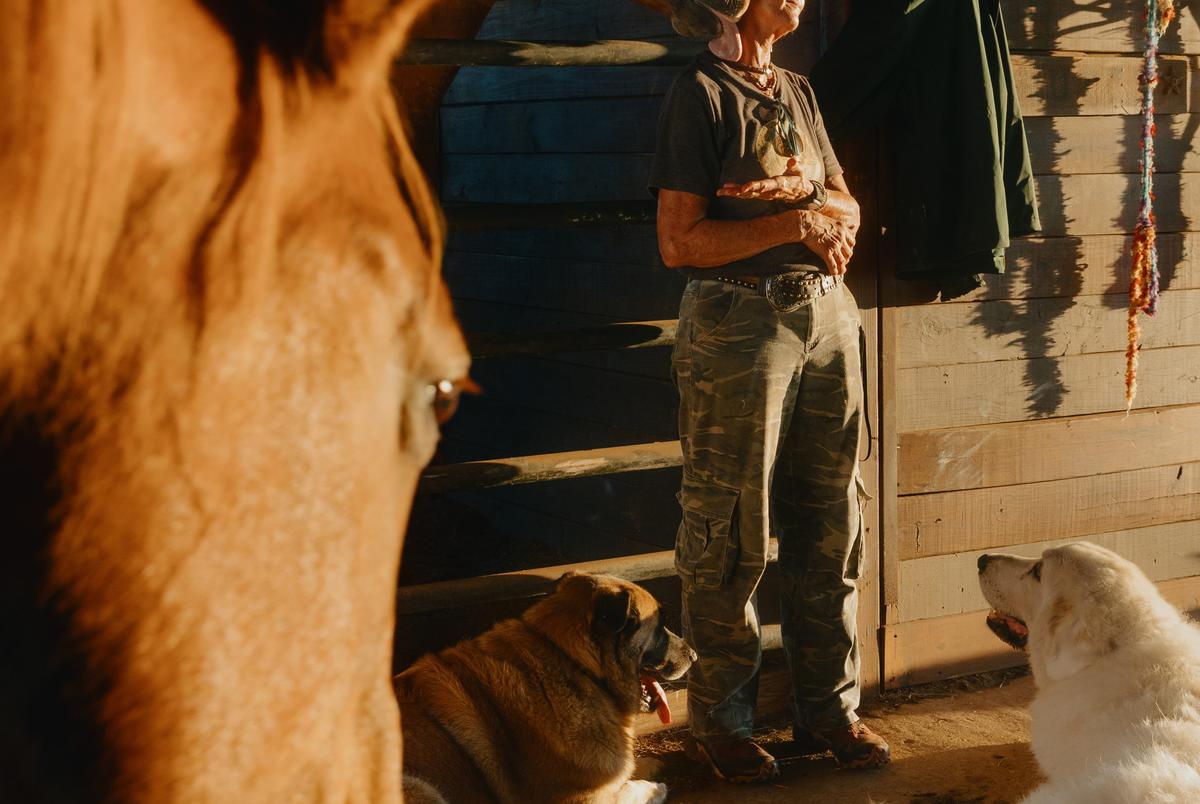
While state lawmakers have deliberated proposals during previous legislative sessions to authorize counties to establish noise ordinances comparable to those enforced by municipalities, they have failed to reach consensus on a bill. Cheryl Shadden, a neighbor of Lakey who has lived in Hood County for approximately 40 years, contends that this absence in the state’s policies places rural Texans in a vulnerable position.
“Therefore, if one resides in a large city, it follows that ‘We will implement additional safeguards because of the sheer number of you; however, because you are merely a small town spanning two square miles, you do not merit any safeguards?'” she questioned. “How does that calculation make sense?”
Credit: Shelby Tauber for The Texas Tribune
The Noise “Penetrates Your Being”
As the November vote approaches, numerous residents express feeling entrapped, citing their apprehension that their property values have diminished due to the persistent disturbances.
Donna Adair, aged 65, resides in a brick residence featuring a cozy backyard outbuilding converted into a rockhounding workshop. Her driveway is adorned with vibrant red crepe myrtles, and her lawn is embellished with multi-colored birdhouses. She expresses a longing for the peace she once experienced reading on her porch swing.
Selling her property is not an option for her. “I could not ethically bring myself to do it,” Adair said. “It is morally wrong to possess a problem without disclosing it to others. While it is not an act of commission, it is a transgression of omission.”
Approximately one mile away, Geraldine Lathers, aged 74, dwells in a mobile home located along the road from the cryptocurrency installation. She states that she began taking vitamin D supplements in lieu of going outside ever since the persistent drone of the fans began two years ago. She has included the supplements with her medications for vertigo episodes, severe headaches, and hypertension, conditions that she claims originated the previous year.
“It is utterly dreadful,” Lathers commented from within her living room. “The noise is so obtrusive that it induces nausea; it penetrates your very core.”
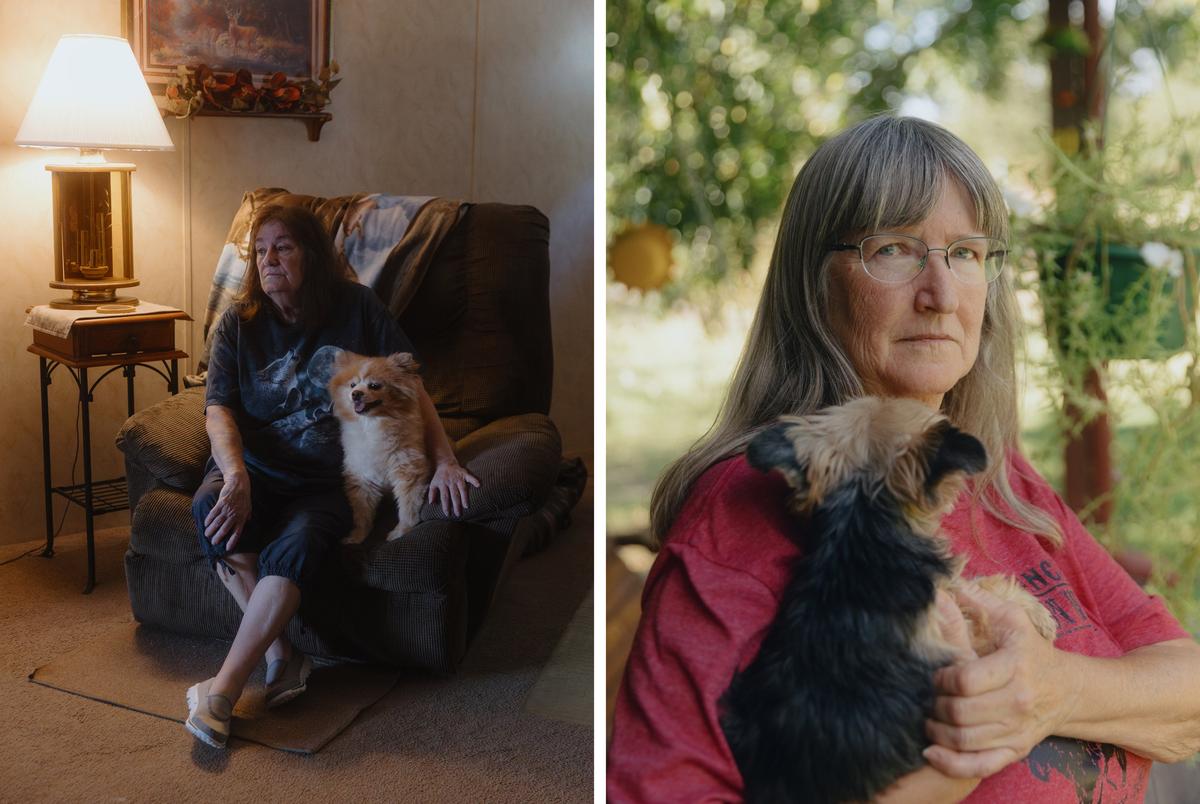
Credit: Shelby Tauber for The Texas Tribune
However, what elicits the most profound sense of sorrow in her is the diminished frequency of her family’s visits on account of the noise.
She explained that her grandchildren previously spent their Sunday afternoons in her backyard when her expansive family – she currently has 23 grandchildren and 20 great-grandchildren – frequently convened for barbecues. Now, she said, they do not visit as frequently as they once did. The parents are unwilling to expose their children to the persistent disturbances, she states.
Lathers states that the two bounce houses that they formerly inflated for the children are now stored in the shed. “They no longer go outside,” she said.
Therefore, Lathers indicates that she intends to vote in favor of establishing Mitchell Bend in November, despite not being particularly enthusiastic about the concept.
“I will vote in favor of it if it will eliminate the disturbances,” she declared as she petted her dog, Gizzmo. “I do not genuinely desire to reside in a city, but what recourse is available to you?”
Disclosure: Texas Blockchain Council has been a financial supporter of The Texas Tribune, a nonprofit, nonpartisan news organization that is funded in part by donations from members, foundations and corporate sponsors. Financial supporters play no role in the Tribune’s journalism. Find a complete
list of them here.
The wait is over! The full
TribFest
program is here. Join us Nov. 13–15 in downtown Austin and hear from 300+ thinkers, leaders and change-makers shaping Texas’ future. TribFest gives you a front-row seat to what’s next, with 100+ sessions covering education, the economy, policy, culture and more.
Explore the program.
TribFest 2025 is presented by JPMorganChase.