
State regulators overseeing securities are raising concerns about proposed legislation that could significantly alter the rules governing the digital asset market in the United States.
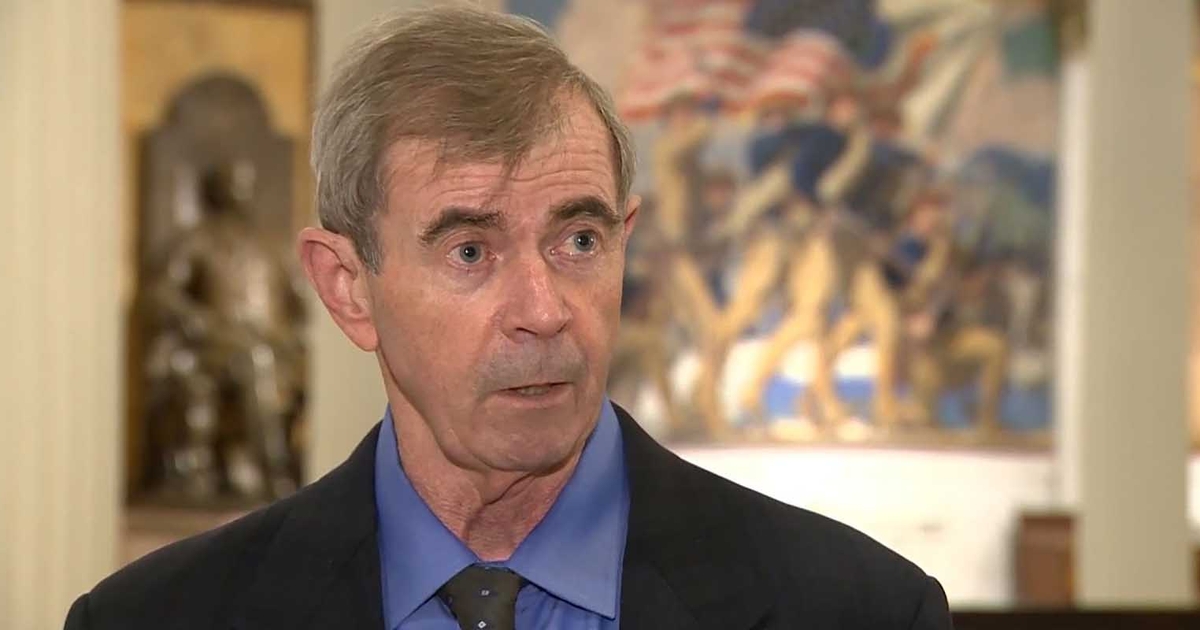
In a formal communication addressed to Senators Tim Scott, Elizabeth Warren, and Ed Markey, Massachusetts Secretary of the Commonwealth William Galvin warned that the proposed bill, if enacted, could spell “disaster for millions of savers,” impacting financial assets far beyond just cryptocurrencies.
Galvin’s critique centers on the “Responsible Financial Innovation Act of 2025,” which aims to reshape the regulatory responsibilities for digital assets between the Securities and Exchange Commission (SEC) and the Commodity Futures Trading Commission (CFTC).
Senator Cynthia Lummis initially presented this legislation in 2022. With Republicans now controlling both Congressional chambers and the Executive Branch, its chances of approval are greater than before. Furthermore, in July, the House of Representatives
approved the Clarity Act
, which represents their interpretation of an adjusted regulatory landscape for digital assets. Senate Republicans introduced their version of the Responsible Financial Innovation Act in draft form during September.
Galvin asserts that the RIFA legislation has an “unacceptable impact” on how “real-world assets” are treated at the state level. He urged Congress to revise specific parts of the bill to “preserve state anti-fraud authority.”
Galvin claims that one provision would undermine state authority “over a broad spectrum of high-risk securities, encompassing abusive penny stocks and microcap stocks.” Another area of concern is what he describes as a “misguided attempt” to reduce oversight of “tokenized ‘real-world assets,’ including real estate and other contractual rights.”
The proposed legislation would designate the CFTC and SEC as the primary bodies responsible for enacting rules affecting operations that Galvin’s office has overseen for decades.
“A fleeting reference…to a study of possible ‘fraud and false claims’ is insufficient, and the absence of state involvement is unacceptable,” the letter stated.
In addition,
a separate letter bearing the signatures of 28 academic experts
in the field of securities and financial regulation, the North American Securities Administrators Association (NASAA) also urged Congress to reject elements of the proposed laws which they argue could weaken regulators’ capacity to prevent fraud.
Specifically, the signatories are focused on Section 105, which they say would “redefine the investment contract” test often utilized by federal and state regulators to shield investors from “new and emerging fraud,” including schemes like pig butchering, Ponzi schemes, fraudulent promissory notes, real estate scams, and deceptive oil and gas offerings.
“Given the current surge in fraud against American investors, especially older individuals, Congress should refrain from pursuing policies that would make it simpler for fraudsters to evade accountability and harder for regulators and law enforcement to act,” the letter said.
Ben Edwards, a professor at the William S. Boyd School of Law at the University of Nevada, Las Vegas, was among the signatories. He told
WealthManagement.com
that tampering with the investment contract test would be “dangerous” because it helps identify misconduct that might otherwise fall outside the purview of securities laws.
“One potential consequence is that if you restrict the test or diminish the capacity of state securities regulators to pursue wrongdoers, it could enable swindlers and con artists to more easily evade accountability,” he stated.
Earlier this year,
state securities regulators cautioned federal legislators
against excluding states from crypto enforcement. A letter from NASAA President Leslie Van Buskirk to senators asserted it would be a “decision with substantial, unfavorable repercussions for Americans.”
In an interview with
WealthManagement.com
,
Alabama Securities Commission Director Amanda Senn explained that without “explicit authority” for states to investigate crypto-related fraud, investors in those states “will be without recourse” in pursuing justice, with numerous cases likely going unexamined due to the sheer number of scams.
“These are our neighbors and loved ones,” she emphasized. “They’re members of our communities, and no one wants to feel helpless in assisting a victim of fraud or crime.”