
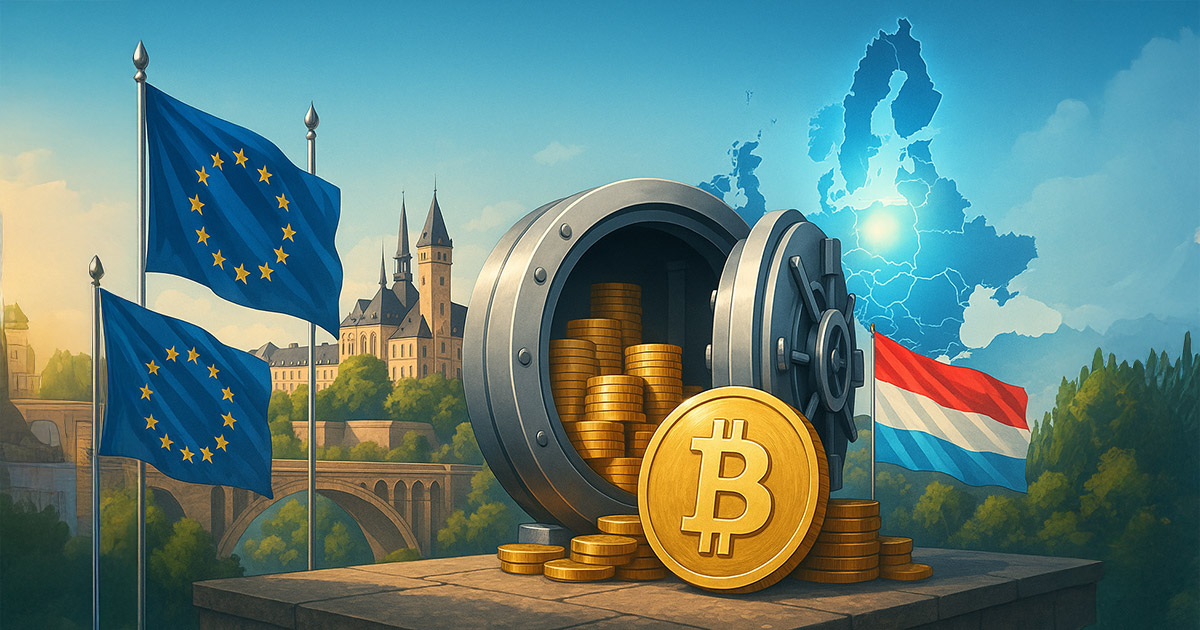

Luxembourg has broken ground as the first nation within the Eurozone to incorporate Bitcoin into its investment strategy via its sovereign wealth fund. Finance Minister Gilles Roth disclosed during the 2026 national budget presentation on October 9th that 1% of the $730 million Intergenerational Sovereign Wealth Fund (FSIL) will be allocated to Bitcoin exchange-traded funds (ETFs).
This investment represents a pivotal moment in the country’s financial blueprint, signaling a progressive movement towards diverse and innovative asset management practices.
According to Roth, this decision is in line with the FSIL’s revamped framework, which received approval in July 2025. The revised guidelines now permit up to 15% of the fund’s portfolio to be invested in alternative asset classes, spanning from private equity and real estate to digital currencies, including cryptocurrencies.
A Eurozone Pioneer
Jonathan Westhead, the head of communications at the Luxembourg Finance Agency, stated that the 1% allocation underscores the nation’s belief in the increasing stability of digital assets. He also emphasized that it “sends a strong signal regarding Bitcoin’s significance in the future of finance.”
He clarified that choosing Bitcoin ETFs as the investment vehicle was a strategic move to reduce potential risks while ensuring compliance with Luxembourg’s investment laws, particularly considering the rigorous standards upheld by the FSIL.
The FSIL, established in 2014 with the purpose of safeguarding national wealth for generations to come, has historically focused on secure investments, such as high-grade bonds. The policy adjustment in July marked a significant shift, broadening the fund’s investment scope to encompass higher-yielding, risk-managed assets that mirror the dynamics of global financial innovation.
Luxembourg’s commitment distinguishes it as the first EU member to actively pursue a policy-backed investment in Bitcoin. While other European nations, such as Finland and the UK, possess Bitcoin acquired through law enforcement seizures, Luxembourg’s approach is deliberate and strategically planned.
On a global scale, only a select few nations have taken similar steps. El Salvador stands out as the most notable example of a sovereign country directly holding Bitcoin as part of its national reserves. Other countries, including Bhutan, Georgia, and Norway, have also gained exposure to Bitcoin through sovereign or institutional funds.
Growing Institutional Interest
This development in Luxembourg coincides with a larger trend of growing institutional adoption of Bitcoin ETFs across the globe. Currently, US spot Bitcoin ETFs collectively manage roughly $168 billion in net assets, representing approximately 7% of Bitcoin’s overall market capitalization.
Sovereign entities have also joined the movement. The Wisconsin Investment Board in the U.S. previously disclosed holdings worth $321 million in BlackRock’s iShares Bitcoin Trust (IBIT) earlier this year, while Abu Dhabi’s Mubadala Investment Company unveiled a position valued at $436.9 million.
Luxembourg’s regulatory landscape has been crucial in facilitating this investment. In July, the country’s financial regulator, the Commission de Surveillance du Secteur Financier (CSSF), released updated guidelines that permitted the inclusion of virtual assets in alternative investment funds. This paved the way for the FSIL’s new investment mandate.