


The sustained rally of Bitcoin, achieving new heights this October, has reignited discussions about its potential to reach $150,000 in a significant, prolonged upward trend.
This optimistic outlook is supported by increased activity in derivatives trading and substantial inflows into Exchange Traded Funds (ETFs). These factors indicate that institutional interest is playing a crucial role in redefining the peak of the current market cycle, rather than merely fueling a short-lived speculative upswing.
Derivatives Market Signals Bullish Sentiment
Analysis from Derive.xyz reveals that options traders are decidedly optimistic, anticipating further gains for the leading cryptocurrency.
Data obtained by CryptoSlate shows a strong upward bias in contracts set to expire before November. Pricing suggests traders are anticipating a potential surge to as high as $150,000.
Dean Dawson, the head of research at Derive, believes this positioning reflects more than just general market optimism. He stated:
“We’re observing a setup where Bitcoin volatility is primed for a significant move. The implied volatility across short and medium-term expiration dates has jumped to monthly highs, signaling increased expectation of substantial price fluctuations ahead.”
This anticipated movement is not occurring in isolation. Market participants are factoring in macroeconomic realities, particularly the widely anticipated quarter-point interest rate cut by the Federal Reserve this month. Polymarket traders are pricing in a near-certain likelihood of this happening. This probability is reverberating throughout assets sensitive to liquidity conditions.
Lower interest rates typically decrease the appeal of holding cash and bolster the attractiveness of riskier assets, like Bitcoin. Data suggests that volatility tends to follow liquidity, which, at the present time, appears to be on the rise.
Strong Inflows Into Spot Bitcoin ETFs
The resurgence of liquidity is particularly evident in spot Bitcoin ETFs. They are viewed as a key indicator of institutional confidence in Bitcoin.
So far this month, these 12 investment funds have collectively absorbed over $5 billion in fresh capital. They are now poised to exceed the record $6.49 billion reached last November when Bitcoin initially surpassed the $100,000 mark.
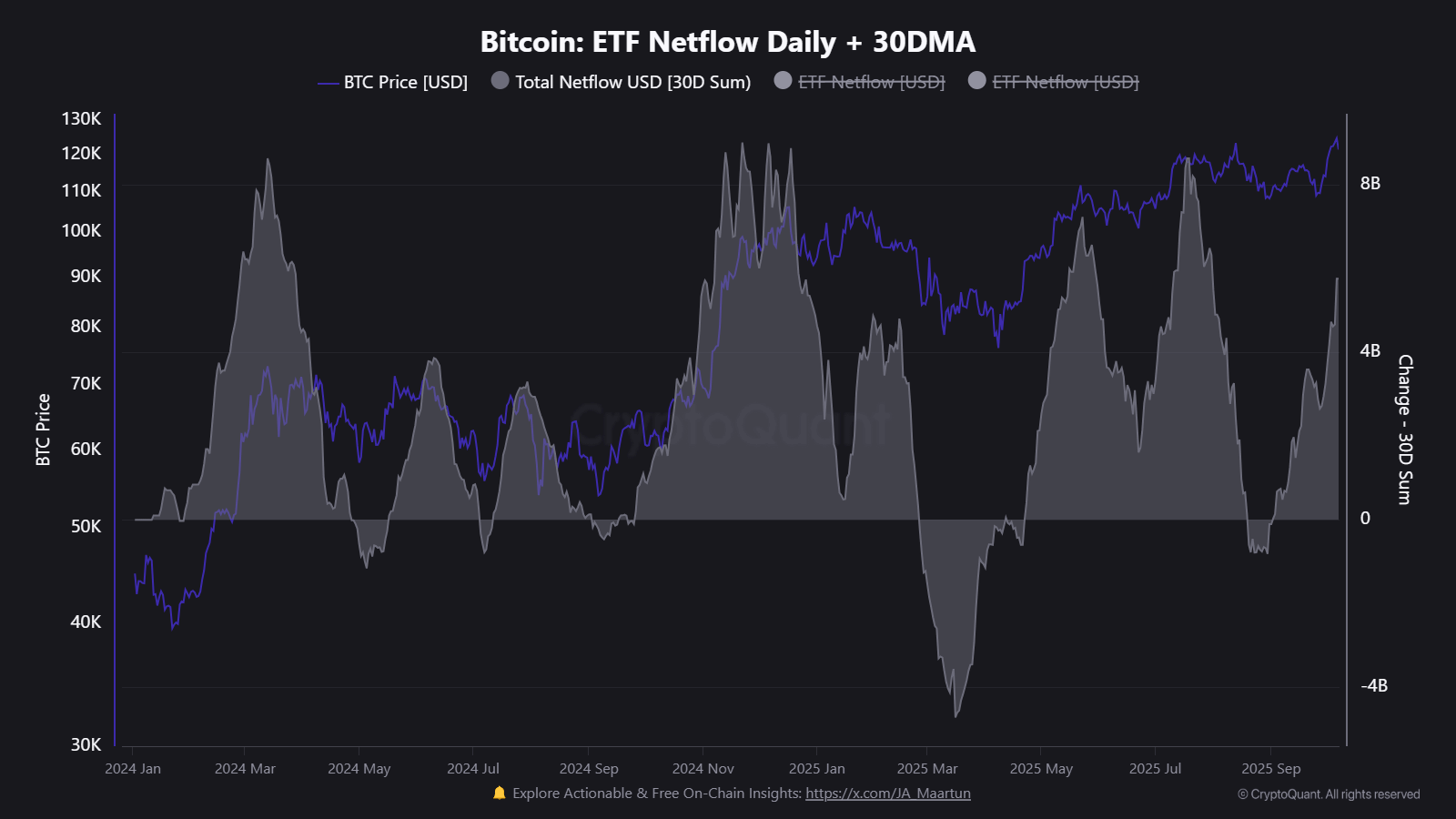
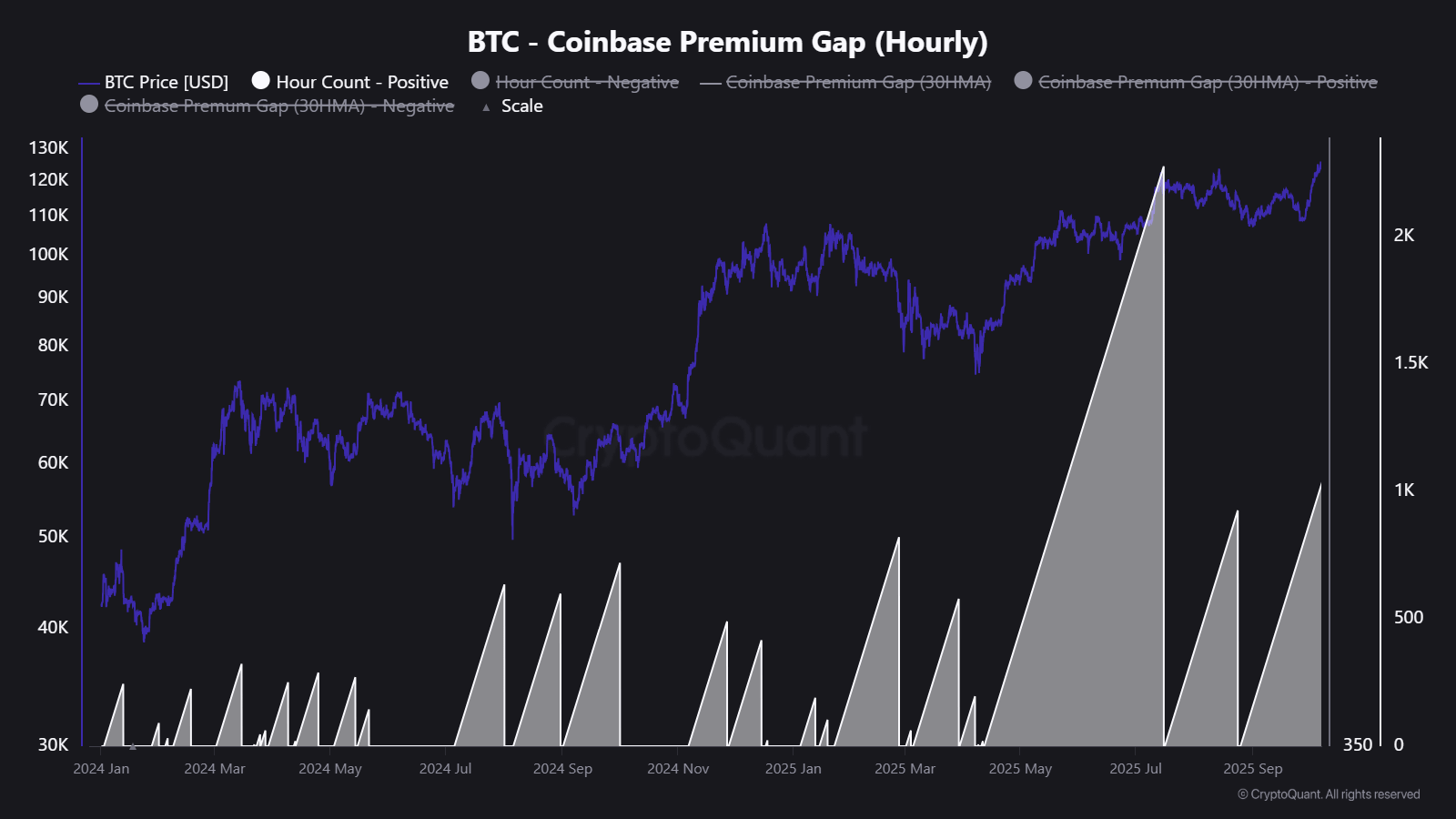
CryptoQuant data reinforces this perspective, noting that the Coinbase Premium Index, an indicator of US institutional demand, has remained positive for an uninterrupted 42 days, highlighting consistent accumulation by regulated investment firms.
According to a report from K33 Research, Bitcoin has yielded an average 30-day return of 8.2% during periods of positive ETF inflows. When monthly inflows exceed 20,000 BTC, this average soars to 23.6%, contrasting sharply with a -4% return observed during outflow periods between 2020 and 2023.
The key implication is that significant capital channeled through structured investment products leads to a reduction in the circulating supply of Bitcoin, creating scarcity. If this trend persists, current inflow momentum could potentially propel Bitcoin towards a price range of $130,000 to $150,000, even without a speculative frenzy.
Decreasing Bitcoin Supply on Exchanges
Another compelling indicator of Bitcoin’s potential rise to $150,000 is the shrinking supply held on cryptocurrency exchanges.
Data from Glassnode reveals that exchange reserves have declined to a multi-year low of 2.838 million BTC, representing 14.24% of the total supply. This observation is further supported by Bitwise’s report that large Bitcoin holders withdrew 49,158 BTC last week, marking the 143rd-largest outflow ever recorded.
The company stated:
“While these movements could reflect internal exchange rebalancing, the combination of rising buying volume coupled with declining exchange balances reinforces the validity of this observation.”
Furthermore, the asset management firm noted that realized profits among short-term Bitcoin holders reached only $3.07 billion last week, significantly less than a third of what was seen at the 2021 peak.
In essence, the market is progressing upwards without a corresponding rush to sell. Bitcoin are being withdrawn from exchanges but not returning in significant volume as prices rise. This scenario establishes a classic setup for supply compression, which can lead to accelerated price appreciation.
Favorable Macroeconomic Conditions for Bitcoin
Beyond the specific data within the cryptocurrency market, the broader global environment is subtly strengthening the foundations for a potential Bitcoin rally.
According to Bitwise, the ongoing geopolitical uncertainty and persistent inflationary pressures have undermined stability in the United States. Simultaneously, global debt levels have risen sharply, putting pressure on fiat currencies and reigniting demand for hard assets like gold.
Gold, a long-standing safe-haven asset, has surged by 50.03% year-to-date, outperforming Bitcoin thus far. However, this impressive performance has divided investor opinion.
One perspective suggests that gold’s rally is overextended, leading to a shift in allocations towards alternative assets such as Bitcoin, which is viewed as a similar hedge against currency devaluation but with a lower valuation premium. The opposing view anticipates that gold will remain the dominant asset, underpinned by central bank accumulation, retail buying in China, and policy uncertainty surrounding President Trump’s trade agenda.
Regardless of which perspective prevails, the liquidity outlook generally favors both assets. Central banks appear inclined to maintain accommodative monetary policies, including lower interest rates, potential yield curve controls, and expanded balance sheets, which could inject substantial capital into financial markets. Liquidity often flows towards the fringes of institutional risk mandates, where Bitcoin is increasingly being positioned.
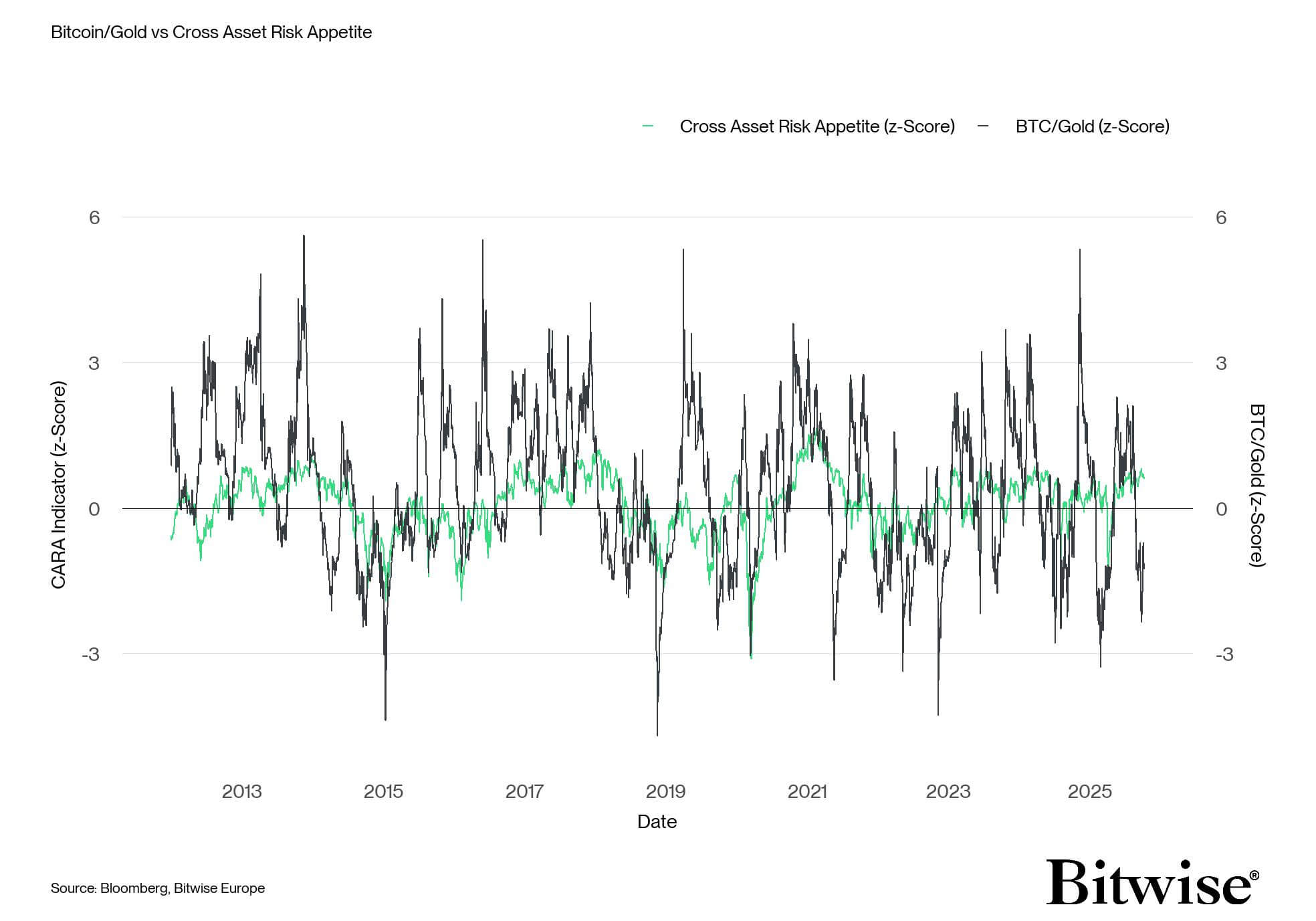
Consequently, investors on both sides of the “store-of-value” debate could converge towards similar investment behaviors. Those reallocating from gold may move into digital assets, seeking greater upside potential. Simultaneously, those seeking higher-risk/higher-reward investments will still find Bitcoin supported by the same broader liquidity conditions.
Ultimately, both narratives point to the same conclusion: renewed capital flows into digital assets, driven by a global quest for secure investment options during a period of widespread monetary expansion.