
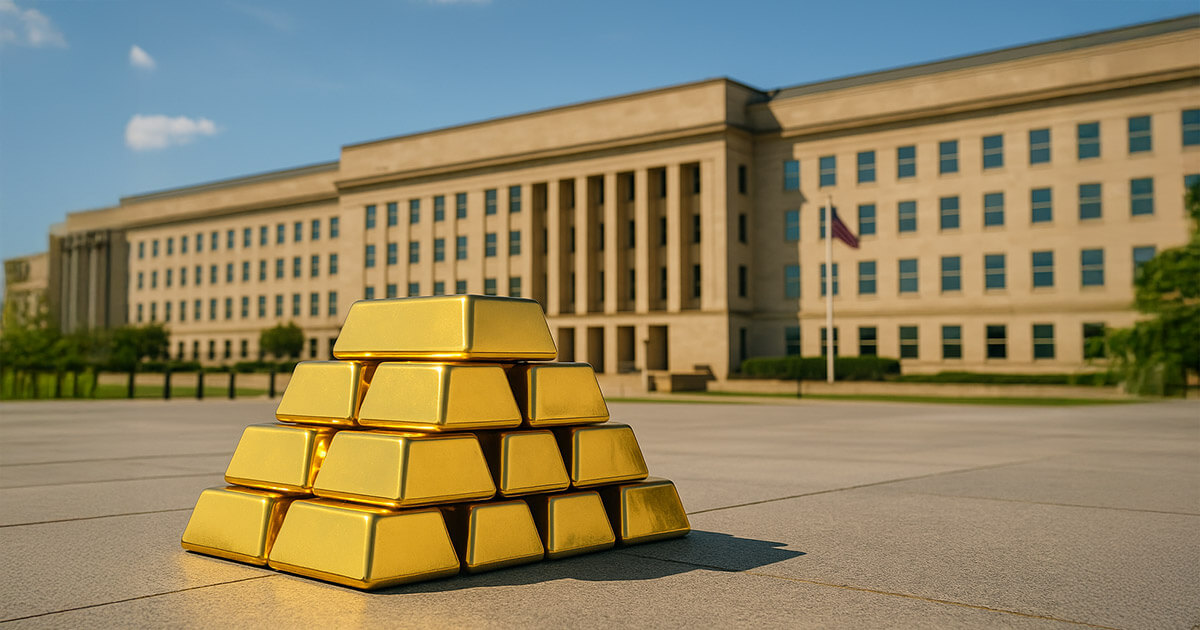

Typically, the U.S. Department of Defense steers clear of commodity speculation. However, when vital national
interests are concerned, standard procedures are often modified. According to reports from the Financial Times,
the Pentagon has initiated a significant investment, allocating $1 billion to build up reserves of crucial
minerals, including rare earth elements.
This initiative encompasses a range of materials, from rare earth minerals to essential metals vital for the
production of electric vehicles, advanced fighter aircraft, and semiconductors. The core objective is to
bolster domestic supply chain robustness and decrease reliance on the current supply chain dominated by China,
which has demonstrated instability.
This undertaking to secure up to $1 billion worth of strategic minerals
is part of a larger, coordinated global strategy to challenge China’s market dominance. This represents a
pivotal strategic shift reminiscent of Cold War-era resource stockpiling programs. In the past, the focus was on
oil; today, the attention is on lithium, cobalt, nickel, and rare earth elements—key components used in
Teslas, missile navigation systems, smart bombs, and high-frequency radar technology.
While concerns about the stability of supply chains have been present for several years, they intensified when
China recently implemented export restrictions on rare earth minerals and other vital materials. This decision
triggered significant volatility across international markets, impacting even Bitcoin
and crypto. Donald Trump voiced his concerns on
Truth Social, stating:
“China is “becoming very hostile, and sending letters to Countries throughout the World, that they want to
impose Export Controls on each and every element of production having to do with Rare Earths, and virtually
anything else they can think of, even if it’s not manufactured in China.”
The Pentagon’s initiative is not about speculation; rather, it’s a proactive measure for defense. This marks
one of the most significant mineral procurement efforts in recent decades, and the U.S. is not acting alone.
European nations and their allies are also expediting their efforts to build up reserves, preparing for both
potential war risks and the ongoing energy transition.
China Throws Markets a Lifeline
In a recent development on Sunday, Beijing seemed to moderate its position. China defended its recent export controls, characterizing them as “legitimate”
and consistent with international law. They emphasized that the controls are designed to protect global peace
and stability, rather than to instigate economic conflict.
Importantly, China has clarified that these controls are not absolute bans and that export applications meeting
the necessary criteria will still be approved. Communication channels with key trading partners will also
remain open. Chinese officials stated that the controls do not equate to outright export prohibitions, and
applications that meet the required standards will be approved.
This more conciliatory tone is expected to ease investor concerns. With China indicating a willingness to show
flexibility and engage in negotiations, analysts are reassessing earlier risk assessments. The potential for
renewed dialogue and a less aggressive stance from Beijing could stimulate a relief rally across various
commodities, including gold, and even boost risk-on assets such as Bitcoin if supply chain fears diminish and
global trade tensions ease.
Implications for Gold and Bitcoin from Rare Earth Moves
Whenever governments increase stockpiles and resource nationalism becomes prominent, gold’s reputation as a
reliable safe-haven asset is reinforced. However, this situation presents unique nuances. The drive to secure
battery metals and rare earth minerals indicates that “strategic value” is extending beyond traditional gold
reserves.
Commodity investors may consider adjusting their portfolio strategies, with gold maintaining its role as a
hedge-of-last-resort but now joined by new “security minerals” as protection against geopolitical
instabilities.
If these measures intensify, gold could benefit from renewed safe-haven investments, especially if China
retaliates and financial markets experience turbulence. Conversely, if China’s more flexible approach leads to
positive discussions and supply chain stabilization, the potential for a gold rally may be moderated by a
broader market recovery.
Bitcoin’s appeal as “digital gold” has always centered around its scarcity, resistance to censorship, and
independence from the physical realm.
Yet, the Pentagon’s mineral accumulation highlights one of Bitcoin’s inherent contradictions: it remains immune
to supply chain disruptions but is still susceptible to broader risk-off sentiment. Should trade tensions
worsen, investors might shift toward USD, gold, and possibly Bitcoin, seeking refuge from fluctuations in
currencies and commodities.
Bitcoin miner holdings typically increase during periods of significant macro uncertainty, although Bitcoin
itself might trade more like a risk-on tech asset in the near term. Meanwhile, disruptions in hardware supply
chains (chips, mining rigs, semiconductors) could impact Bitcoin mining economics but will not affect the core
principle of its scarcity.
If China continues to adopt a conciliatory stance, crypto markets and risk assets may see a recovery as the most
pessimistic scenarios are avoided. As The Kobeissi Letter posted:
“If President Trump responds and de-escalates on Sunday, markets are set for a big jump on Monday.”
With the Pentagon and European nations stockpiling minerals, the definition of “store of value” is evolving.
Gold is not becoming less important, but it is facing competition. Bitcoin’s attraction persists, especially
for investors wary of government intervention or physical constraints.
While $1 billion might be relatively small in the context of global resources, the symbolism is significant. As
Gold Telegraph on X commented:
“The race is on”