


Bitcoin miners are encountering heightened financial challenges.
Following a significant market downturn amounting to $19 billion, mining entities have started transferring substantial quantities of Bitcoin to crypto exchanges. This behavior often indicates a potential increase in selling activity.
Data sourced from CryptoQuant reveals that between October 9th and 15th, mining-related wallets moved 51,000 BTC, valued at over $5.6 billion, specifically to Binance. The largest single-day transaction occurred on October 11th, involving more than 14,000 BTC. This represents the most considerable deposit from miners since July 2024.
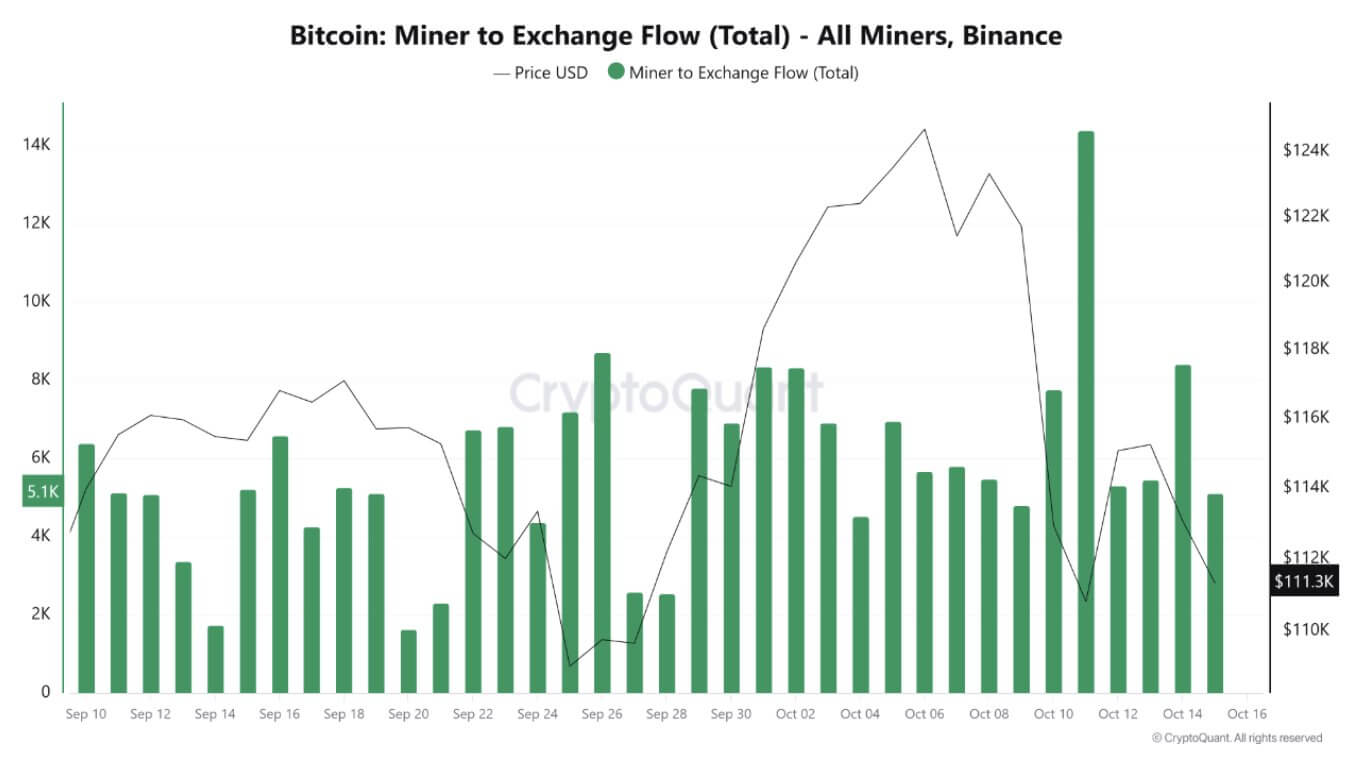
Selling the reserves
These abrupt increases in transfers rarely occur independently. Instead, they typically surface when miners require readily available funds to manage escalating operational expenses or to mitigate the impact of market price fluctuations.
Analysts interpret these movements as a negative signal within the blockchain, suggesting that miners are concluding periods of long-term accumulation and are gearing up for potential sales.
Blockchain researcher ArabChain noted that substantial movements from miner wallets typically signal either the immediate sale of assets or preparations for obtaining loans using Bitcoin as collateral.
According to the researcher:
“At times, miners deposit digital assets to secure derivative contracts or obtain funding. In some instances, such transfers are purely technical adjustments, representing movements between wallets associated with mining operations and trading platforms to fulfill regulatory or operational demands.”
This shift in strategy marks a significant change for the Bitcoin mining industry. For much of the current year,
miners generally accumulated Bitcoin, anticipating that constrained supply following the halving event would push prices upward.
However, miners are now responding to opposing factors, as diminished profit margins and escalating network complexity put significant pressure on their financial performance.
A tougher race to every block
Bitcoin mining difficulty, which gauges the complexity of discovering a new block, peaked above 150 trillion in September following seven consecutive upward adjustments.
According to Cloverpool data, the most recent epoch, which ended at block 919,296, showed a reduction of 2.73%, offering temporary relief after months of consistent increases.
Difficulty adjustments take place roughly every two weeks, recalibrating the computational challenge to maintain an average block discovery time near Bitcoin’s target of ten minutes.
An increase in difficulty indicates that more miners are competing for rewards, whereas a decrease suggests that less efficient miners have ceased operations. However, even a minor reduction has not led to improved profitability.
According to Hashrate Index, the hashprice, representing revenue per terahash of computing power, has decreased to around $45, its lowest level since April.
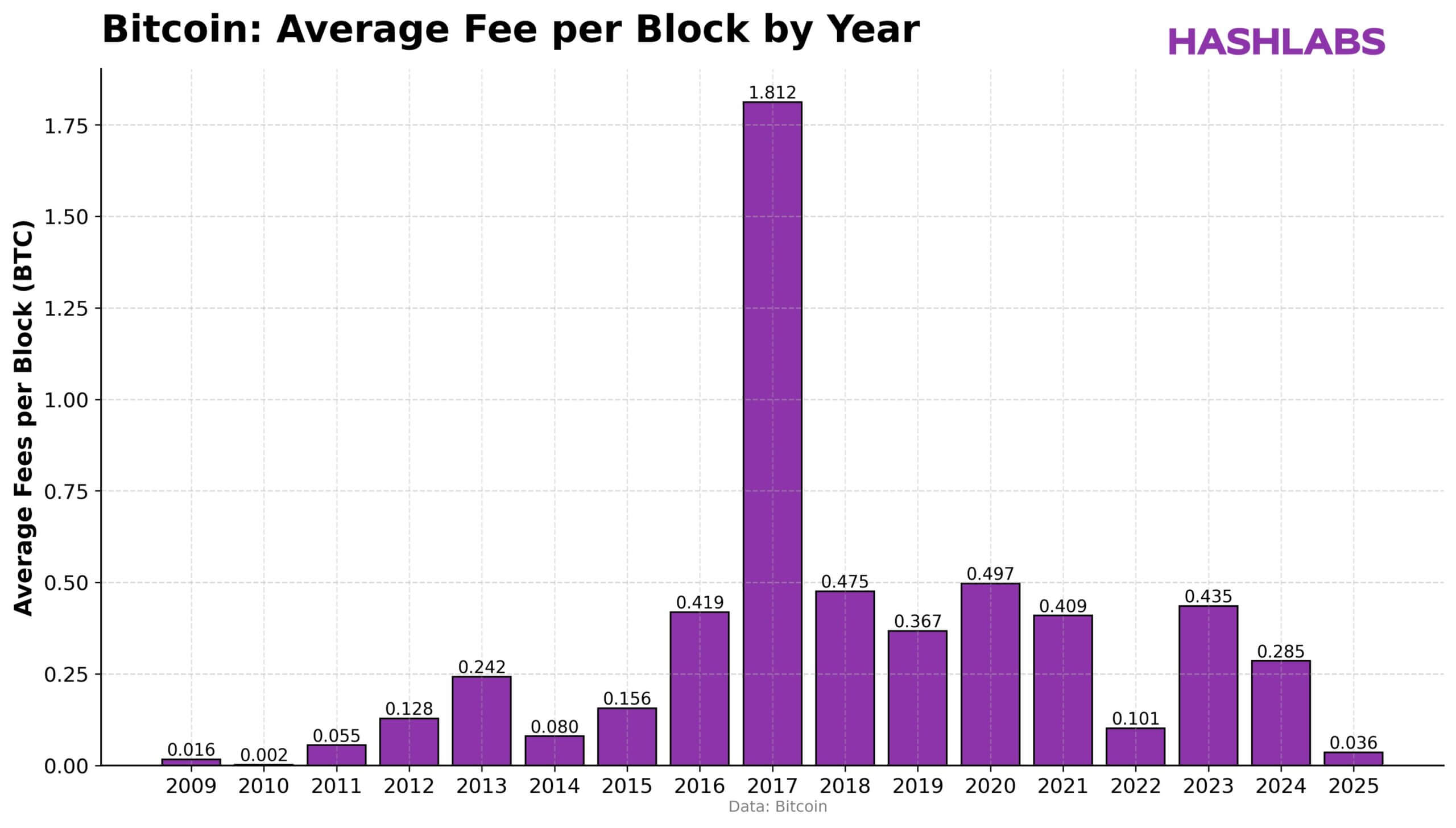
Concurrently, transaction fees, which should counterbalance diminished rewards, have also declined significantly. Throughout 2025, the average fee per block has been 0.036 BTC, the lowest since 2010.
Bitcoin mining analyst Jaran Mellerund commented:
“The neglect of transaction fees by so many Bitcoin miners is truly puzzling. These fees are rarely discussed, despite their growing importance. In the coming decade, they will constitute almost your sole revenue source.”
With the Bitcoin halving in April reducing block rewards to 3.125 BTC, miners now operate in an increasingly competitive environment. Each additional unit of computing power reduces the returns for all participants.
Numerous smaller mining operations are already operating at a loss, particularly those using older, less efficient hardware.
AI presents a lifeline
Faced with minimal profit margins, significant mining firms are exploring a more lucrative
alternative: providing AI and high-performance computing (HPC) hosting services.
Over the past year, companies such as Core Scientific have reconfigured their extensive data centers—already
optimized for power consumption, cooling, and high-speed internet—to accommodate the demanding computational requirements of AI workloads.
Hashlabs reported that a 1-megawatt (MW) mining site using efficient hardware at approximately 20 joules per terahash (J/TH) can generate around $896,000 in Bitcoin revenue annually, based on a BTC price of $100,000.
In contrast, the same MW capacity leased to AI clients for intensive computing tasks can yield up to $1.46 million annually through stable, contract-based revenue.
Nico Smid, the founder of Digital Mining Solutions, observed:
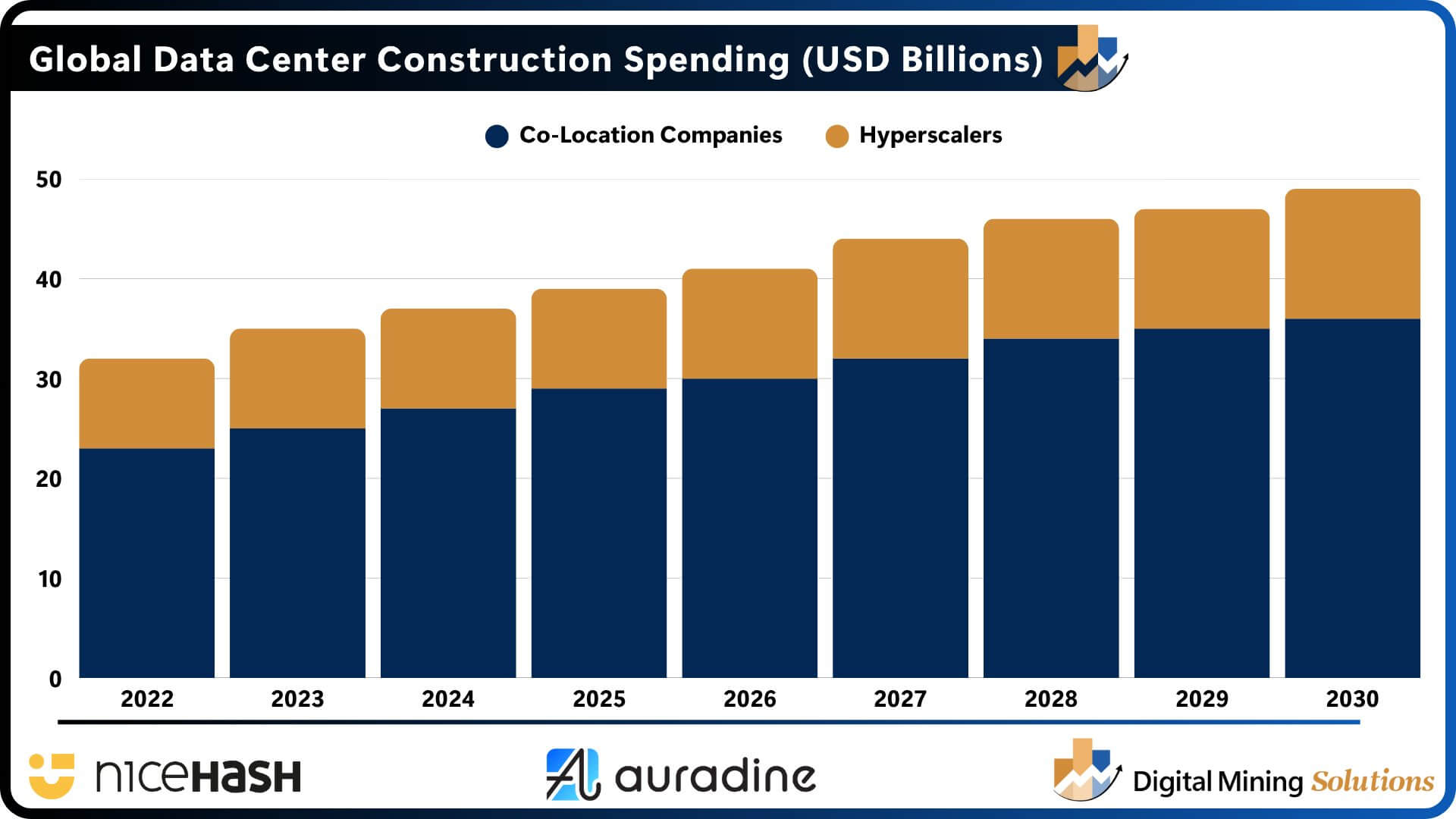
“The increasing demand for AI and high-performance computing (HPC) is reshaping the global computational environment, significantly impacting Bitcoin miners. These sectors, initially distinct, are now competing for critical resources: electricity, infrastructure, personnel, and financial backing.”
This strategic adjustment does not indicate a complete abandonment of Bitcoin mining. Instead, miners are diversifying by leveraging their existing infrastructure, once dedicated solely to securing the blockchain, to participate in the broader computing economy.
Practically, miners can sustain operations through hosting contracts while awaiting more favorable conditions in the cryptocurrency market.
What it means for Bitcoin
In the immediate term, miner selling adds downward pressure to an already uncertain market.
Historically, consistent outflows from miner wallets have been followed by periods of market consolidation or capitulation. However, the long-term consequences may be more significant.
If mining facilities continue their transformation into combined AI and crypto data centers, Bitcoin’s security framework, which relies on sustained hashpower incentives, could face fundamental changes.
As the profitability of block rewards diminishes, Bitcoin’s hash rate may become increasingly reliant on entities whose primary business is no longer exclusively Bitcoin mining.