
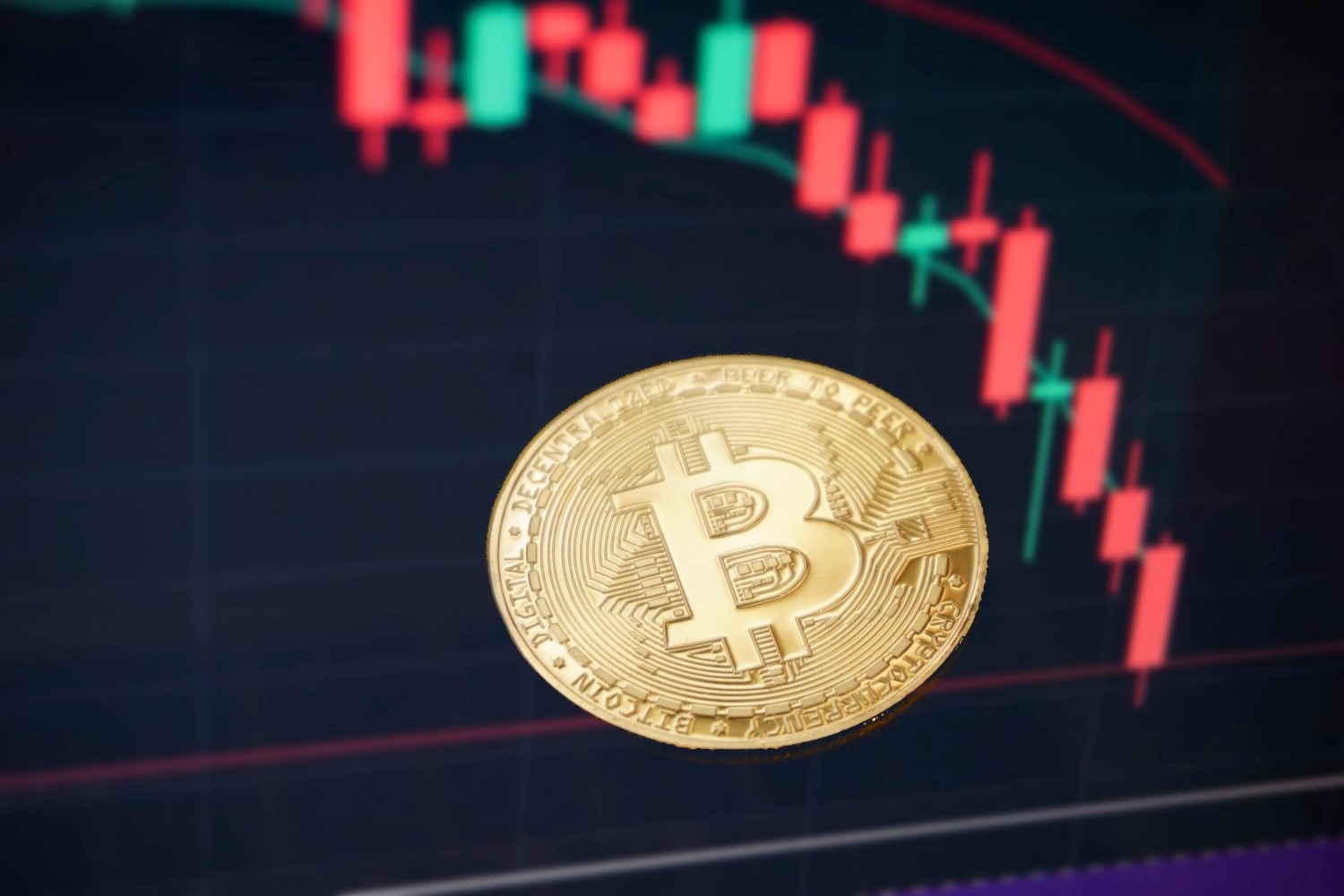
On August 12, it was revealed that consumer inflation for July eased to 3.4%, and the following day, producer prices remained steady, defying predictions of a 0.2% increase. This decline in inflation may provide the Federal Reserve with the flexibility to halt interest rate hikes, a shift that typically boosts Bitcoin prices.
Conversely, Bitcoin (CRYPTO:BTC) experienced a drop following the reports, tumbling from an intraday peak of $65,234 to $63,304 after the consumer data release. In contrast, both the Nasdaq and S&P 500 indices saw gains from the same information. So, what’s causing Bitcoin to decline despite favorable news?
Bitcoin’s Decline Throughout 2026
Currently, Bitcoin’s market capitalization stands at approximately $1.28 trillion, roughly half of its peak value of $126,000 achieved last October, significantly lower than the $119,400 price of a year ago.
At the beginning of January, Bitcoin started at $88,764 and experienced a 34% decline in the following six months, concluding June at $58,566, its lowest valuation in 21 months. The Federal Reserve’s continuous discussion on raising rates had a significant impact on this downturn, alongside a record-breaking outflow of $4 billion from spot Bitcoin ETFs in June.
Currently, 45% to 46% of Bitcoin holdings are valued at less than what buyers initially paid—around 9 million coins. Those who entered the market in the last six months had an average purchase price of $68,700, as per Glassnode, indicating they’re down 7.2%. Many tend to sell whenever prices approach their breakeven point, explaining why Bitcoin has remained within the $58,000 to $68,000 range since June.
The current BTC price is below all key moving averages monitored by traders, including the 200-day moving average near $71,900, a situation that has persisted for over seven months. Additionally, perpetual futures trading has fallen to a three-year low, and the Fear and Greed Index indicates a level of 29, reflecting widespread market fear.
Why the Inflation Data Didn’t Boost Bitcoin

Consumer prices saw a 3.4% increase year-over-year in July, down slightly from 3.5% in June. Core inflation also decreased to 2.5%. Producer prices remained flat, instead of the anticipated 0.2% rise, with annual figures dropping from 5.5% to 4.7%. These stable readings from producers typically indicate a subsequent easing in consumer prices, which might have been expected to support Bitcoin’s value.
Nonetheless, Bitcoin showed little reaction to this news. After the consumer report, its price fell from a high of $65,234 to $63,304, and the subsequent producer data did not lead to any recovery.
As indicated by Glassnode, a lack of market response to positive developments serves as a warning sign. A stagnant market amidst good news suggests a shortage of buyers rather than a deficit of positive catalysts.
Additionally, traders have reduced the likelihood of a rate hike in September to 32%, down from over 75% a month earlier. They currently estimate a 63% chance of a pause following a decrease in payrolls by 23,000 in July. While short-term pressures have subsided, expectations for tighter policies by year-end remain at around 70%, signaling the anticipation of future rate increases before December.
Who is Currently Selling Bitcoin?

Consistent inflows into ETFs are being offset by over-the-counter (OTC) sales from miners and Strategy. While ETFs purchase from the open market—boosting Bitcoin’s price with each transaction—OTC sales occur privately in large amounts, bypassing public order books, meaning buying activity is reflected in prices while selling is not.
Miners are currently capitalizing on better revenue from renting out their computing capacity to AI firms as opposed to mining. Many are reallocating Bitcoin earnings towards data center expansions, resulting in $1.78 billion in sales this year.
Between August 3 and 9, Strategy sold 1,690 BTC at an average price of $64,262, marking its fourth disclosed sale this year and bringing the total to 6,948 BTC sold. Their remaining 840,447 BTC were purchased at an average price of $75,385, which means they are selling below their own cost by approximately $11,000. Similarly, crypto exchange Bullish reported a quarterly loss of $280 million, primarily due to a $244.6 million reduction in its Bitcoin assets.
ETF demand has been inconsistent throughout this period. Spot Bitcoin funds recorded $853 million in inflows for the week ending August 7— the strongest performance since April—then saw outflows of $144.6 million on August 10 and another $61 million on August 12. So far this year, those funds are facing $4.5 billion in net outflows.
Despite this, large holders have continued to accumulate. Wallets containing over 1,000 BTC hit a 2026 high of 3.06 million Bitcoin on August 8, representing a value of approximately $196 billion, indicating that large investors have been increasing their holdings while miners and corporations have been offloading their assets.
Bitcoin Price Outlook for the Rest of 2026
The Bitcoin price may stabilize between $60,000 and $66,000 as September approaches. Should it break out of this range, a downward shift is more probable. Although the chances of a September rate hike are down to 32%, traders still anticipate a tightening by the year’s end at nearly 70%. This situation diminishes the potential for rate cuts, which historically helped Bitcoin recover from similar scenarios.
On September 15, the Senate is set to vote on the CLARITY Act, and if it fails, it will eliminate one of the last potential regulatory catalysts for 2026. The Federal Reserve will meet the following day, where a hawkish tone could indicate forthcoming tighter monetary policy, possibly deterring buyers through Q4.
Some analysts predict Bitcoin may dip below $60,000, potentially reaching $55,000 before establishing a cycle low. Conversely, others believe the bottom may already have been hit, noting the minimal impact of the Coldcard hack and the CLARITY Act delay on price dynamics. Notably, the weekly RSI, which assesses the speed of selling, has been trending upwards even as prices fall, a trend observed before previous recoveries.
For any inquiries or corrections, contact [email protected].