
NEW YORK (AP) — Bitcoin has crossed the $100,000 mark for the first time this week, driven by a significant surge in the world’s premier cryptocurrency, particularly in the wake of Donald Trump’s election.
The cryptocurrency officially hit six figures on Wednesday night, shortly after the president-elect announced his plan to nominate Paul Atkins as the next chair of the Securities and Exchange Commission.
Since Trump’s successful bid for the presidency on November 5, Bitcoin has experienced a remarkable rise, going from $69,374 on Election Day to as high as $103,713 on Wednesday, according to CoinDesk. This new all-time high follows just two years after Bitcoin had dipped below $17,000 following the collapse of the FTX crypto exchange.
However, by Thursday afternoon, Bitcoin had fallen back below $100,000, remaining above $99,000 by 4 p.m. ET. While this rally has more than doubled Bitcoin’s value this year, some analysts continue to caution about potential investment risks associated with this fluctuating asset.
Here’s what you need to know.
What exactly is cryptocurrency?
Cryptocurrency has gained considerable traction in recent years, but many are still learning what it entails.
In simple terms, cryptocurrency is digital currency. It operates on an online network without a central authority, typically unbacked by government or banking institutions, with transactions recorded via blockchain technology.
Bitcoin is the largest and oldest cryptocurrency, though others such as Ethereum, XRP, Tether, and Dogecoin have also gained significant traction. Some investors perceive cryptocurrency as a digital alternative to traditional money, yet the majority of everyday transactions still rely on fiat currency like the dollar. Bitcoin’s price can fluctuate greatly based on broader market conditions.
Why is Bitcoin experiencing such growth?
Much of the recent surge can be attributed to the results of the U.S. presidential election.
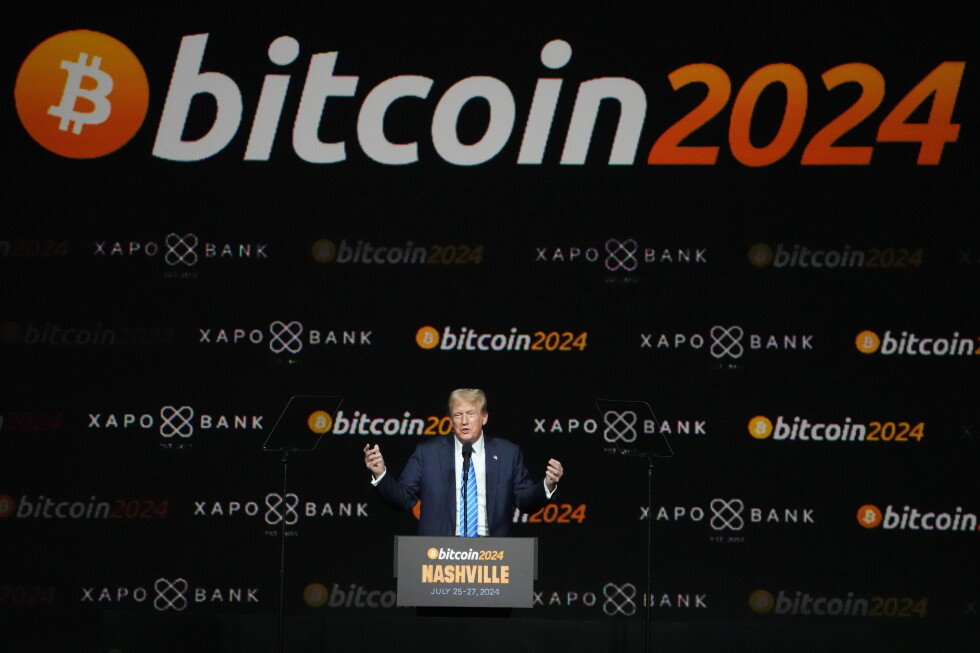
Trump, initially skeptical of cryptocurrencies, has committed to positioning the U.S. as the “crypto capital of the world” and establishing a strategic Bitcoin reserve. His campaign even accepted contributions in cryptocurrency, and he engaged with supporters at a bitcoin conference last July. Additionally, he has launched World Liberty Financial, a venture involving family members to trade cryptocurrencies.
On Thursday morning, just hours after Bitcoin reached the $100,000 milestone, Trump congratulated “BITCOINERS” on his social media platform, Truth Social, seemingly taking credit for the recent surge, with the message, “YOU’RE WELCOME!!!”
Many key figures in the cryptocurrency sector welcomed Trump’s electoral victory, hoping he could facilitate legislative and regulatory changes they have long sought. These changes are generally aimed at enhancing legitimacy with minimal bureaucratic hurdles. The industry has significantly invested in this endeavor, with Public Citizen reporting over $119 million spent in 2024 to support pro-crypto candidates in federal elections.
Trump continued his pro-crypto stance by announcing his plan to nominate Atkins as SEC chair. Atkins served as an SEC commissioner during George W. Bush’s presidency and has, since leaving the agency, argued against excessive market regulation. He became a member of the Token Alliance, a cryptocurrency advocacy group, in 2017.
Under the current chair Gary Gensler, who is set to depart when Trump takes office, the SEC has implemented stricter regulations on the cryptocurrency industry, penalizing several companies for breaching securities laws. Gensler also attracted substantial criticism from industry participants during his tenure.
One crypto-friendly action taken by the SEC under Gensler was the approval of spot Bitcoin ETFs in January, allowing investors to have exposure to Bitcoin without direct ownership. These ETFs were a significant driver of Bitcoin’s price before Trump’s victory and have seen record inflows since then.
What does Bitcoin reaching $100,000 signify? Is further growth possible?
The achievement of Bitcoin surpassing the $100,000 mark has generated considerable excitement within the crypto community.
“What we are witnessing is not merely a rally — it signifies a fundamental shift in Bitcoin’s status within the financial ecosystem,” stated Nathan McCauley, CEO and co-founder of crypto custodian Anchorage Digital, highlighting the increase in new market entrants and the rise of institutional adoption.
Yet, some analysts warn that elevated Bitcoin prices do not guarantee mainstream adoption. The $100,000 milestone is merely a psychological barrier, termed “just a number,” as mentioned by Dan Coatsworth, an investment analyst at British firm AJ Bell, in a Thursday commentary.
Nonetheless, Bitcoin may continue its ascent toward new peak values, especially if Trump fulfills his promises regarding more crypto-friendly regulations in his upcoming presidency. For instance, if a Bitcoin reserve is established, changes in supply could also influence prices positively.
“The shift in Washington’s perspective on cryptocurrency following the election is monumental,” asserted Matt Hougan, chief investment officer at Bitwise Asset Management, emphasizing that prices might continue to rise if trends remain steady. “Demand is significantly outpacing supply, which is typically a favorable indication for growth.”
However, as is the case with everything in the volatile crypto world, predicting the future is complicated. Ongoing regulatory uncertainties and environmental concerns tied to Bitcoin “mining” — the process of creating new Bitcoin, which consumes substantial energy — are among the issues that analysts like Coatsworth identify as potential roadblocks to future growth. As a relatively nascent asset with an unpredictable history, broader acceptance has yet to be fully realized.
Is it too late to invest? What are the risks involved?
The recent buzz surrounding Bitcoin might encourage those not yet involved to jump into the market. For potential investors, Hougan argues that it is not too late, noting that Bitcoin is still in its early stages, with most institutional investors having “zero exposure.”
At the same time, both Hougan and others caution against hasty decisions, emphasizing the importance of not overextending oneself. Experts continue to raise alarm over crypto “FOMO,” or the fear of missing out, particularly for investors with smaller capital.
“While many have profited from the recent surge in cryptocurrency’s value, this high-risk asset may not suit everyone,” Coatsworth remarked on Thursday. “Its volatility, unpredictability, and speculative nature do not lend themselves to stress-free investments.”
In summary, historical patterns show that one can lose money in crypto as swiftly as gains are made. The price trajectory largely hinges on broader market conditions. Trading occurs round-the-clock, every day.
Coatsworth refers to recent findings from the Bank for International Settlements, a global collection of central banks based in Switzerland, which indicates that around three-quarters of retail investors in crypto exchange apps likely incurred losses on their Bitcoin investments from 2015 through 2022.
At the beginning of the COVID-19 pandemic, Bitcoin was valued at just above $5,000. It surged to nearly $69,000 by November 2021, fueled by intense demand for technology assets, before plummeting amid aggressive rate hikes by the Federal Reserve. The late-2022 collapse of FTX severely undermined overall confidence in crypto, driving Bitcoin below $17,000.
As inflation began to decline, investors returned en masse, and excitement over the launch of spot ETFs propelled Bitcoin’s price upward once again, particularly amid the recent post-election buzz. However, reduced regulation from the upcoming Trump administration could mean decreased protections.
_____
This article has been updated to clarify that Anchorage Digital functions as a crypto custodian, not a crypto asset manager.