
Sure! Here’s the rewritten news article:
Quick Summary
At a recent event in Seoul, four South Korean banks collaborated with Ripple; however, they did not identify XRP as a settlement asset in publicly shared agreements.
Though banks can utilize Ripple’s technology or the RLUSD stablecoin, this does not necessitate the use of XRP, indicating that Ripple’s partnerships do not guarantee demand for the XRP token.
Current verified users of XRP are primarily payment service providers, like Japan’s SBI Remit, rather than banks, leaving XRP enthusiasts with exciting news but minimal increase in token demand.
Building an investment portfolio differs greatly from deriving income from it, a skill rarely taught. This gap is what The Definitive Guide to Retirement Income addresses, and it’s currently available for free.
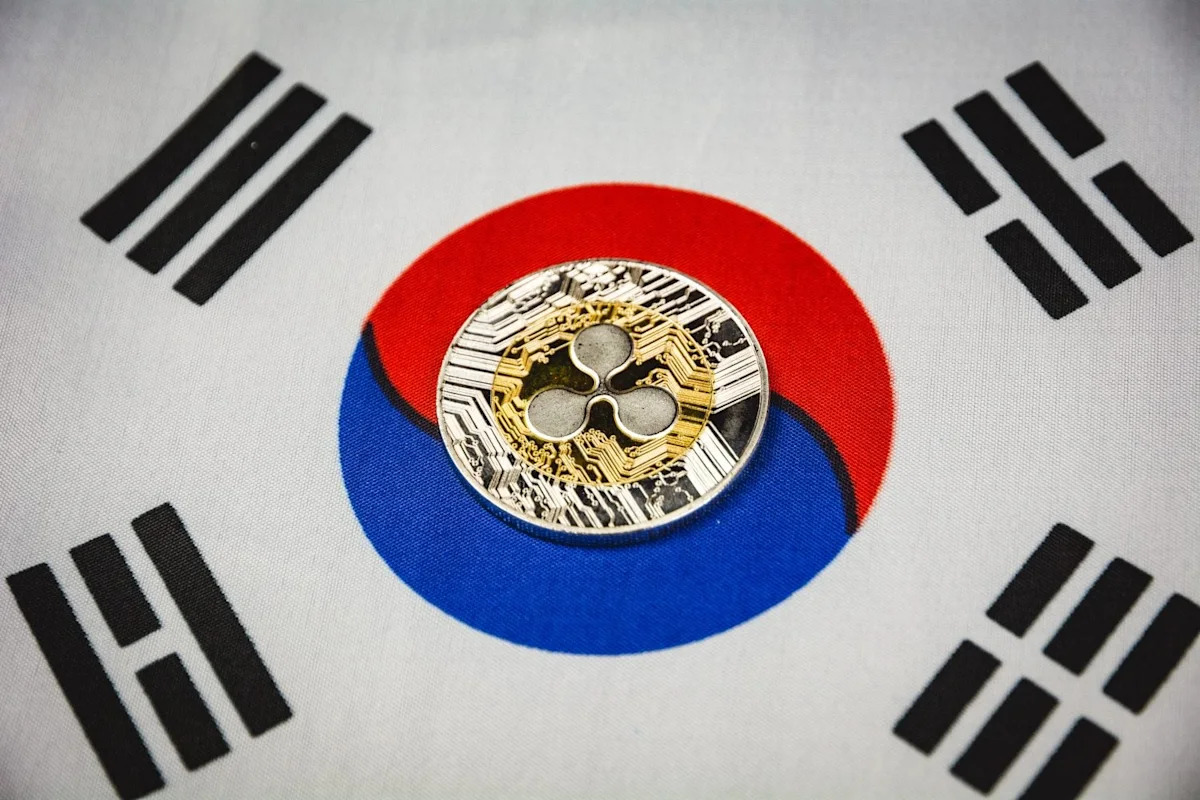
Four financial institutions from South Korea appeared alongside Ripple at the XRP Seoul event, leading many to assume that these banks are adopting XRP (CRYPTO:XRP). The participating banks included Woori Bank, Kbank, and Kyobo Securities, with Jeonbuk Bank or Kakao Bank completing the lineup.
During the gathering, Ripple unveiled XRP Asia, a new initiative aimed at enhancing the XRP Ledger’s visibility in the region. This prompts the question: Are these banks actually adopting the XRP token, or are they simply leveraging Ripple’s technology?
Understanding Ripple Partnerships vs. XRP Usage
It’s crucial to distinguish between engaging with Ripple and utilizing XRP. Banks may collaborate with Ripple without ever integrating XRP into their operations. Ripple offers payment solutions that streamline transactions among banks, specifying payer, amount, and currency. This software can work solely with traditional currencies, such as dollars, won, or yen.
Alternatively, a different process involves converting one currency to XRP, processing it through the XRP Ledger, and then converting it back to the desired currency. Banks find this mechanism advantageous because traditional cross-border payments often require funds to be held with foreign partner banks. Using XRP as a bridging asset allows banks to secure the required value upon payment execution.
New Release: The Definitive Guide to Retirement Income
An insightful moment often arises for successful investors when they shift their focus from growing their wealth to managing withdrawals. Mismanaging this can jeopardize years of strategic investing.
The Definitive Guide to Retirement Income addresses this dilemma, outlining the real cost of retirement, viable income sources, and withdrawal strategies to ensure longevity of funds. It’s available for free from Fisher Investments.
Summarizing the Situation
In essence, the first scenario highlights a partnership with Ripple’s software, while the second concerns XRP’s role as a financial bridge, necessitating purchases of the token for each transaction. Many news articles blur the lines of these distinct circumstances.
Seoul Banks Engage Ripple’s Solutions, but XRP Not Identified
Each participating bank has formed a partnership with Ripple. Kbank, for instance, launched a remittance pilot that targets the UAE and Thailand in April 2026. Jeonbuk Bank employs Ripple Payments for swift cross-border settlements for its business clientele.
Additionally, Kyobo Life collaborates with Ripple for the settlement of tokenized government bonds, while Woori Bank aligns with BDACS, a Korean custodian managing XRP for institutional investors. However, the details presented during the event fail to designate XRP explicitly for transactions. Ripple Payments can facilitate payments in local currencies, RLUSD stablecoin, or XRP. Moreover, a custodian holding XRP for clients simply manages the token rather than using it for transactions.
Ripple President Monica Long referred to this as the initiation of the “next significant growth phase” for the XRP Ledger. However, this remark is more of a hopeful forecast than a confirmation of current XRP utilization by these banks.
Three Key Considerations Distinguish XRP Use from Ripple Collaborations
When evaluating any announcements from banks, three crucial questions should be asked:
- Is XRP explicitly mentioned as the settlement asset?
- Is there a commitment to a specific transaction volume through this partnership?
- Is the agreement formalized in a signed contract, or is it merely a non-binding memorandum of understanding?
Currently, the information revealed during the Seoul event does not meet any of these criteria. The focus was on ongoing partnerships and products, with no new agreements identifying XRP as a settlement asset. So far, the primary users of XRP appear to be payment firms, such as Japan’s SBI Remit, which has utilized XRP for transfers to the Philippines since 2021.
Do Any Banks Utilize XRP Following the Seoul Event?
Publicly, the Seoul banks are capitalizing on Ripple’s payment technologies, tokenization services, and custody solutions. Nevertheless, their announced agreements do not demonstrate the actual deployment of XRP for payment settlements. Ripple has gained substantial visibility, partnered with four licensed institutions, and introduced a regional initiative— a win for the company.
This scenario leaves XRP holders watching news about banks without the desired increase in demand for the token. As of October 4, XRP is valued at $1.50.
If Kbank, Jeonbuk Bank, or any of the other participating banks were to announce a commitment that names XRP as the settlement asset, along with a specified transaction volume, it could redefine the current outlook. As it stands, the reliance on Ripple’s software and stablecoins may leave demand for XRP on hold.
Released: The Definitive Guide to Retirement Income
Most individuals spend their entire careers focusing on the accumulation of wealth. Upon retirement, they often realize that the necessary skill they require is quite different: successfully converting that wealth into a stable income without depleting their resources.
This transition is often overlooked yet carries significant weight in personal finance, with many prudent investors stepping into retirement without a solid plan. The Definitive Guide to Retirement Income provides clarity on realistic retirement costs, sources of cash flow, and sustainable annual withdrawal amounts. Discover more here.
For any inquiries or corrections, please contact editorial@247wallst.com.
Feel free to customize any links or specific references!