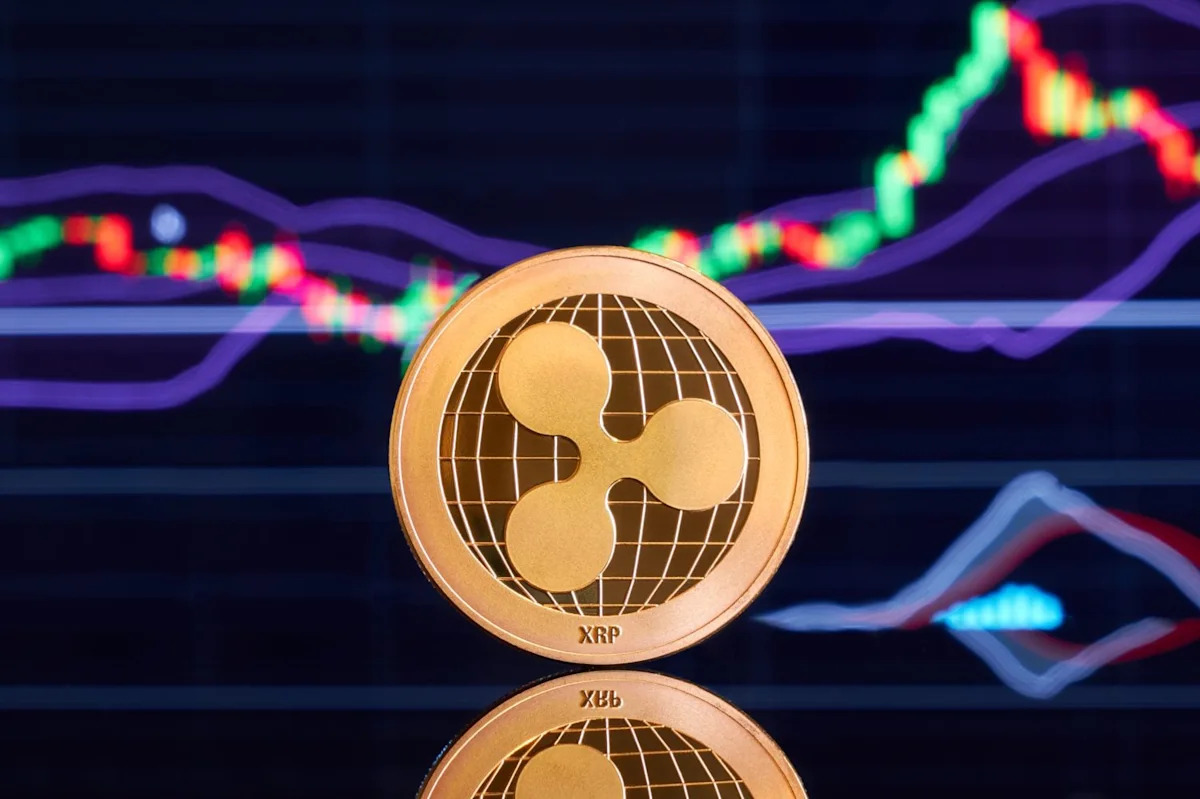
Decoding the XRP-Bitcoin Connection: A Correlation Unveiled
Quick Overview
XRP often follows Bitcoin’s lead, but there have been three notable instances where it diverged, each resulting from a court decision, changes in SEC policies, or Senate votes.
The resignation of Gary Gensler in 2024 led to a near 5-fold surge in XRP, while Bitcoin experienced a more modest 40% increase during the same timeframe.
XRP’s price seldom shifts significantly due to Ripple’s partnerships since banks utilize Ripple’s payment system, rather than XRP, for transactions.
Crafting a financial portfolio is vastly different from managing withdrawals for sustenance during retirement. This issue is tackled in “The Definitive Guide to Retirement Income,” which is available for free today. Read more here. (Sponsor)
XRP (CRYPTO: XRP) tends to reflect movements in Bitcoin (CRYPTO: BTC). This correlation arises since both cryptocurrencies are influenced by common market dynamics, monetary trends, and news events on most trading days. Nevertheless, the XRP-Bitcoin correlation has fractured on three distinct occasions in recent history due to court rulings, SEC changes, or legislative votes.
As of October 7, 2026, XRP is trading at $1.47, showing a decline of 1.4% in the previous 24 hours, whereas Bitcoin is valued at $84,232, down by 1.3%. In longer terms, XRP has experienced a more drastic drop, currently sitting around 60% below its peak of $3.65, while Bitcoin lies approximately 33% lower than its all-time high of $126,080. Even though both assets usually exhibit similar directional motions, their price fluctuations do not always align perfectly.
Maryshot / Shutterstock.com
Understanding Why XRP Movements Align with Bitcoin, Even on Ripple’s Inactive Days
SashaMagic / Shutterstock.com
Bitcoin is the foremost cryptocurrency, boasting a market capitalization of around $1.69 trillion. When fresh investment capital enters the crypto space, it typically begins with Bitcoin, subsequently extending to other currencies like XRP. Conversely, when investors withdraw funds, Bitcoin usually experiences the initial decline, setting the overall market trend.
The influence of leveraged trading also magnifies these price shifts. Traders may lend capital to enhance their positions, often holding several cryptocurrencies simultaneously. If losses exceed their collateral, trading platforms may enforce liquidation of these holdings. For instance, $1.9 billion worth of positions were liquidated in a single day on November 21, 2025. Consequently, a sharp drop in Bitcoin can lead to similar sell-offs in XRP due to their correlated behaviors.
Now Offering: The Complete Guide to Retirement Income
Across the investment landscape, many successful individuals eventually find themselves asking a key question. After accumulating savings and building a portfolio, they shift their focus from growth to how much they can withdraw. Misjudging this aspect can jeopardize years of astute investing.
This is precisely the issue that The Complete Guide to Retirement Income addresses. This resource delves into the costs of retirement, viable income sources, and the math behind withdrawals to ensure funds remain sustainable. This guide is available for free from Fisher Investments. Read More Here ›
Market reactions to collective announcements also play a role in this correlation. When significant updates, such as adjustments in Federal Reserve interest rates or regulatory actions arise, traders may simultaneously sell both Bitcoin and XRP, even in the absence of Ripple-specific news.
Key Instances When XRP Diverged from Bitcoin and Their Triggers
Kjetil Kolbjornsrud / Shutterstock.com
The relationship between XRP and Bitcoin faced disruptions on three significant occasions, each attributed to legal or regulatory interventions:
The Initial Disruption. On July 13, 2023, Judge Analisa Torres determined that Ripple’s sale of XRP on public platforms did not constitute securities offerings. This verdict resulted in an immediate surge of approximately 60% in XRP’s value, while Bitcoin experienced a negligible increase, as the decision directly influenced XRP’s legal standing without impacting Bitcoin.
The Second Disruption. In November 2024, following the U.S. electoral outcomes, optimism grew for a more favorable SEC environment. On November 21, SEC Chair Gary Gensler indicated his plan to resign. Throughout this period, XRP soared from roughly $0.50 in early November to nearly $2.50 by December 2, representing a substantial five-fold increase, while Bitcoin only noted about a 40% gain during that time.
The Third Disruption. On September 15, 2026, the Senate did not pass the CLARITY Act, a proposal to classify XRP as a commodity under federal law. Failing to secure 60 votes, the bill’s rejection led to a rapid decline of about 8% in XRP’s value the following day, while Bitcoin experienced a limited drop of around 1.4%.
Why Ripple’s Collaborations Don’t Significantly Affect XRP’s Movement from Bitcoin
Volodymyr Maksymchuk / Shutterstock.com
Ripple frequently announces new partnerships and updates, yet these events typically do not result in substantial price shifts for XRP in relation to Bitcoin. In 2022, JPMorgan’s Michael Cembalest pointed out this inconsistency. Ripple’s transaction volume increased fivefold between 2019 and 2020, but banks primarily utilized Ripple’s payment network rather than the XRP cryptocurrency for transactions.
Thus, although partnerships can enhance Ripple’s revenue, they don’t necessarily drive demand for XRP. In contrast, court rulings and regulatory actions have an instant effect on XRP’s market dynamics. These factors distinctly impact who can invest in XRP, the platforms that support its trading, and how it is regulated, leading to occasional fluctuations.
Is XRP Acting as a Substitute for Bitcoin, and When Does the Correlation Break?
Generally, XRP serves as a surrogate for Bitcoin, fluctuating in alignment with it. Nevertheless, it exhibits independent behavior in response to legal verdicts, congressional developments, or regulatory shifts that target XRP specifically. Investors diversifying their portfolios by holding both assets must navigate this relationship. While they often rise and fall together, XRP has experienced a more pronounced drop from its peak.
Future divergences in correlation might arise from regulatory changes rather than judicial rulings, as both the SEC and CFTC have suggested that they will establish cryptocurrency regulations without seeking Congressional approval. If XRP begins to stray from Bitcoin in response to Ripple’s partnership announcements, it could signal that the market is starting to recognize increasing demand for XRP itself, challenging its position as merely a Bitcoin proxy.
Released: The Complete Guide to Retirement Income
(Sponsor) For most individuals, their entire careers are spent on one principle: accumulating wealth. Upon reaching retirement, they realize they need an entirely different skill set to convert that wealth into a consistent income throughout their retirement years without running out.
This transition, often overlooked yet vital in personal finance, sees many diligent investors entering it without a concrete strategy. This is the exact challenge that The Complete Guide to Retirement Income aims to address. This free guide by Fisher Investments explores genuine retirement costs, potential income sources, and how much you can safely withdraw each year. Discover more by visiting Learn More Here ›
For inquiries or adjustments, please reach out to editorial@247wallst.com for any questions or corrections.