
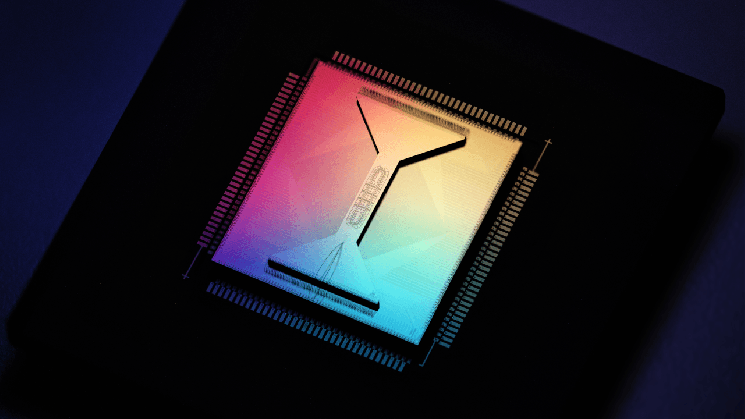
This advancement builds on Quantinuum’s groundbreaking work from September, which employed a different error-correction approach using the same Helios platform.
“We have surpassed the necessary threshold for exponential enhancements in accuracy, solidifying our journey towards Apollo and enabling users to harness commercial potential from quantum technology at scale,” stated Rajeeb Hazra, CEO of Quantinuum.
The firm noted that this latest milestone aligns error-correction capabilities with the targets set for Apollo, its upcoming fault-tolerant quantum computer, anticipated to launch by 2029.
Robin Blume-Kohout, co-director of the Quantum Performance Lab at Sandia National Laboratories and not involved in the study, labeled the development as a major milestone. He indicated that the results imply a larger system could achieve functional fault-tolerant computing with under one million physical qubits.
However, the findings pertain specifically to a certain error-correction benchmark and not a demonstration of a comprehensive, general-purpose quantum computer. Considerable engineering obstacles remain before such systems can reliably perform complex algorithms.
Bitcoin’s Quantum Threat Becomes Clearer
This update follows another significant achievement reported by Google Quantum AI last week, where researchers showcased a method called “magic state cultivation” that decreased errors by a factor of 40. The research recorded a 99.99% logical fidelity in generating specialized quantum states necessary for specific advanced computations.
According to Bitcoin.com News, Google’s advancements have revived fears about “Q-Day,” the theoretical moment when quantum computers could potentially compromise widely used cryptographic systems.
In earlier assessments, Google researchers suggested that breaking the elliptic-curve cryptography utilized in Bitcoin’s digital signatures might require fewer than 500,000 physical qubits—approximately 20 times less than previous projections.
The research also proposed a hypothetical scenario where an advanced quantum system could extract a bitcoin private key from a public key within approximately nine minutes.
It is estimated that around 6.9 million BTC—nearly one-third of the total supply—may be at risk due to previously exposed public keys, including funds in older wallet formats and reused addresses.
While Quantinuum’s recent advancements do not demonstrate any ability to compromise Bitcoin’s encryption, they signify progress towards the reliable quantum computing that could ultimately facilitate such attacks.
These advancements have heightened dialogues about preparing cryptocurrency networks for a future influenced by quantum technology. Fidelity Digital Assets has cautioned that exposed Bitcoin public keys could become susceptible, while Coinbase has emphasized the technical challenges involved in transitioning the Bitcoin network to quantum-resilient cryptography.
Possible defenses might involve new digital signature frameworks, although their implementation could necessitate significant modifications to Bitcoin’s infrastructure, such as larger signatures, wallet updates, and collaboration across the decentralized network.
A particularly challenging aspect relates to inactive bitcoin holdings, where owners may struggle to migrate their funds to quantum-resistant addresses.
At present, no existing quantum computer possesses the ability to breach Bitcoin’s cryptographic barriers. However, with Quantinuum aiming for a fault-tolerant Apollo system by 2029 and Google swiftly progressing in related technologies, the urgency to build quantum-resistant cryptocurrency infrastructure is growing.