
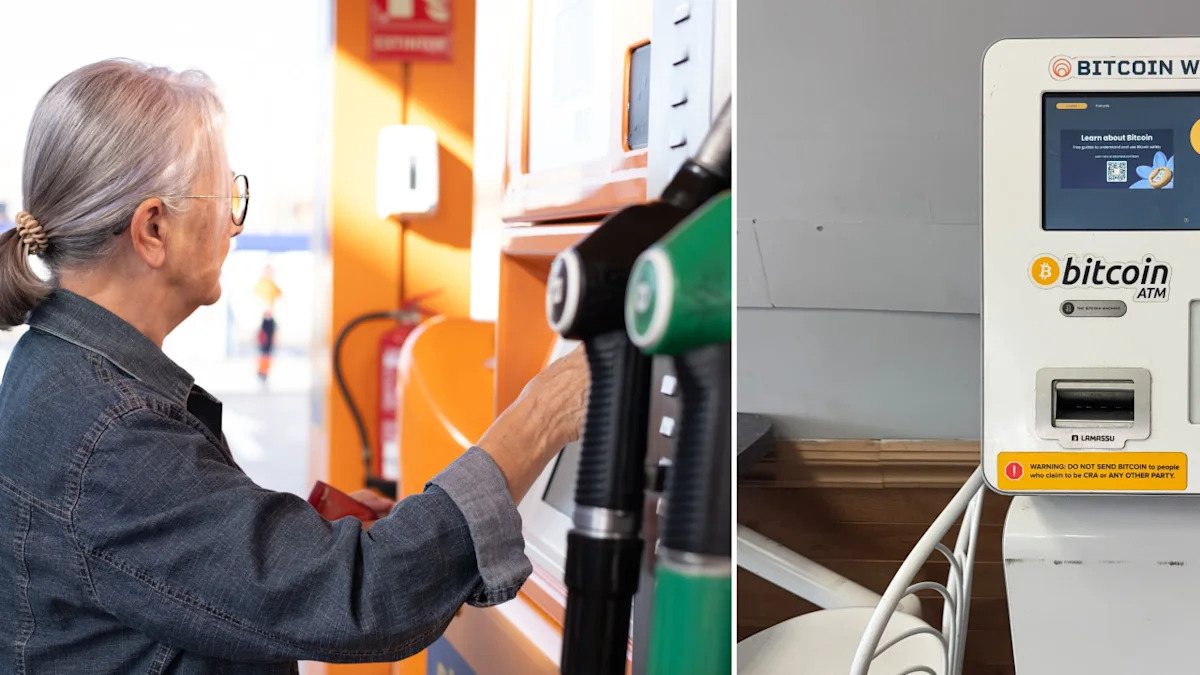
A woman from Johnston County, North Carolina, fell victim to scammers posing as local law enforcement, who claimed she could secure her release from confinement by sending cash. Consequently, she deposited her savings into a cryptocurrency kiosk located at a gas station.
The situation became clearer when the impostors asked for an additional $4,000. When she admitted she was out of funds, the phone call ended, and the reality of the scam hit her, as reported by WRAL.
Essential Reading
“I have arranged a meeting with a counselor to discuss my experiences, as this has significantly impacted me both financially and emotionally,” she told the news station, opting to remain anonymous.
North Carolina’s Attorney General, Jeff Jackson, stated that the U.S. Department of Justice is investigating crypto kiosk companies. “The inquiry is actively ongoing,” he mentioned to WRAL.
Why Scammers Prefer These Machines
Crypto kiosks resemble standard ATMs, but they convert cash into cryptocurrency. Transactions are nearly instantaneous, leave minimal trace, and are difficult to reverse, according to WRAL’s report.
The frequency of scams is on the rise. The FBI noted that grievances related to kiosks exceeded 13,400 in 2025, reflecting a 23% increase from 2024, with losses surpassing $388 million, a 58% rise. Over 50% of these complaints involved individuals aged 50 and older. In North Carolina, the count stands at 491 complaints and approximates to $12.6 million in losses.
In 2023, the FBI recorded over 5,500 kiosk-related complaints and estimated losses of $189 million.
Additionally, the Federal Trade Commission found that losses associated with bitcoin ATMs increased nearly tenfold between 2020 and 2023. In the first half of 2024, the median reported loss was $10,000, with individuals aged 60 and above more than three times likely to report fraud.
Additional Reading: Vanguard reveals what’s coming for U.S. stocks — and it’s raising alarm bells for older investors
New Legislation in North Carolina
In July, Governor Josh Stein enacted House Bill 920. He declared that this legislation aims to safeguard individuals from fraud related to cryptocurrency kiosks by mandating state licensing and regulation of these machines. The law includes limits on daily transactions, the installation of scam warning notifications, provision of customer support, issuance of transaction receipts, and the option to cancel ongoing transactions. This law will commence on January 1, 2027.