
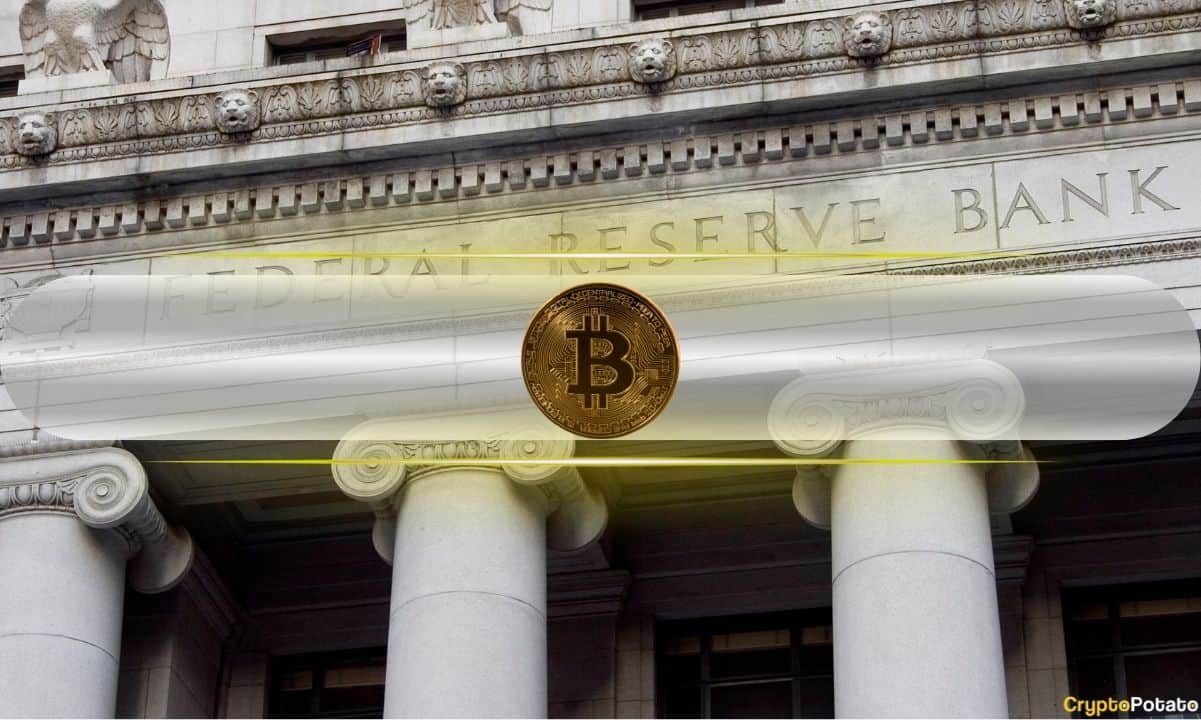
What impact might this have on Bitcoin as the Federal Reserve approaches next week’s FOMC gathering, facing a difficult balancing act?
While it is anticipated that the US Federal Reserve will maintain interest rates at their current level during the upcoming meeting on October 27-28, a larger issue persists.
Inflation remains stubbornly high, oil prices are exceeding $100, and the costs of borrowing in the US are becoming increasingly burdensome, with both federal debt and interest expenses hitting unprecedented levels. Is the US economy capable of navigating this challenging macroeconomic environment?
Is the US Prepared for Increased Rates?
Analysts at the Kobeissi Letter contend that if interest rates average 150 basis points above the Congressional Budget Office’s (CBO) forecasts from February through 2036, the United States could see cumulative deficits rise by approximately $6 trillion. They referenced CBO data indicating that public debt might reach 133% of GDP, with the annual deficit potentially increasing to 8.8% of GDP.
An overshoot of just 50 basis points could lead to nearly $2 trillion in additional deficits, pushing national debt to 124% of GDP. The Committee for a Responsible Federal Budget agrees, asserting that sustained high borrowing costs would further complicate an already difficult fiscal outlook.
Consequently, the Kobeissi Letter determined that the US government essentially “requires rate reductions,” yet the Fed has limited ability to implement such changes. Inflation remains significantly above the central bank’s 2% target, compounded by high energy costs adding further price pressures.
Federal Reserve Governor Christopher Waller recently mentioned that additional rate hikes could be necessary if economic conditions unfold as projected, although these increases need not occur at consecutive meetings. On the other hand, Fed Chair Kevin Warsh declined to commit to a specific course of action ahead of the meeting.
A recent Reuters poll indicated that almost all economists expect the Fed to hold off on rate hikes in October, with an increase likely coming in December.
You may also like:
Implications for Bitcoin
The outcome of next week’s meeting may not hold as much significance for Bitcoin as the communications that follow. A pause in rate hikes, coupled with more dovish language regarding future adjustments, could alleviate some tension stemming from elevated Treasury yields and restrictive financial conditions. This scenario might enhance interest in riskier assets and provide Bitcoin with a necessary boost after its recent downturn.
In contrast, an unexpectedly aggressive stance or a surprise rate hike would likely produce the opposite outcome. Anticipated high rates would enhance the attractiveness of yield-generating assets, tighten liquidity, and generally create a more challenging environment for speculative investments like cryptocurrencies.
Looking at the long-term implications, consistently high rates may create short-term pressures, but the fiscal challenges highlighted by the Kobeissi Letter suggest that the US cannot sustain tight monetary policies indefinitely, potentially benefiting Bitcoin in the long run.