
“What greatly intrigues me is America’s interests.”
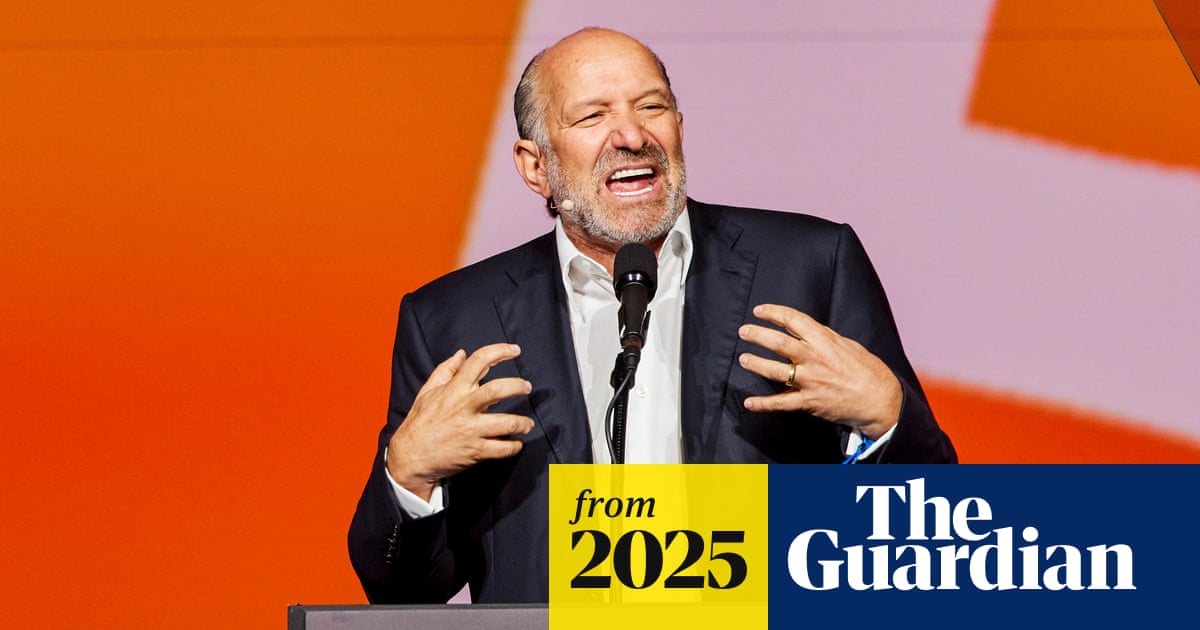
Howard Lutnick, the chairman and CEO of Cantor Fitzgerald, a notable Wall Street investment bank, and Donald Trump’s appointee for the role of the next secretary of commerce, addressed a crowd of cryptocurrency supporters last April.
“I cannot be swayed. There’s no way someone can approach me and say: ‘Here’s a dollar, can you assist with this, that, or the other?’” he stated. “What captivates me is what benefits America. And the dollar is beneficial for America.”
As senators prepare to review Lutnick’s confirmation in the upcoming weeks, they must consider granting one of the key figures in banking’s cryptocurrency sector the leadership role in an agency that plays a crucial part in the crypto landscape. The Department of Commerce influences both domestic economic strategies and international trade policies, which have a significant effect on the crypto industry, noted Tonya M. Evans, a Penn State law professor focusing on fintech and author of “Digital Money Demystified.” She cautioned that potential conflicts of interest merit serious consideration.
“Ultimately, it’s critical that public trust in our leadership remains intact and is not jeopardized by significant conflicts or any suggestion of misconduct,” she remarked. “Public trust in government — similar to trust in crypto — is at a low point. The sector has a prime opportunity to reshape the public’s perception of crypto. Ethical governance is essential, not merely for innovation, but also for the sustained stability of both the crypto sector and the broader U.S. economy.”
Lutnick’s affiliations with the crypto world may herald significant changes ahead. The Biden administration has implemented regulations in response to the notorious fraud associated with FTX, which was once among the largest cryptocurrency exchanges globally, and the fallout involving its disgraced founder, Sam Bankman-Fried.
Despite this, Lutnick has emerged as a passionate advocate for cryptocurrency within global finance, especially promoting a type of cryptocurrency known as stablecoins. His firm, Cantor Fitzgerald, serves as a banker for Tether, which stands as the world’s most widely utilized stablecoin, leveraging blockchain technology to facilitate dollar-denominated fund transfers worldwide.
“Lutnick’s extensive expertise in the cryptocurrency sector is undeniably significant, yet his strong connections to Tether and vested interests in its success raise legitimate concerns regarding potential or actual conflicts of interest, especially considering Tether’s pivotal role in decentralized finance,” Evans stated. She anticipates rigorous questioning from cryptocurrency skeptics in the Senate, particularly those on market and banking oversight committees, during his confirmation process.
Tether is the most traded cryptocurrency globally, even surpassing Bitcoin, and currently ranks as the third-largest cryptocurrency by market cap, with approximately $137 billion circulating digitally. Tether’s market capitalization surged by 50% last year, according to the company.
While Bitcoin experiences significant price volatility, Tether, identified as $USDT in cryptocurrency markets, was created to address this fluctuation by being pegged to the dollar. Tether asserts that every dollar’s worth of its currency is backed by an equivalent dollar held in reserves across various global banks.
Cantor Fitzgerald maintains its treasury bills within the U.S. Regulators have pursued Tether for proof of the reserves asserted by its founder and CEO, Italian computer scientist Paolo Ardoino.
Since 2021, Tether has been offering a detailed and publicly accessible account of its reserve assets, although these reserves have not yet been subjected to an independent public audit. Ardoino has indicated that obtaining an external audit is “a priority.”
“Despite growth in the sector, crypto companies continue to face challenges in accessing banking services that traditional financial entities generally enjoy,” a spokesperson noted. “The absence of global standards and regulations renders audits of cryptocurrency firms a significant risk for major accounting firms, particularly after the FTX collapse.”
Concerns regarding the nature and integrity of Tether’s reserves have long been voiced by its critics.
“It is intended to be backed by a range of relatively liquid assets, and historically, there have been some discrepancies regarding the nature of those assets,” commented Bennett Tomlin, head of research at Protos Media and a critic of Tether.
“Currently, it appears that Tether has a substantial quantity of assets, and figures like Howard Lutnick have publicly supported both the quality and the volume of those assets.”
Over time, Tether has faced scrutiny from federal regulators cracking down on stablecoins used in secondary markets for financing terrorism, facilitating cybercrime, money laundering, and the distribution of precursor chemicals for illegal drug production.
However, as Tether has started assisting law enforcement with criminal investigations into illicit activities — and given the more favorable interest rate environment for holding treasuries — concerns surrounding Tether’s assets have diminished.
A spokesperson for Tether mentioned that the firm has been collaborating with law enforcement, freezing over $2 billion in assets alongside 220 agencies across 51 jurisdictions.
Lutnick has been transparent about his efforts to bolster Tether, even while competitors have attempted to discredit the coin. Bankman-Fried, the incarcerated former billionaire head of FTX, tried to trap Tether in a liquidity crisis in 2022 by redeeming $10 billion in Tether simultaneously, Lutnick shared with bitcoin enthusiasts at a conference in Nashville last year. Since Cantor is one of the U.S. government’s 24 primary dealers of treasuries, it could meet the redemption request instantaneously, Lutnick recounted.
This incident and Lutnick’s support for Tether’s asset claims last year appear to have eased market doubts regarding the firm’s finances.
“Based on our extensive research, they possess the funds they report,” Lutnick told Bloomberg TV last year.
Cantor Fitzgerald endured a significant loss of two-thirds of its workforce at its New York office during the 9/11 attacks, including Lutnick’s brother. The accusation that Tether enabled terrorism has angered Lutnick, who expressed his sentiments on the matter.
“We would never align with an organization linked to jihadism. It repulses me,” he stated during a Bitcoin event last year. “Tether will seize any cryptocurrency involved in illegal activities.”
Lutnick and Trump share a longstanding friendship. Lutnick played a role in fundraising for Trump’s re-election campaigns in 2020 and 2024. Prior discussions had circulated about Lutnick possibly becoming chief of staff or treasury secretary before Trump nominated him for commerce.
As chairman of the Trump transition team, Lutnick has emphasized the necessity for administration appointees to be fully loyal to the Trump agenda.
“You can debate all you want, but when the leader states the plan, do you have an issue implementing what the leader wants? You always have two choices: either step down or carry out the plan.”
Lutnick plans to pass control of a special purpose investment firm at Cantor Fitzgerald to his 26-year-old son Brandon, who has been engaged with Tether.
“The incoming administration seems unconcerned with conflicts of interest,” Tomlin remarked. “In many instances, it appears that conflicts of interest are nearly a requirement… Handing over your business to your son doesn’t convincingly ensure you’re detached from how your executive decisions affect that enterprise.”
If appointed secretary of commerce, Lutnick would be tasked with advancing Trump’s policies regarding tariffs. He contends that tariffs serve as tools to challenge protectionist trade stances in Europe and Asia. Nonetheless, the commerce department also bears regulatory responsibilities related to the cryptocurrency sector, which may disadvantage Tether and competing stablecoins if the federal government initiates its own digital currency.
Joe Biden had issued an executive order in March 2022 to explore the implementation of a central bank digital currency.
Lutnick argues that a government-developed digital currency could be rejected by many nations as a means of espionage or for undermining local currencies. However, the current alternative is a private entity lacking direct responsibility to or oversight from any U.S. governmental body.
Importantly, Tether announced its intention to relocate its headquarters to El Salvador on Monday. El Salvador has embraced cryptocurrency as a key economic advantage, transitioning its economy and currency into this digital realm.
Last year, Senators Kirsten Gillibrand and Cynthia Lummis introduced the Lummis-Gillibrand Payment Stablecoin Act of 2024, designed to regulate stablecoins.
State authorities would oversee stablecoins with assets below $10 billion, while larger entities — such as Tether and its competitor Circle — would be regulated by the office of the comptroller of the currency within the treasury department. This proposed legislation would require stablecoins to maintain reserve assets on a one-to-one cash or cash-equivalent basis, mandate on-demand redemptions, and necessitate monthly asset reporting.
That bill did not progress last year.
Lutnick expressed his belief that dollar-pegged stablecoins enhance American influence and is concerned that regulations in Europe and other regions may hinder Tether’s and other dollar-based cryptocurrencies’ growth.
“If a dollar-based stablecoin were backed by the euro, then they should just forget it,” he stated. “How does that support us?”