
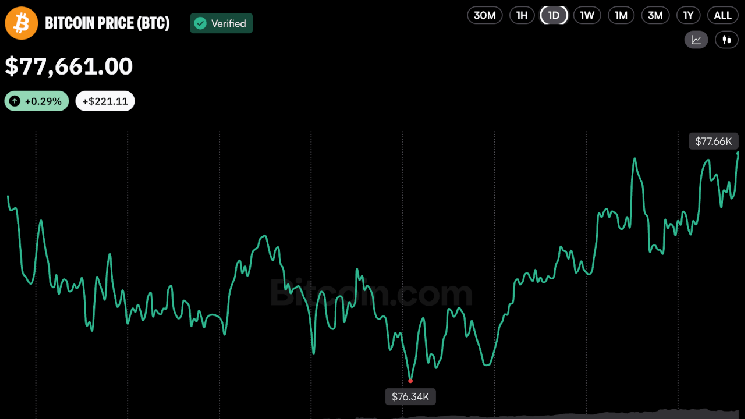
The fluctuations in derivatives markets have resulted in a significant increase in bitcoin liquidations, rising from approximately $69 million just a day prior to $96 million. The largest impact came from long positions, which accounted for roughly $76.5 million in liquidations. Overall, the cryptocurrency market saw liquidations exceeding $365 million, with long positions alone contributing $286 million to that total.
Political Instability and Global Tensions Affect Market Sentiment
As Binance worked to mitigate the repercussions of the largest hack in cryptocurrency exchange history—resulting in a loss of $6.3 billion last Thursday—investors shifted their focus to the upcoming U.S. midterm elections. Polling data and forecasting platforms suggesting that Democrats may secure control of both houses of Congress raised concerns about a divided government, which could diminish President Donald Trump’s legislative power and complicate the pursuit of his pro-cryptocurrency initiatives.
A change in congressional leadership could reshape the legislative environment for the digital asset landscape and influence various regulatory efforts within the cryptocurrency sector. A divided government might also necessitate compromises across party lines, potentially delaying policy advancements at a time when the industry is advocating for clearer regulations to enhance institutional engagement.
Adding to this political uncertainty, reports of renewed military confrontations between U.S. and Iranian forces have contributed to a cautious market climate. Rising tensions in the Middle East could lead to concerns over energy supply disruptions, higher oil prices, and renewed inflationary pressures. These factors may complicate the Federal Reserve’s interest rate strategies and further deter investment in more volatile assets, including cryptocurrencies.
The Challenge of Quantum Computing Looms Ahead
In addition to immediate political and macroeconomic factors, bitcoin must contend with long-term technological challenges that could impact its valuation. One of these is the potential risk from quantum computing, which threatens the elliptic curve cryptography that secures bitcoin transactions.
In recent remarks, Swapspace CEO Evan Ceolini referenced Google’s Quantum AI Willow demonstration as a prompt to consider the technological hurdles that blockchain networks face. Although the demonstration did not pose an immediate threat to bitcoin’s defenses, advancements in quantum computing have spurred discussions about the eventual need for quantum-resistant cryptographic methods and the complexities involved in upgrading protocols.
However, it remains uncertain whether current investors are taking these long-term risks into account when valuing bitcoin.
When asked if institutional investors were already considering quantum-related challenges and the governance issues linked to updating bitcoin’s protocol, Ceolini noted an increased awareness but warned against assuming that these risks are entirely incorporated into market prices.
“I wouldn’t claim it’s completely unpriced,” Ceolini stated. “More institutional investors are beginning to recognize the quantum threat and the upgrade hurdles. However, just being aware doesn’t imply that this risk is fully reflected in bitcoin’s market price.”
He emphasized that the lack of a reliable framework for assessing these threats complicates the understanding of whether a significant risk discount is being applied to bitcoin’s valuation.
“There’s no definitive evidence of a measurable discount for governance or upgrade risk. For now, it’s better characterized as a recognized but hard-to-quantify long-term risk, rather than as something that markets have overtly factored in,” Ceolini explained to Bitcoin.com News.
Ceolini’s analysis highlights the difference between risks that provoke immediate market reactions and those with potential ramifications that may not materialize for years. While security breaches, political changes, and economic upheavals can lead to immediate price fluctuations, the longer-term threats posed by quantum computing remain difficult to evaluate, leaving uncertainty about how well bitcoin’s current valuation accounts for future technological challenges.