

Update (Thursday, 3:52 am UTC): The story below has been updated to reflect the latest information regarding negotiations surrounding the vote.
House Republican leadership has brokered an agreement to advance three cryptocurrency-related bills that were stalled due to a protracted procedural vote. The logjam occurred after some conservative Republicans initially refused to budge on the issue of central bank digital currencies.
The vote to initiate floor debate on the proposed legislation stretched for over nine hours, marking the longest such vote in the history of the House of Representatives. The measure ultimately passed late Wednesday by a vote of 217 to 212.
Initially, a faction of Republican representatives withheld their support, demanding assurances that a ban on central bank digital currencies (CBDCs) would be enacted. However, House Majority Leader Steve Scalise indicated to journalists on Wednesday that Republicans now plan to incorporate a CBDC prohibition into the National Defense Authorization Act (NDAA), a crucial piece of defense spending legislation.
Tom Emmer
House Republicans have designated this week as “Crypto Week,” with the intention of passing key legislation related to cryptocurrency. This includes the CLARITY Act, designed to establish a clear market structure for digital assets; the Anti-CBDC Surveillance Act, aimed at prohibiting central bank digital currencies; and the GENIUS Act, intended to regulate stablecoins. President Donald Trump has expressed his desire to sign the GENIUS Act into law before the weekend.
According to a report from PunchBowl News, Scalise stated that the House would hold separate votes on the GENIUS Act and the CLARITY Act possibly as early as Thursday. However, Speaker of the House Mike Johnson suggested that votes on the other bills could be delayed until Friday or the following week.
CBDC Ban: A Key Point of Contention
The opposition to CBDCs among some Republican lawmakers also disrupted an earlier procedural vote on Tuesday concerning the three crypto bills.
Representative Keith Self, one of the Republican holdouts who later reversed his position, previously expressed concerns that the GENIUS Act “will allow a back door to a CBDC.”
Marjorie Taylor Greene was the only Republican representative who sided with the Democrats in voting against the measure.
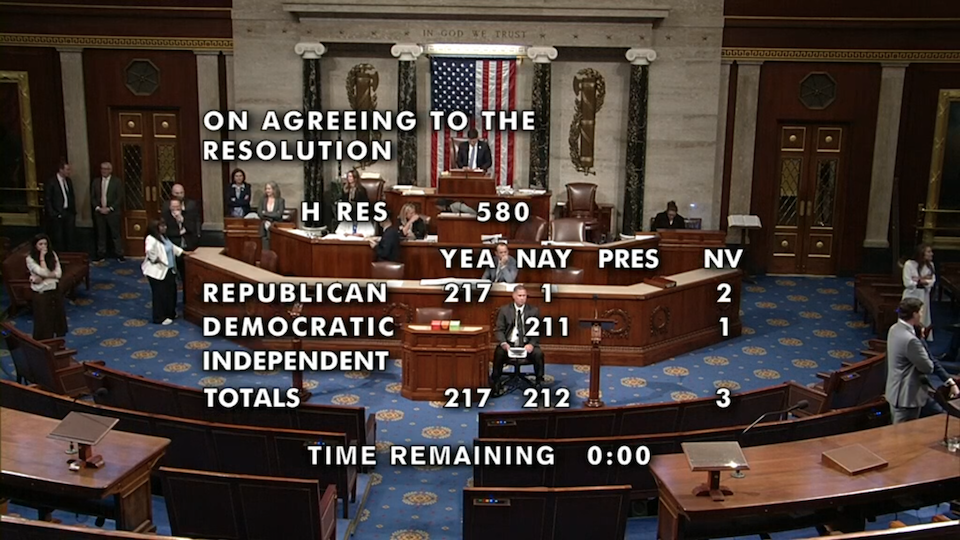
C-SPAN
However, the GENIUS Act explicitly states that it should not be interpreted as expanding the Federal Reserve’s authority to offer services directly to the public, which would encompass a CBDC.
CBDC Ban Potentially Included in Defense Bill
House Republican leaders reportedly assured conservative members that a prohibition on CBDCs would be included in the must-pass NDAA defense spending bill.
Representative Tim Burchett, a Republican who initially voted against advancing the bills, mentioned in a video posted on X on Wednesday that the negotiations involved moving the CBDC ban to the NDAA.
Related:
CLARITY Act Isn’t Perfect, But It’s The Bill US Congress Must Pass This Summer
“If they adjust this [the GENIUS Act], they kill the bill if it goes back to the Senate, and so they’re thinking about trying to make some changes later,” he added.
Republican leaders, including Speaker Johnson, have suggested the Senate wouldn’t pass the bills if they remained bundled together, contributing to the decision to consider them separately.
Record-Breaking Vote Duration
The voting process lasted over nine hours, setting a new record for the longest vote in the House’s history. This surpassed the previous record established earlier this month during a vote on Trump’s tax and spending legislation, known as the One Big Beautiful Bill Act.
Magazine:
Bitcoin vs Stablecoins Showdown Looms as GENIUS Act Nears