
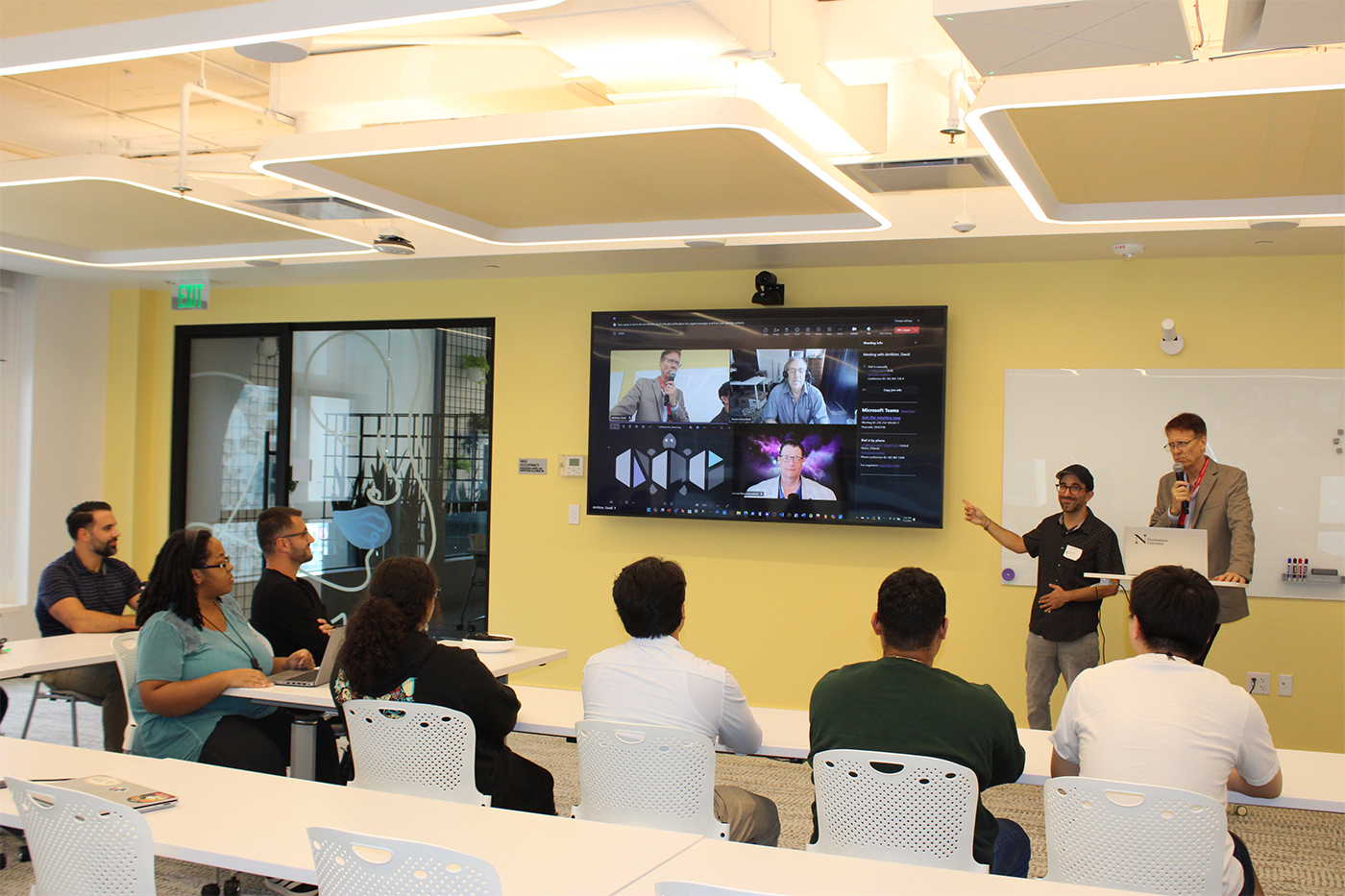
According to David de Hilster, a professor within Northeastern’s Engineering College, the aim is to foster an AI framework based on sound reasoning, defined guidelines, and complete openness, moving away from reliance on statistical approximations.
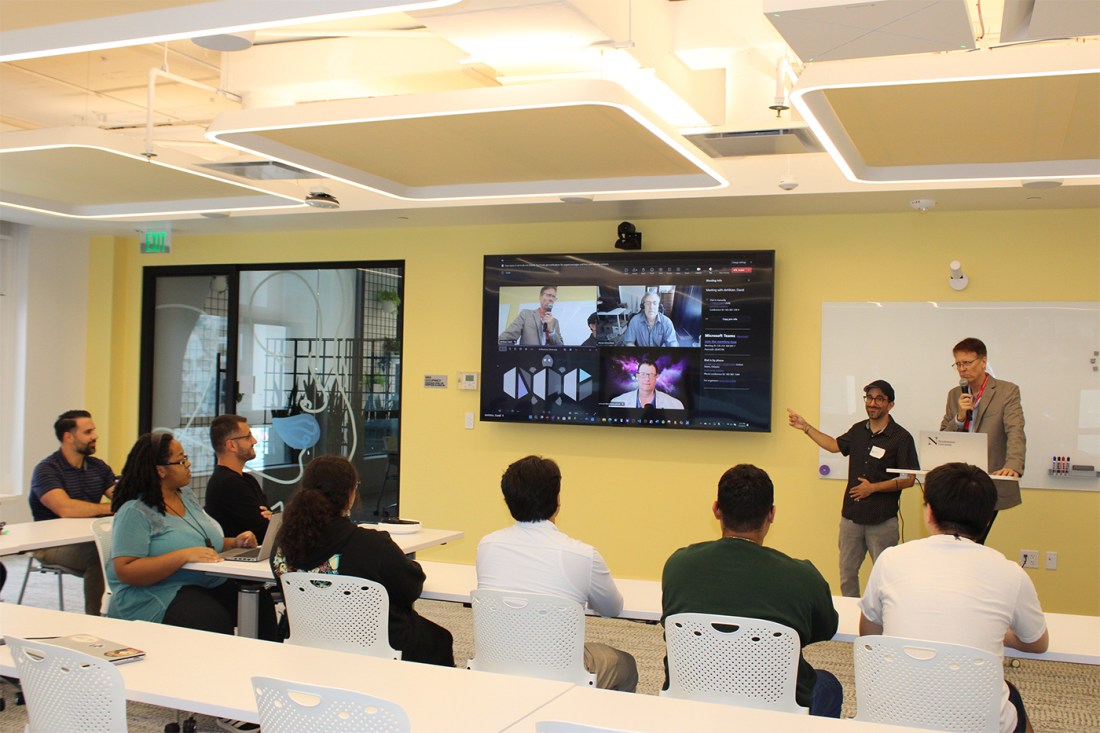
A novel student organization will be available to Northeastern University’s Miami campus attendees this coming academic year. This club has the challenging goal of creating distributed AI platforms using blockchain technology and a unique coding language known as NLP++.
Spearheaded by David de Hilster, an experienced computer language innovator and professor of engineering, the club welcomes all students. It plans to cultivate a collaborative atmosphere for students passionate about distributed systems, language processing, and artificial intelligence, with the key objective of building the essential infrastructure required to assimilate de Hilster’s logic-based language with the blockchain.
The ultimate objective is to cultivate an AI environment that prioritizes logical deduction, explicit rules, and operational clarity, diverging from the conventional statistical estimation approaches, according to de Hilster.
De Hilster elaborates, “Our ambition is to establish an accessible, decentralized platform that encourages the creation, upkeep, and application of linguistic instruments applicable across all languages and subject areas. NLP++, in its standalone format, is just a programming language. However, integrated with the blockchain, it gains access to extensive dictionaries, collective knowledge, and refined algorithms, facilitating performance that mirrors human comprehension and is conducted with utmost reliability.”
The blockchain, a modern digital innovation, functions as a shared, decentralized registry that securely stores transactional data across a connected network of computer systems. Renowned digital currencies like Bitcoin and Ethereum operate using blockchain architectures.
Decades ago, de Hilster embarked on developing a computational method that allowed machines to interpret and analyze textual data in a similar fashion to human cognitive processes. This pioneering effort culminated in the creation of Natural Language Processing ++, or NLP++, a programming language he collaboratively developed.

According to de Hilster, NLP++ has the potential to power advanced digital support systems capable of using logical and rule-oriented reasoning for answering user queries. This represents a significant move away from the statistical-based methodologies used in contemporary chatbot technologies like Gemini, Claude, and ChatGPT.
Although the NLP++ provides the fundamental framework, the quality of information required for creating AI systems is just as important. As per de Hilster, acquiring superior data can be problematic, specifically when carried out via manual, collaborative, and clear methods, which is where the blockchain is key.
De Hilster emphasizes that the blockchain’s main benefit is its governance structure, which ensures it isn’t regulated or possessed by any private organization. Its inherent decentralized structure promotes clarity and gives unrestricted access to every linguistic asset developed atop the NLP++ platform.
He further states, “Our strategy involves enabling users to write algorithms, maybe for designing a virtual sports agent, using NLP++ within the blockchain framework. This implies these algorithms are then readily available for public use.”
In the foreseeable future, de Hilster’s team plans to launch an NLP coin to provide monetary rewards for contributors to boost the development and maintenance of these resources.
While the system design is scheduled to begin this fall via the club, the comprehensive integration of NLP++ into the blockchain might span several years. However, de Hilster holds a firm belief that the ultimate advantages will be highly significant.
De Hilster points out that, unlike tools like ChatGPT, digital assistants built on NLP++ are designed to utilize structured logic and clearly defined rules sourced from the blockchain. This contrasts with the vast datasets and probability-based modeling techniques. As a result, the assistants are designed to emulate human reasoning as opposed to functioning solely as predictive machines.
“Our objective is to provide trustworthy NLP which functions in the same way human cognitive processes occur. Humans use established rules rather than depending on probabilities acquired from extensive reading. For example, if one is presented with 100 English sentences, a native English speaker can readily distinguish those that are grammatically correct,” says de Hilster.