
The escalating popularity of decentralized applications is causing an explosion in blockchain data volume. This growth makes it harder to distribute and interpret information across different blockchains, especially real-time data from all chains. Current challenges involve integrating Artificial Intelligence with crypto and accessing reliable, comprehensive data from across the blockchain ecosystem.
Enter Chainbase, an emerging data network designed to tackle these pressing issues. It aims to create a data infrastructure using a dual consensus mechanism. This article will discuss “Chainbase Genesis” and how it aims to provide more accessible blockchain data for everyone.
What is Chainbase?
Chainbase
is envisioned as a comprehensive Web3 data platform with the goal of speeding up and streamlining blockchain development. The platform equips developers with tools that facilitate the analysis of on-chain and off-chain information originating from numerous blockchains. The tools will provide APIs to easily access intricate datasets making them suitable for everyday use.
Think of Chainbase as the portal to blockchain data, eliminating the complexities of accessing and deciphering data from different blockchains. It gathers information and presents it in one location. This allows developers to monitor portfolios, create applications, and enhance AI systems using reliable blockchain data. It creates a fundamental infrastructure that allows seamless integration of data from on-chain and off-chain sources. Already compatible with BNB Chain and Base Chain smart contracts, the hyperdata network provides useful data for AI applications.
Key Benefits of Chainbase
-
Low Latency, High Throughput:
The platform is engineered for quick data processing and analytics. -
Security:
Chainbase uses a dual-staking consensus model alongside on-chain verification challenges to protect data integrity. -
AI Readiness:
Designed to restructure raw blockchain data into verifiable datasets suitable for AI. -
Data Interoperability:
Chainbase provides a unified system for accessing and using data across applications and blockchains.
Key statistics about Chainbase
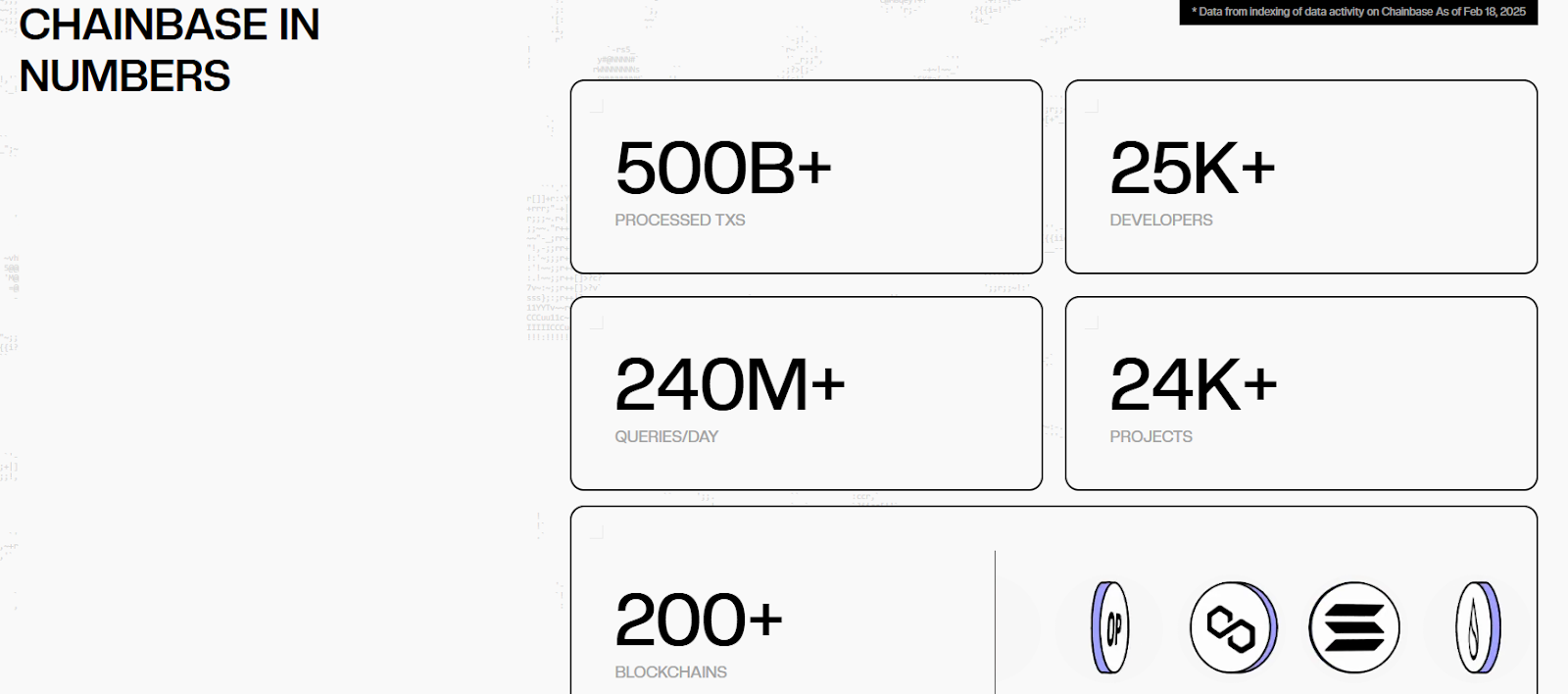
Although relatively recent, the Chainbase data network has had tremendous expansion. Already, it has handled over 500 billion data calls
as demand continues to rise. The platform supports over 25,000 developers
, generally builders and researchers.
Ecosystem growth highlights over 24,000 active projects
across various sectors like L2 explorers, MEV infrastructure, and on-chain analytics. It has already enabled more than
200 diverse blockchains
like
Ethereum
,
Solana
,
Sui
. Chainbase Genesis successfully raised over $15 million in Series A funding to support the debut of its Mainnet C Token.
What is Chainbase (C) Token?
The Chainbase Token ($C) is at the heart of the project’s design. The C Token serves as the fuel for the project’s entire ecosystem. Its price has seen positive movement following the announcement of its listing by Binance. C Token is available on exchanges like KuCoin, MEXC, Bitget, and PancakeSwap.
There is a total supply of 1 billion tokens
, built on Ethereum. The C Token incentive structure aims for a balanced token economy. At least 80% of the fees collected goes to the network’s operators. Another 15% is allocated to motivate developers who design valuable data tools. The final 5% will be gradually burned, further reducing the token’s total quantity.
Token Utility
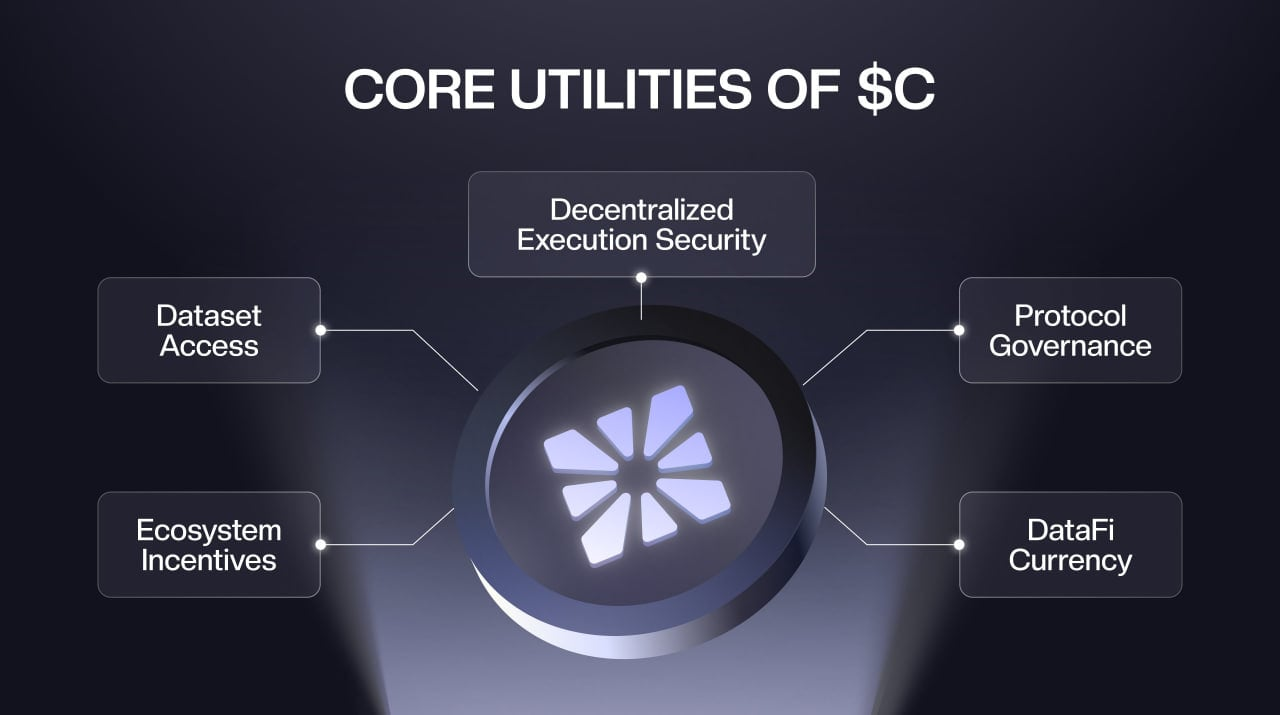
The $C token serves various crucial purposes and functionalities within the Chainbase network:
-
Dataset Access
: Utilized by smart contracts, AI agents, and DApps to query and extract structured data across multiple blockchains. -
Incentivized Ecosystem:
Chainbase encourages innovation through a fair incentive structure, where developers, data contributors, validators, and active users earn with C Tokens, resulting in strong network effects. -
Secure Decentralized Execution:
C Token holders can stake their tokens to protect the system and guarantee data workflow validity. An Autonomous Validation System (AVS) layer adds enhanced integrity and trustless data verification. -
Platform Governance:
Token holders vote on platform-related proposals, encompassing technical improvements and incentive structures, contributing to a community-driven and sustainable environment. -
DataFi payment unit:
The C Token serves as the payment mechanism and standard accounting currency throughout the Chainbase system.
Token Allocation
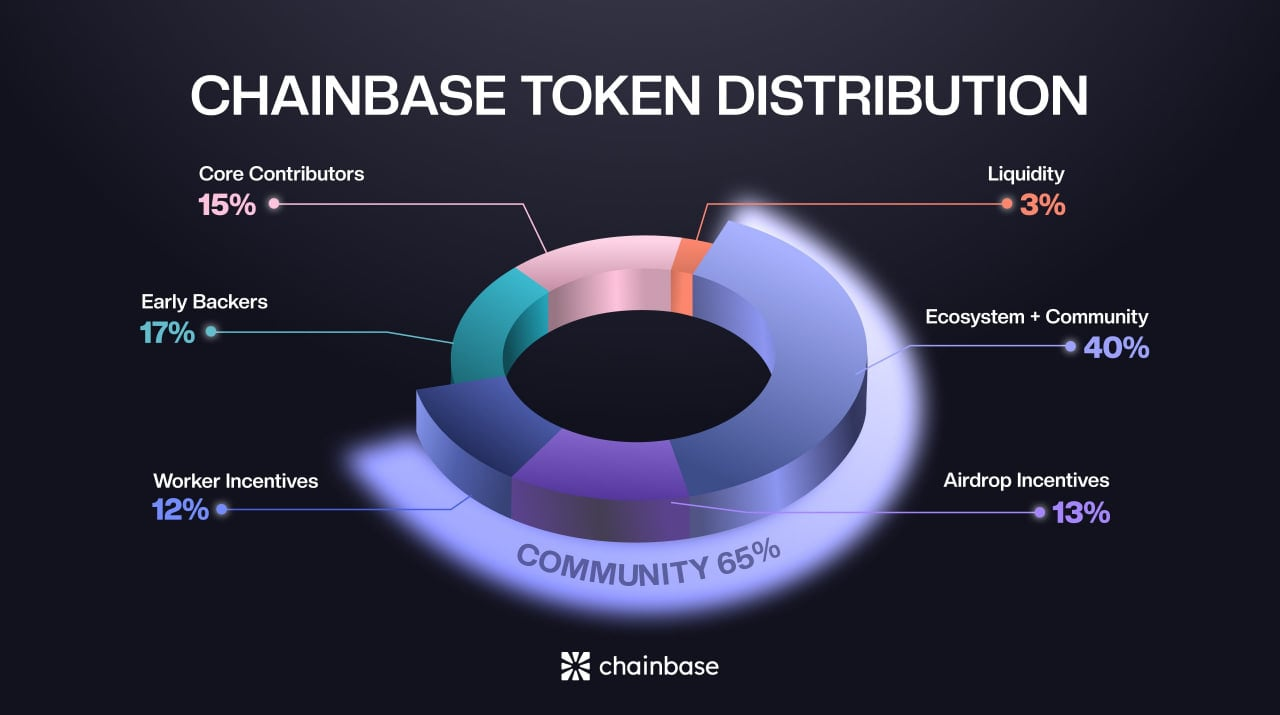
The C token economically motivates users and agents to efficiently distribute and share data, transforming raw on-chain information into a valuable asset. The following allocation model is proposed:
- Community and Chainbase ecosystem: 40%
- Chainbase airdrops: 13%
- Incentives for node operators: 12%
- Core team: 15%
- Early investors: 17%
- Liquidity: 3%
Chainbase Token Airdrop
Cryptocurrency exchange
Binance announced a Chainbase airdrop
as the 28th project on its HODLer Airdrops program. Binance will list the C Token on July 18, 2025, at 14:00
(UTC) with the initial trading pairs will be USDT, USDC, BNB, FDUSD, and TRY. This means that users can begin depositing C one hour following the announcement.
Users subscribed to Binance’s BNB Simple Earn and On-Chain Yields from July 6 to July 9 will receive the airdrop. The exchange noted the Genesis total token supply at 1 billion. Token rewards for HODLer airdrops will be 20 million C tokens or 2% of the entire supply. An additional 10 million tokens, or 1% of the total supply, are allocated three months after the spot listing.
The total circulating supply on Binance reaches 160 million C tokens, representing 16% of the total token supply. Binance listed BNB Chain and Base Chain addresses for Chainbase crypto. As the C token is already on Binance Alpha, the exchange’s platform for new ventures, users can already engage in trading. After the declaration, the Chainbase C token price jumped 46.6% to $0.242, signaling investor enthusiasm.
How to Join & Claim Chainbase ($C) Airdrop?
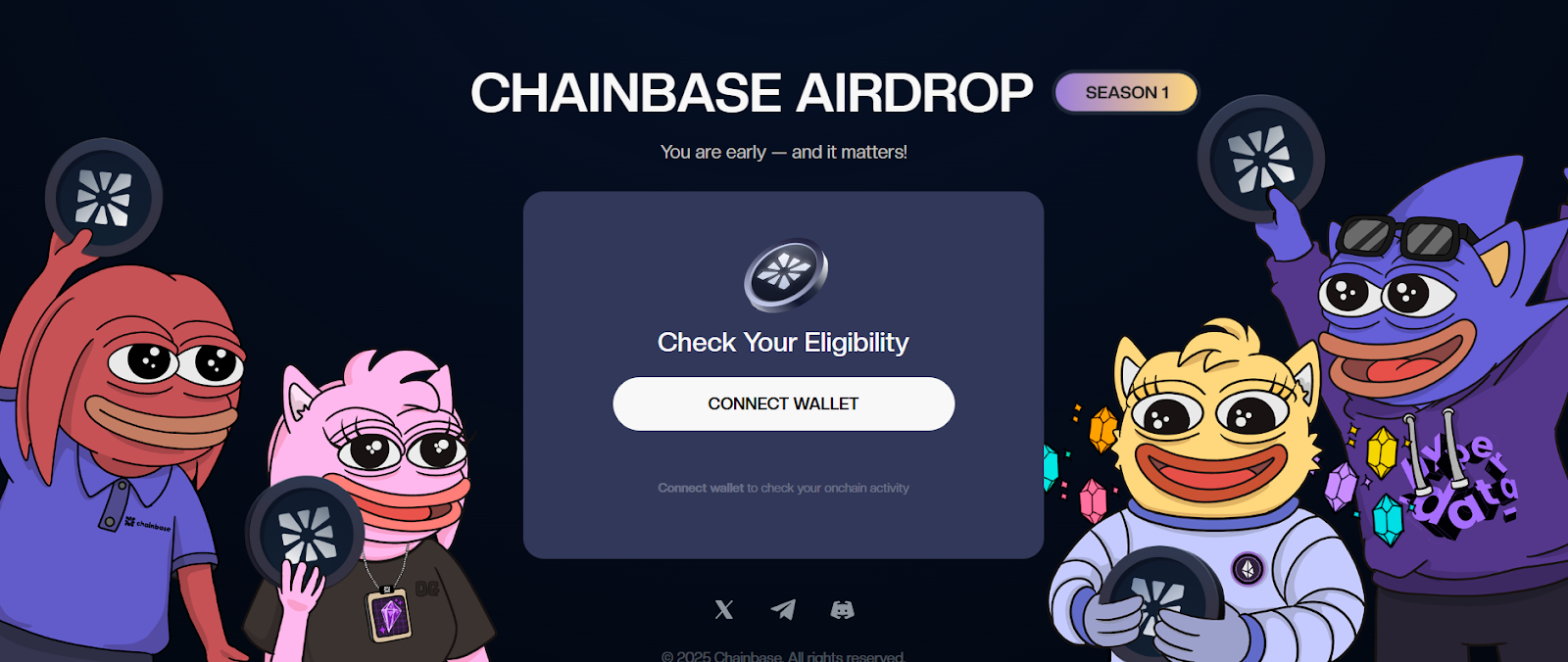
There are at least three different ways users can participate in the
Chainbase airdrop
event.
Option 1: New Users
New users can participate by registering using the
official Chainbase airdrop page
after completing advanced KYC. Participants must deposit at least 100 USDT or 2,000 C tokens via fiat, P2P, or on-chain transfer. Registered users must start spot or futures trading with the C token. The initial 500 eligible participants will share 400,000 C tokens.
Option 2: All Users
Participants can also participate in the following open challenges:
-
C Spot Trading Challenge:
Traders with C spot pairs demonstrating a cumulative volume of $ 2,000 or more will receive proportional shares of 50,000 C tokens. Larger trades result in larger rewards, up to 5,000 C tokens per user. -
C Futures Trading Challenge:
Participants trading at least $2,000 in perpetual futures will earn bonuses worth 15,000 USDT. The initial 1,000 users are eligible for prizes between 2 and 800 USDT.
Option 3: Invite Friends
Participants can earn additional rewards by inviting friends to participate. Receive 200 C for each registered friend using your referral link who fulfills a new user task. Users can earn up to 4,000 C through the referral program.
Airdrop winners accounts will be credited 10 days after the event concludes on July 24, 2025
. Bonuses will be valid for 14 days after distribution and usable for margin trading.
How Does Chainbase Work?
Chainbase is an all-encompassing data network integrating blockchain data for AI applications. The platform prioritizes data transparency, facilitating data exchange with unique benefits. The data composability and programmability is enhanced by a dual-chain architecture. It has high throughput, low latency, and a double-staking security model.
Chainbase uses its Hyperdata Network to design verifiable, structured AI-ready data from on-chain signals. The protocol is a comprehensive ecosystem for blockchain data, enhancing data transparency for AI.
Data Acquisition and Processing
-
Manuscripts:
The programmable layer defining dataset structure and transformation within Chainbase. Using
manuscripts
, developers can set data processing logic for blockchains used in gaming, NFTs, or DeFi. -
Zones:
A dedicated data-processing domain focusing on use cases or sectors based on the manuscript framework. -
Dual-Chain Technology:
Chainbase bridges crypto data programmability and composability via a dual-chain framework.
Key Roles of the Chainbase Network
Key participants manage the platform’s security and operations, which include:
-
Developers:
Create and distribute manuscripts, which are data-processing logics making blockchain data accessible. Developers are also consumers of data used to develop decentralized applications (DApps). -
Operators
: Manage the platform’s execution layer. Responsible for providing the computational resources required for data processing for efficient operations. -
Validators:
Uphold data integrity, network security, consensus, and verify transactions to ensure the integrity of the blockchain. -
Delegators:
Stake Chainbase crypto tokens with validators and operators contributing to economic stability and blockchain security.
All roles collectively create a collaborative system facilitating secure, scalable, and reliable data for AI and Web3 applications.
Key Products of Chainbase Network
Chainbase Genesis
Chainbase Genesis
intends to become a secure, decentralized data network, developing new standards in decentralized computing, storage, and data protocols. Genesis adopts collaborative measures for developers, revolutionizing data use within crypto. The project highlights Chainbase’s commitment to a transparent and efficient data ecosystem, with an incentivized Testnet event for developers.
Crypto Data Platform
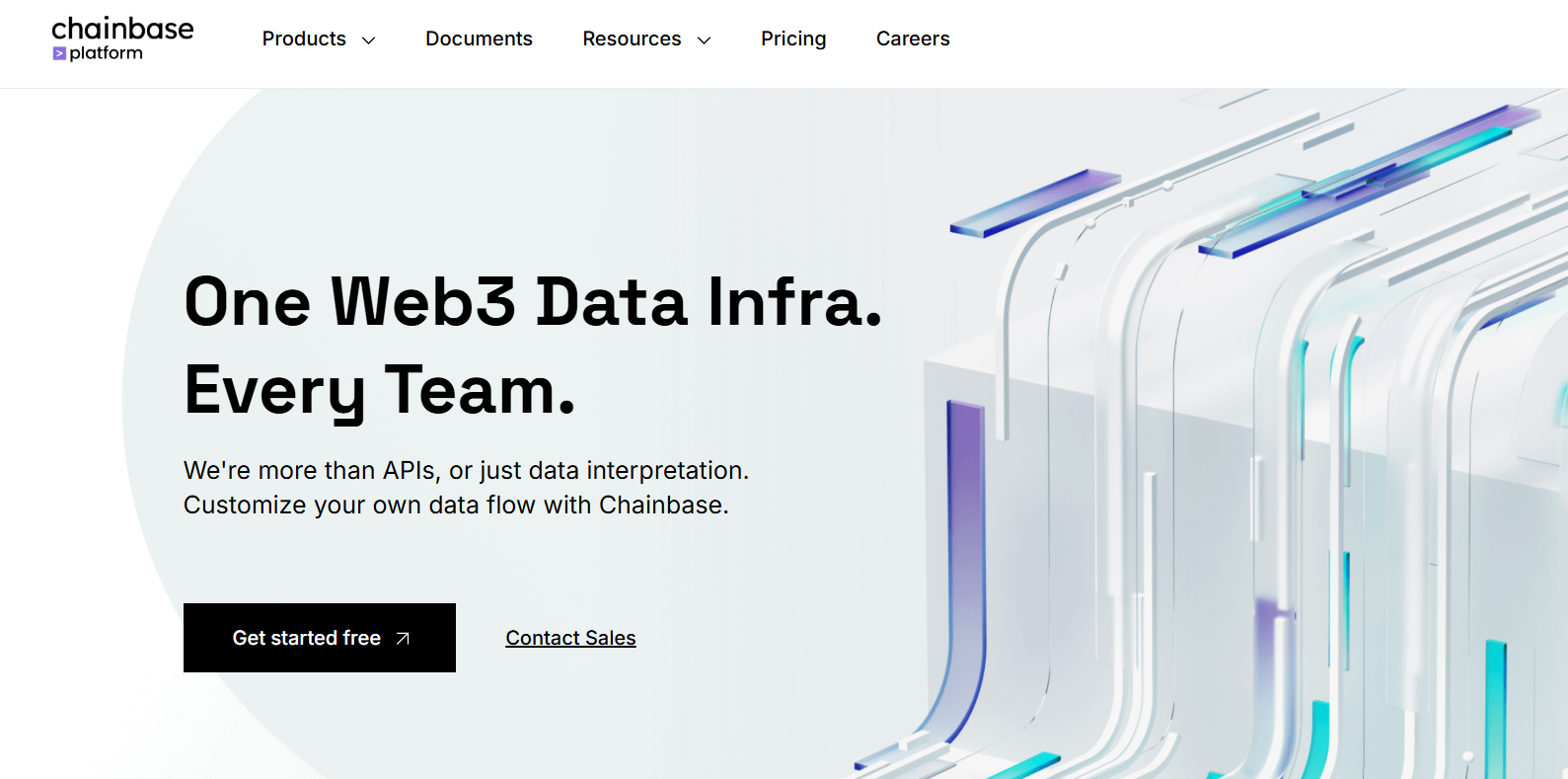
Chainbase operates a
Crypto Data Platform
, acting as the center for the decentralized data ecosystem. It offers a secure framework for users to process and analyze large amounts of blockchain data. Designed for high throughput and low latency, users can access real-time data and insights using machine learning. It is a vital tool for researchers, developers, and businesses within crypto.
Crypto World Model
Crypto World Model
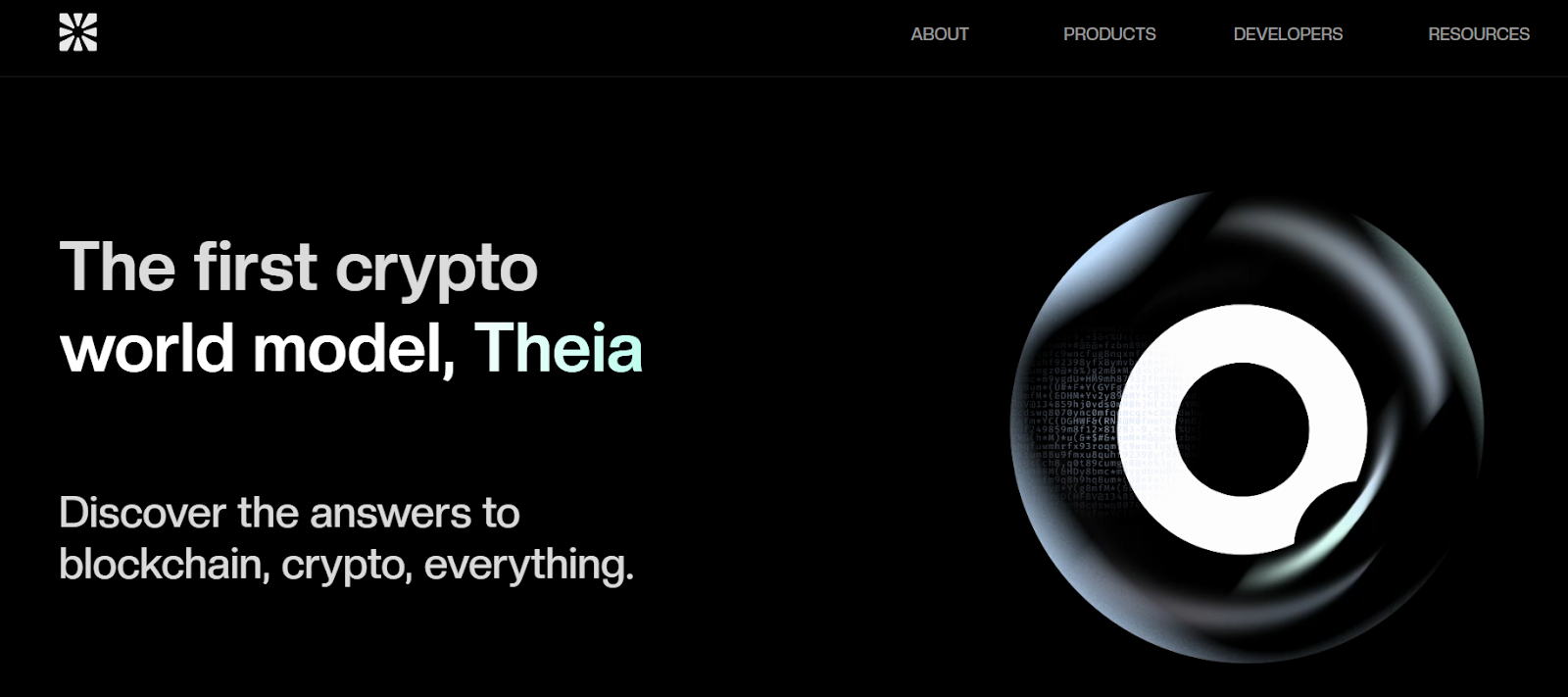
(also known as Theia) is designed to promote clarity within the ecosystem. Leveraging omnichain data, the platform builds a comprehensive crypto model. The model integrates expert knowledge across on-chain and off-chain data through natural language processing. Users can gain reliable access to transparent crypto information supporting informed decisions. The World Crypto Model uses Generate to Defend (G2D) algorithm to boost security and integrity.
Chainbase Wallet
The Chainbase Wallet is a secure multi-chain digital wallet that allows users to manage crypto across different blockchains from a single interface. It has a user-friendly interface and secure fund and private key storage.
Conclusion
Chainbase utilizes strong technical design, infrastructure, and branding for enhanced blockchain integration. The platform invites a broad audience seeking tools for AI applications, developers, and analysts. The program’s foundation consists of programmable manuscripts, decentralized execution, and a contributor model.
FAQs
How does Chainbase work?
The platform indexes, transforms, and uses on-chain data through a four-layer framework, using a data integrity, access, and a native AI layer. Users can access data using customizable APIs.
Is Chainbase a secure platform?
Share.