
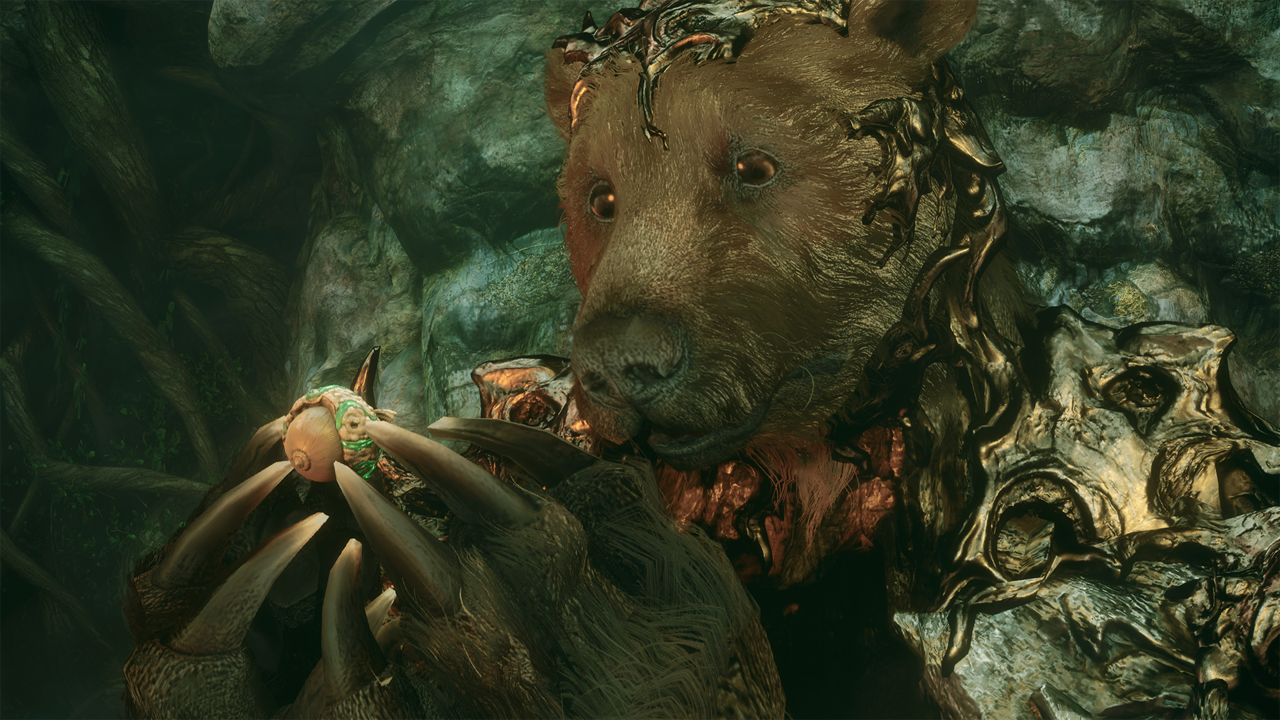
Digital Extremes is gearing up for its 10th annual TennoCon, a celebration marking not only 12 successful years of Warframe, but also the promising beginnings of their new intellectual property, Soulframe. In anticipation of the event, a sneak peek gameplay demonstration of Soulframe was presented by key figures from Digital Extremes: CEO Steve Sinclair, Creative Director Geoff Crookes, and Senior Community Manager Sarah Asselin. Following the demo, team members had the opportunity to engage in a conversation with two members of the Soulframe development team.
Sydney Hills, the Narrative Designer, and Scott McGregor, the Lead Designer, fielded questions about various aspects of the game. Topics included the innovative skill progression system, the charming French-speaking witch named Verminia, the musically inclined bear known as Bromius, and other intriguing elements.
Soulframe presents a free-to-play, open-world multiplayer RPG experience, diverging from Warframe’s science fiction setting with a focus on fantasy elements. The game emphasizes a profound bond with nature, inviting players to explore the enchanting and mysterious landscapes of Midrath. Trade in your guns and lasers for bows and magical abilities as you delve into this unique world.
Eager to get hands-on with Soulframe? Registration is now open on the official Soulframe website. Digital Extremes is offering access to Soulframe Preludes for all who register during the TennoCon weekend, but don’t delay, the offer ends July 20 at 11:59 p.m. Eastern Time.
GameSpot: Steve mentioned earlier that traditional skill trees felt “boring” and perhaps not ideal for Soulframe as a live-service game, while also showcasing concept art for a new skill system. Could you elaborate on this new approach to managing and acquiring skills, and explain how it aligns better with Soulframe’s vision?
Scott McGregor: Those familiar with Warframe’s early days might recall our initial experiment with a skill tree system. We ultimately discovered it wasn’t effective. We then, perhaps foolishly, tried again [laughs]. In Soulframe, we initially attempted to integrate skills with broad weapon categories, aiming to synchronize the progression with the game’s extensive lifespan. The games we create are designed to be played for thousands of hours, with the goal of engaging players for extended periods, as exemplified by the many players who have journeyed with Warframe for the past 12 years.
Designing systems that remain captivating and provide sufficient depth for that kind of timeframe is a significant challenge. Upon evaluating our progress with skill trees, we concluded that they would not serve our purposes effectively. Consequently, we are transitioning to a more adaptable and open-ended system, one that facilitates rapid additions and modifications. Traditional skill trees can be restrictive due to the need to honor players’ prior investments.
A player who has been with us for an extended period should be able to access new and exciting content, even if it’s located at the end of a skill tree. In contrast, a new player who joins later, or someone who discovers the game through a development stream, might be discouraged by the extensive time commitment required to reach the same point.
An open-ended system that allows for the seamless addition and removal of elements as we develop the game ensures that both new and veteran players can enjoy new features. We believe this approach is crucial for creating a system that can evolve alongside the game.

McGregor: It’s not entirely fixed in one direction. The number of skills you can equip will be tied to your mastery of specific weapon categories. For instance, if you specialize in bows, you’ll have access to a “ninja scroll” type system where you can slot in various bow techniques and skills. As your expertise with bows grows, you’ll unlock more slots. The individual skills themselves will be discovered within the game world, perhaps learned from an ancestor, acquired as a rare drop, or obtained through other means.
We encountered the French-speaking witch, Verminia—who I must say, I absolutely adore, being a French speaker myself—and it was mentioned that language plays a significant role in Soulframe. Does this linguistic diversity contribute to the narrative’s richness, or is it primarily intended to enhance the overall atmosphere and feeling of the world?
Sydney Hills: Absolutely, the heart of Soulframe is shaped by its diverse languages and accents. We’ve already collaborated with voice actors from various corners of the world. Kim Bonifay, who lends her voice to Verminia, is French but resides in London, England. Similarly, for the Bromius quest, we enlisted Øystein Kanestrøm, a Finnish voice actor who recorded his lines in Finland.
In my writing process, I draw inspiration from historical languages and slang. For our latest update, we brought in a team of Scottish voice actors