
14h05 ▪
5
min read ▪ by
Tether’s valuation has soared to new heights, reaching into the billions. However, increasing regulatory scrutiny poses a challenge to its operations. With a massive 160 billion USDT in circulation, a critical vulnerability emerges. The stablecoin leader must adjust its strategies to comply with the newly enacted GENIUS Act in the United States. This calls for swift adjustments, a focus on domestic opportunities, and a revised roadmap for the future.
In brief
- CEO Ardoino welcomes the GENIUS Act, pledging full adherence to U.S. market standards.
- Tether plans to introduce two stablecoins: USDT for international markets and a new coin specifically for American institutions.
- The competition between Tether and Circle heats up, each highlighting their strengths in transparency and media relations.
- Tether’s expansion into the U.S. could improve Bitcoin’s liquidity but also amplify systemic risks within the cryptocurrency ecosystem.
Tether and U.S. Policy: A New Chapter Unfolds
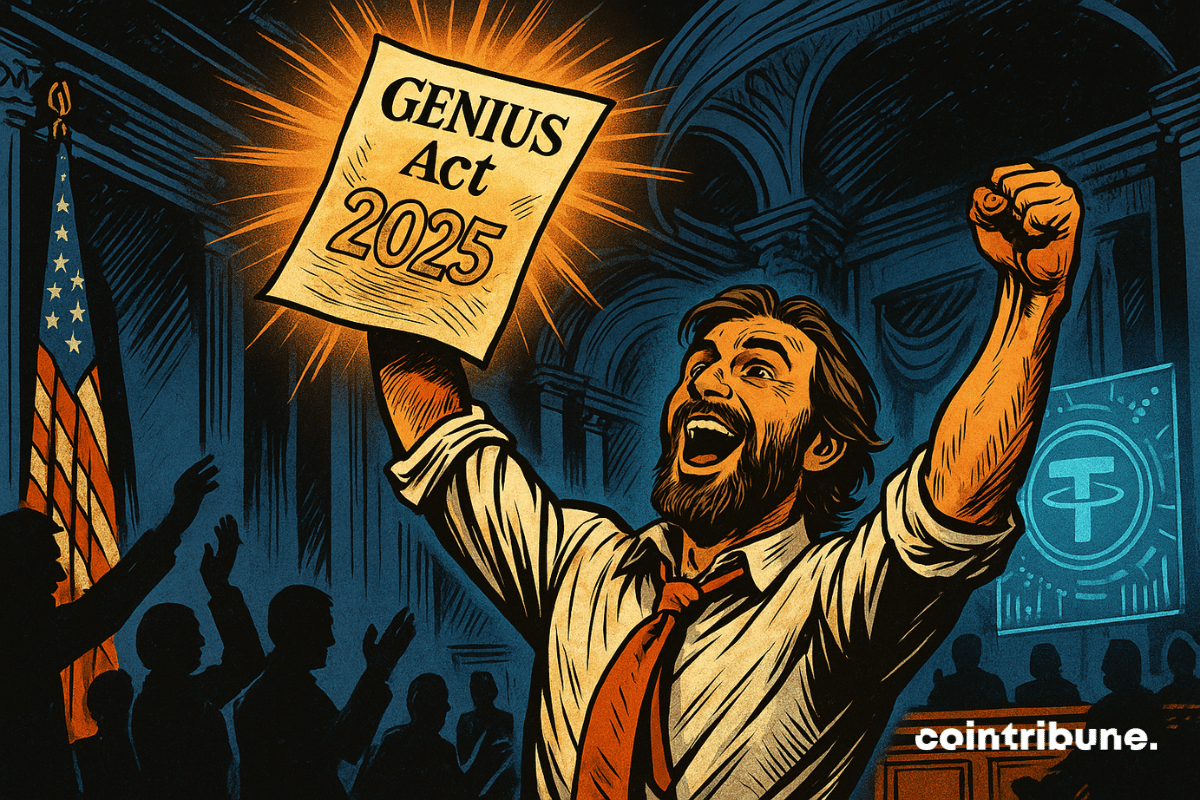
Shortly after the GENIUS Act was officially enacted, Tether’s Chief Executive Officer, Paolo Ardoino, acknowledged the event as a transformative moment. He stated from the White House, “We are very proud to be here and to be directly mentioned by the president, as it reflects all the great work done by our team over the past few years”.
This development is significant. Once a target of regulatory criticism, Tether is now experiencing a major resurgence. Ardoino emphasizes key elements such as audits, compliance, and openness. He is even committed to creating a dedicated stablecoin tailored for U.S. institutions. Moving beyond its offshore origins, Tether is aiming for acceptance within the established American financial system.
In a widely circulated post on July 18, he declared: “Now that President Trump has led the United States to adopt digital assets, we believe we can multiply our impact and establish the global dominance of the dollar“.
This statement sets the stage.
Two Stablecoins: Tether’s Strategy for U.S. Market Navigation
In response to the GENIUS Act, Ardoino is employing a dual approach: maintaining USDT while also developing a stablecoin version specifically for the U.S. market. The existing USDT will continue to operate through a “foreign issuer pathway,” primarily facilitating international transactions and serving expatriates. The new token aims to attract Wall Street by promising efficiency and complete regulatory compliance.
Institutions are used to super efficient markets, and they count every basis point; that is why we must design something suited to this new market.
Paolo Ardoino – Source: CoinDesk
Circle, Tether’s primary competitor, remains composed: “The GENIUS Act truly codifies in law the way Circle does business. We have always been trustworthy, transparent; we have been subject to public audits for five years.”
The rivalry between Circle and Tether intensifies, as each attempts to cement its market position. One stresses its history of compliance, while the other focuses on quickly repositioning its image through media and strategic initiatives. Ardoino needs to persuade stakeholders swiftly, convincingly, and decisively.
Cryptocurrency Landscape: Tether’s Impact on Bitcoin and Smaller Firms
Tether’s integration into the U.S. regulatory framework may not be universally welcomed. While it could substantially benefit Bitcoin, its broader effects on the stability of the cryptocurrency market need careful monitoring.
Key figures include:
- USDT holds a value of 161 billion dollars, making it the world’s largest stablecoin.
- Ardoino estimates that 500 million users have already embraced it.
- Circle has undergone five years of consistent public audits, whereas Tether has not been audited… at least, not yet.
- Coinbase has invested 25 million dollars in Fairshake to promote crypto-friendly legislation in Congress.
This new legislation may enable Tether to enhance Bitcoin’s liquidity. Increased USDT availability on American crypto exchanges could lead to higher trading volumes and increased market activity. However, this could also result in negative consequences, such as liquidity imbalances, heightened leverage, and concentrated risks.
What about smaller crypto businesses? They will face the challenge of balancing transparency, compliance requirements, and associated costs. While larger organizations like Tether can manage these demands, smaller entities might struggle under the regulatory pressure. Tether’s entry creates an opportunity, but ensuring access for all participants is essential.
Tether’s strategic move in the U.S. is noteworthy. Simultaneously, the company is engaged in a separate debate in Europe, where Ardoino openly opposes the MiCA regulation. He argues that its provisions are “dangerous” for banks and undermine financial autonomy. Consequently, several platforms are delisting USDT from the European market. The future of this leading stablecoin appears to be divided between two major regions.
Enhance your Cointribune experience with our “Read to Earn” program! Collect points for every article you read, unlocking exclusive rewards. Join now to start earning benefits.

La révolution blockchain et crypto est en marche ! Et le jour où les impacts se feront ressentir sur l’économie la plus vulnérable de ce Monde, contre toute espérance, je dirai que j’y étais pour quelque chose
DISCLAIMER
The views, thoughts, and opinions expressed in this article belong solely to the author, and should not be taken as investment advice. Do your own research before making any investment decisions.