
The search for the perfect blockchain – one that seamlessly balances speed,
security, and decentralization – is a constant pursuit. A new Layer 1
blockchain called Monad is generating buzz, aiming to achieve this
trifecta with a high-performance environment fully compatible with
Ethereum’s Virtual Machine (EVM). With a public testnet planned for February
2025 and a mainnet launch expected in late 2025, Monad has already
attracted significant attention thanks to its ambitious technical goals and
strong financial backing from institutions. For those considering investing,
it’s crucial to understand Monad’s performance metrics and what to watch
for after launch to assess its long-term potential. So, what do the numbers
actually reveal about Monad, and how can these translate into tangible
value?
High Performance, Low Latency
Monad is built for speed at its core. During the development network
(devnet) phase, Monad reported successful tests achieving 10,000
transactions per second (TPS). This performance is driven by MonadBFT, a
specialized consensus mechanism, and an approach that executes tasks in
parallel to speed things up. Additionally, block creation times average just
0.5 seconds, and transactions are finalized in approximately 1 second. This
is notably faster than Ethereum, which requires multiple block confirmations,
and even surpasses many other Layer 1 blockchains known for their speed,
like Solana or Aptos.
Monad Devnet is live.
10,000 real TPS achieved on the EVM.
pic.twitter.com/1bnfsi6bqU— Monad ⨀ (@monad)
March 14, 2024
If Monad can consistently deliver high TPS, fast finality, and low
transaction fees, it would validate its engineering design. This could lead
to developers migrating from Layer 2 solutions or other Layer 1 blockchains.
These performance indicators are not just technical achievements; they have a
direct impact on user engagement, the user experience of decentralized
applications (dApps), and the overall perceived value of the network by
investors.
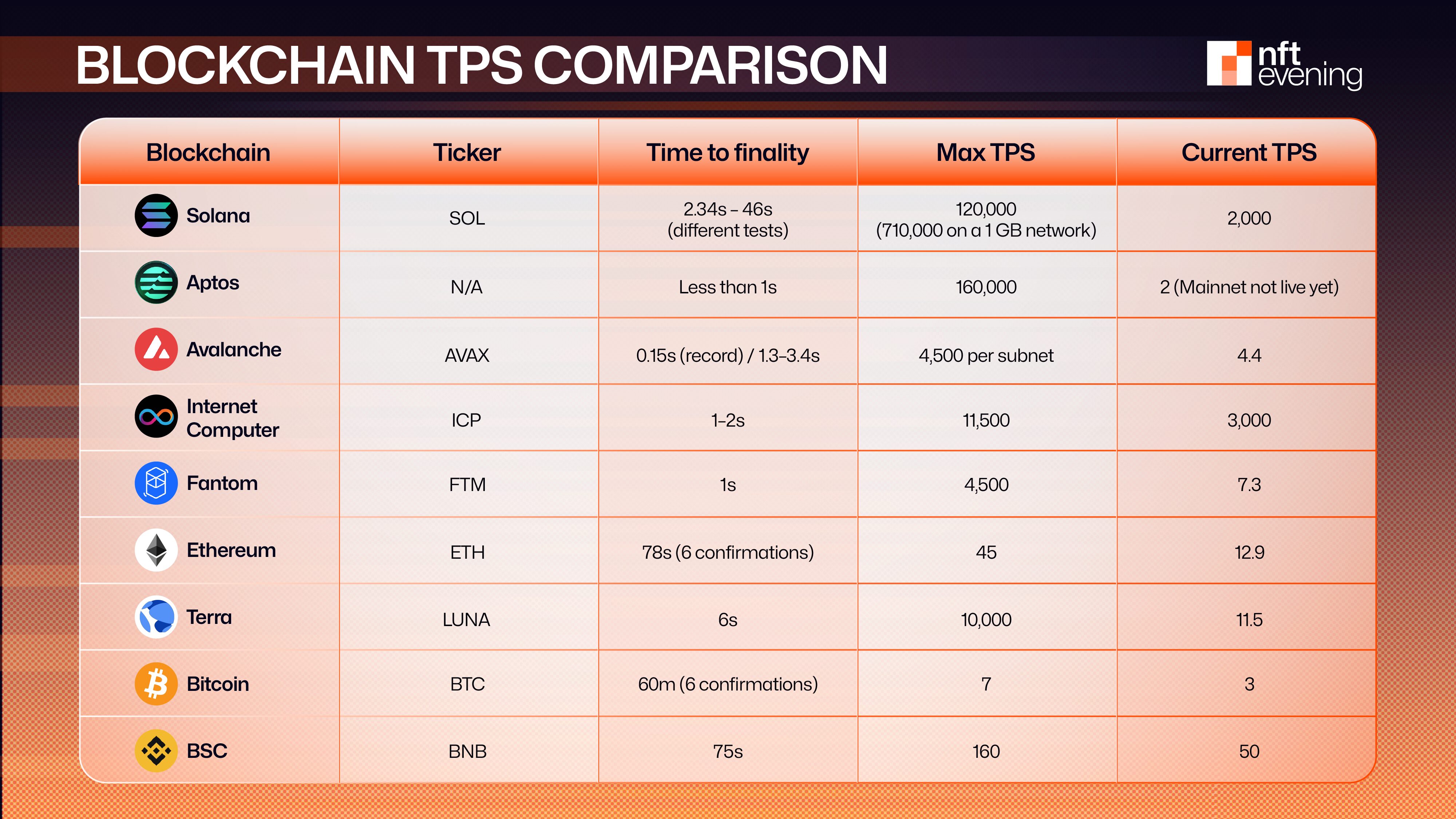
The devnet testing results from Monad show some positive signs compared to
other blockchains.
From a developer’s standpoint, this level of technology unlocks the
potential to create applications that are simply not viable on slower
blockchains. Analyzing these performance metrics in live conditions,
especially during periods of high demand, will reveal whether Monad can
effectively handle demanding applications. These could include real-time
DeFi (decentralized finance), high-frequency gaming, or machine-to-machine
microtransactions, all without sacrificing the ability of different
applications to work together seamlessly (composability).
For more:
Is Monad a Good Investment in 2025?
Gas Costs: Usability Meets Capital Efficiency
Transaction fees on Ethereum often average around $3.85 and can surge to over
$20 during periods of high network activity, making it expensive for users
and limiting the scalability of dApps. Monad addresses this issue directly
with its low-overhead, parallel processing model. Early testing indicates
average transaction fees between $0.004 and $0.007, which is comparable to
Solana and lower than leading Layer 2 solutions like Base ($0.015) and
Arbitrum ($0.05).
This cost reduction is critical for high-volume protocols such as DeFi
trading platforms or real-time games. A dApp processing 100,000 transactions
daily could save approximately $299,400 by choosing Monad over Ethereum.
Importantly, Monad aims to maintain these cost savings without relying on
centralized sequencers, which aligns with its commitment to long-term
decentralization.
If Monad can sustain these low costs at scale, it could reshape expectations
for all EVM-compatible blockchains, attracting developers who were previously
discouraged by high fees. By embedding affordability at the Layer 1 level,
Monad could become the new standard for composable, high-frequency dApps.
For more:
Monad Deep Dive: Into the Fully Compatible EVM Blockchain
Wallet Activity: Who’s Using the Network?
In Monad’s early development, the limited data available from the devnet and
testnet suggests growing momentum, although most figures are reported by
Monad itself or tracked by the community. According to
Mitosis University,
Monad’s devnet has seen over 242,000 unique wallet addresses and processed
more than 2.7 million transactions, with block finality achieved in 0.5
seconds and peak transaction throughput exceeding 3,000 TPS. While these
numbers reflect testnet conditions, they provide a basis for what the
mainnet could potentially achieve.
This dashboard will become particularly useful in coming weeks. You might want to bookmark the tweet so you don’t forget about it pic.twitter.com/9T2IPmj3eC
— Daniel Amah (@danny_4reel)
February 21, 2025
Community-developed dashboards, like those from Flipside Crypto, have begun
to monitor real wallet interactions, although comprehensive on-chain
analytics remain limited. For example, one Flipside dashboard reports over
770,000 transactions across different smart contracts and increasing daily
active users, but it doesn’t yet verify deeper metrics such as wallet
retention or the distribution of tokens.
Claims such as 15,000–18,000 daily active users, a DAA (Daily Active
Addresses) to wallet ratio of 8.5%, and that 78% of the MON supply is held
by the top 1% of wallets, have not yet been verified by independent
analytics providers. Investors should view these figures as preliminary
indicators rather than confirmed facts. It’s important to closely monitor
platforms such as Dune or Artemis once data from Monad’s mainnet becomes
widely available.
Capital Flow and TVL: Is Real Liquidity Arriving?
Total Value Locked (TVL) is more than just a number; it reflects whether
capital genuinely trusts and is being actively used on the network.
According to NFT Evening, PancakeSwap on Monad has already accumulated $250
million in TVL, making it the largest decentralized exchange (DEX) within
the Monad ecosystem. Furthermore, integrations with LayerZero enable seamless
cross-chain connections across 50–60 different networks, facilitating the
flow of assets into the platform.
However, the fact that PancakeSwap dominates the TVL raises concerns about
the concentration of capital. When a small number of protocols hold most of
the liquidity, the ecosystem becomes vulnerable, especially if the incentive
structures change. Encouragingly, there are reports of growing interest from
niche DeFi tools, staking platforms, and derivatives protocols, indicating
that diversification is underway. A broader distribution of TVL would
decrease systemic risk and enhance the ecosystem’s resilience, which is
essential for maintaining long-term investor confidence.
Validator Distribution and Decentralization Health
As of mid-2025, the Monad testnet is operating with over 57 active
validators, and more are expected to join when the mainnet launches. While
the validator count is still at an early stage, Monad’s technical design,
particularly MonadDB, which allows state access using solid-state drives
(SSDs), reduces hardware requirements. This makes it possible for a wider
range of participants to run full nodes without needing expensive,
enterprise-grade equipment. In turn, this promotes decentralization without
sacrificing performance.
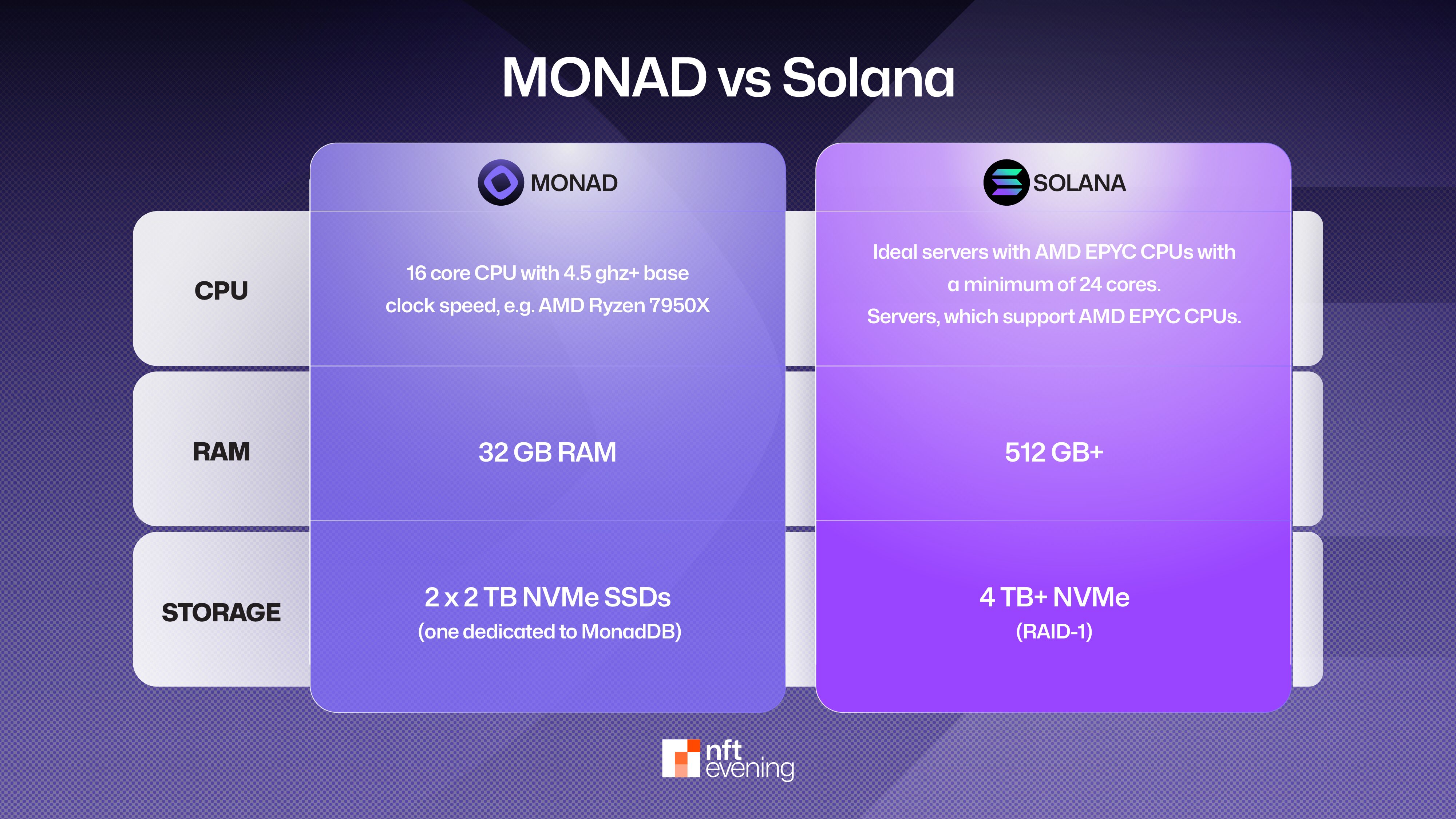
Additionally, Monad seems to have relatively modest hardware needs compared
to blockchains like Solana, which encourages broader validator participation
from around the globe. These factors are especially appealing to investors
who prioritize the long-term resilience of the protocol, as it implies less
dependence on centralized infrastructure and more community-led scalability.
Future reports on penalties for validator misbehavior and the rate at which
validators join or leave the network will provide further insights into this
aspect.
Ecosystem and Testnet Traction
According to
Bitget,
metrics confirm that Monad has over 1.5 million unique addresses, 32.4
million transactions, 564,000 deployed smart contracts, an average block
time of approximately 0.5 seconds, a 98.3% transaction success rate, and
average fees of 0.01 MON.
The ecosystem’s project pipeline is also growing rapidly. Monad has
attracted over 100 independent dApps, including key integrations with
LayerZero, Pyth, Chainlink, Band Protocol, Backpack Wallet, and FoxWallet, as
reported by
Coinbureau.
The news about integrations highlights partnerships in cross-chain messaging
and oracles, which lay a solid foundation for the growth of DeFi within the
Monad ecosystem.
Kuru is excited to announce our $11.6m Series A round led by @paradigm
This funding will help us scale our team and bring our vision of a fully on-chain orderbook to life on Monad. pic.twitter.com/oNC1T9Mnht
— Kuru (@KuruExchange)
July 7, 2025
Although specific details regarding fundraising for Kuru and aPriori are less
definitive, reports suggest a $2 million seed round for Kuru and a $10
million round for aPriori. These investments indicate that investors have
confidence in protocols built on Monad.