
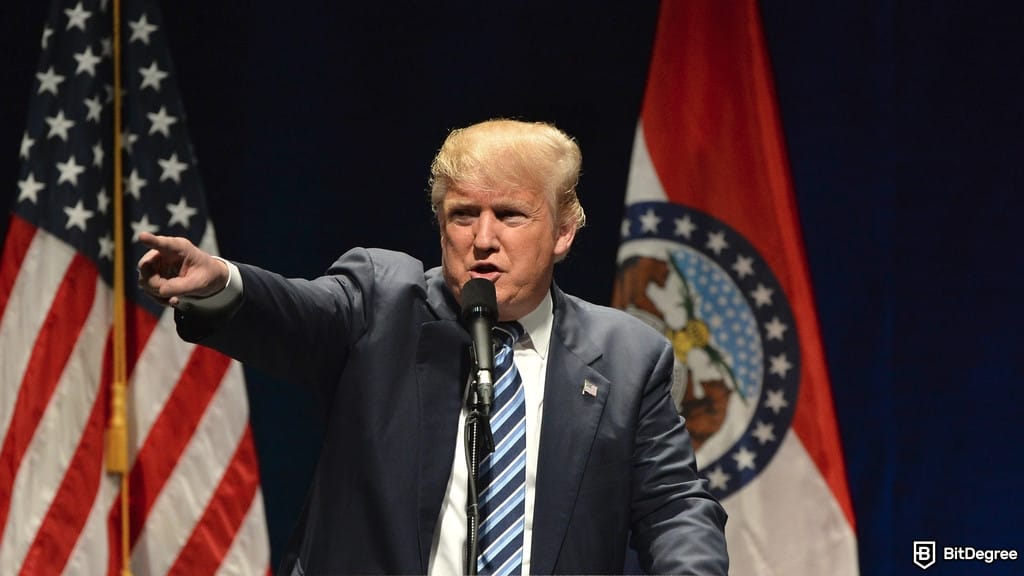
A fresh initiative from Washington aims to strengthen the presence of artificial intelligence (AI) within the borders of the United States.
The outlined strategy prioritizes three core objectives. It begins with expanding accessibility to open-source AI technologies for use in sectors like schooling, healthcare, the legal field, national defense, manufacturing, and scientific study.
The second priority focuses on restoring domestic semiconductor manufacturing to the US, essential for AI hardware requirements.
Did you know?
Subscribe – We publish new crypto explainer videos every week!
What Are Oracles in Crypto? (Beginner Friendly Animation)

Thirdly, the strategy establishes criteria governing the content permissable in AI models to promote “freedom of expression” within digital environments.
A foundational element of this strategy involves scaling AI infrastructure, notably through the construction of additional data centers and speeding up the approval timeline for these facilities. This undertaking would require adjustments to their environmental law categorization.
To sustainably power these planned expansions, the action plan includes support for energy alternatives, particularly focusing on nuclear fission and fusion. The aim is to maintain grid stability while accounting for anticipated higher energy consumption from AI computing.
While encouraging open-source contributions to AI, the strategy places a restriction on government-funded support, limiting contracts to developers engaged with ‘frontier’ large language models (LLMs).
Furthermore, a key aspect of the plan involves reshaping how governmental bodies guide AI content. The Department of Commerce, together with the National Institute of Standards and Technology, will lead endeavors to omit references to disinformation, Diversity, Equity, and Inclusion (DEI), and climate change from the AI guidance.
Separately, the British government recently entered an agreement with OpenAI to consider deploying AI within public services like healthcare, law, defense, and education. What insights did Peter Kyle, the UK Science and Technology Secretary, provide? Explore the complete story.

Having completed a Master’s degree in Economics, Politics, and Cultures of the East Asia region, Aaron has written scientific papers analyzing the differences between Western and Collective forms of capitalism in the post-World War II era.
With close to a decade of experience in the FinTech industry, Aaron understands all of the biggest issues and struggles that crypto enthusiasts face. He’s a passionate analyst who is concerned with data-driven and fact-based content, as well as that which speaks to both Web3 natives and industry newcomers.
Aaron is the go-to person for everything and anything related to digital currencies. With a huge passion for blockchain & Web3 education, Aaron strives to transform the space as we know it, and make it more approachable to complete beginners.
Aaron has been quoted by multiple established outlets, and is a published author himself. Even during his free time, he enjoys researching the market trends, and looking for the next supernova.