
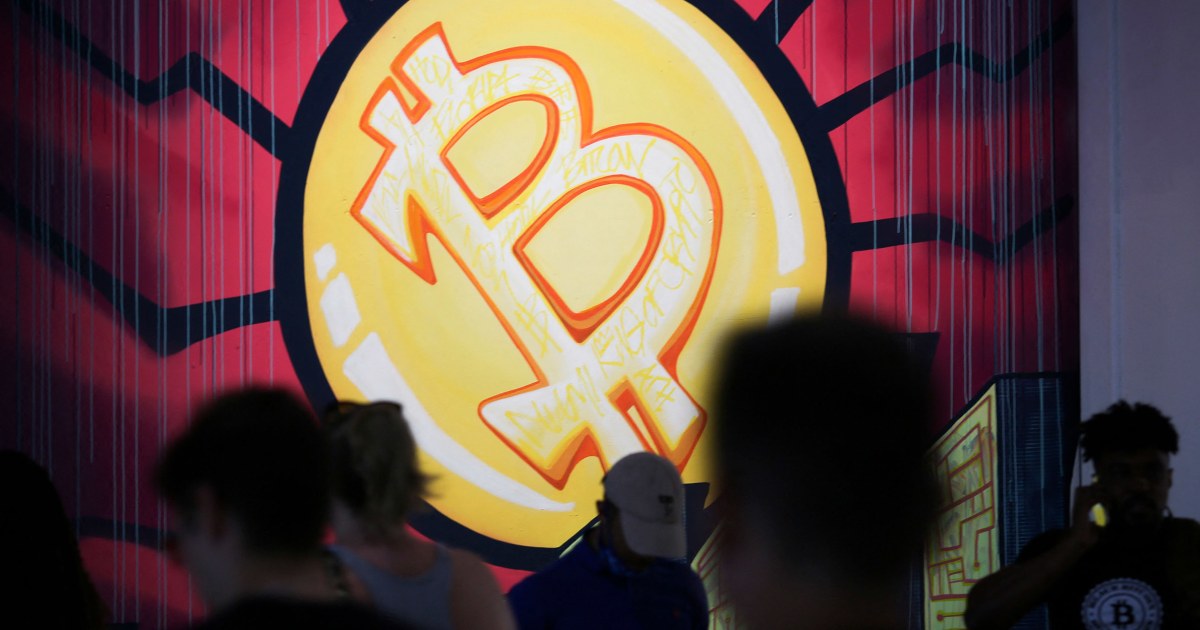
JACKSON HOLE, Wyoming – A major political action committee supporting cryptocurrency is injecting significant funds into key Senate races in Michigan and Arizona, backing Democratic candidates against those endorsed by Donald Trump. This move has sparked outrage among leading Republicans who previously saw the crypto sector as an ally, not an adversary.
Fairshake PAC, along with associated super PACs, is committing millions in advertising dollars to influence the outcome of three U.S. Senate elections this cycle. On Wednesday, the group announced pledges of roughly $3 million each to Representatives Ruben Gallego, a Democrat running in Arizona, and Elissa Slotkin, a Democratic candidate in Michigan.
This financial intervention risks disrupting Republican efforts to win Senate seats in these crucial swing states, impacting the overall balance of power in the Senate. It also comes at a time when prominent Republicans have been actively working to strengthen ties with the cryptocurrency industry amidst a challenging regulatory climate, leveraging their political influence to do so.
When contacted for their position, Fairshake directed NBC News to Stand With Crypto, a crypto-advocacy nonprofit, citing Slotkin and Gallego’s current “A” ratings from the organization. Both Democratic congressional members have recently crossed party lines to support a groundbreaking crypto legislation.
For several years, Slotkin had been critical of cryptocurrency, but her views appear to have shifted considerably in recent months. As recently as March, Stand With Crypto gave the Michigan representative a failing grade of “F.”
Gallego, who is facing Republican Kari Lake in the Arizona Senate race, has historically not supported crypto-backed legislation. In 2022, he publicly praised a candidate who “slayed the Crypto beast.” Last year, Gallego co-signed a letter led by Senator Elizabeth Warren of Massachusetts, addressing crypto-related financial reforms, while acknowledging Warren as a “outspoken advocate for regulation and oversight of crypto.” He has also criticized business leaders like Elon Musk for “pushing Bitcoin” and profiting from cryptocurrency, and has supported past legislative measures viewed negatively by the crypto community.
Lake, in contrast, enjoys an “A” rating from Stand With Crypto, earned through her strong public support for the cryptocurrency industry and is considered “very pro-crypto.”
Josh Vlasto, a spokesperson for Fairshake, explained in a statement that the super PAC and its affiliates aim to “support candidates who embrace innovation, want to protect American jobs and are committed to working across the aisle to get things done and oppose those who do not.”
The cryptocurrency industry, along with its affiliated super PACs, has amassed over $100 million for spending in House and Senate elections. This financial power is being used to cultivate a favorable regulatory environment by supporting candidates sympathetic to the crypto sector. For instance, in Ohio, the group is targeting $12 million to aid a Republican Senate candidate seeking to unseat Democratic Senator Sherrod Brown, chairman of the Senate Committee on Banking, Housing and Urban Affairs, who is seen by industry advocates as skeptical of cryptocurrency.
Fairshake stands out as the leading PAC backed by digital asset companies, with its primary funding originating from a select group of donors: the blockchain firm Ripple; individual contributors linked to the venture capital firm Andreessen Horowitz; and Coinbase, the largest cryptocurrency exchange in the United States.
Republican strategists advocating for cryptocurrency argue that it represents a growing sector which the party has wisely embraced, and that these investments will yield positive outcomes in the long term.
“The landscape has changed since Trump’s initial term,” stated Matt Mackowiak, a Texas-based GOP strategist. “Savvy Republicans recognize the potential and are engaging with it. This offers multiple benefits: a source of fundraising, a way to attract younger voters, and a chance to differentiate themselves from Democrats, positioning Republicans as the party of the future.”
Now, simmering disagreements are surfacing as concerned Republicans view Fairshake, its affiliated super PACs, and its key donors with increasing suspicion. They caution that the groups risk diminishing their influence with Republicans after building hard-won relationships, and they question how solid Gallego and Slotkin’s commitment to crypto really is.
“It mirrors the Chamber of Commerce’s decision to finance a number of anti-business House Democrats, who then enacted substantial tax increases on businesses through the so-called Inflation Reduction Act,” noted a senior GOP Senate aide. “Now, the Chamber of Commerce struggles to even secure a meeting with House Republican Leadership to discuss their priorities.”
Relations between Congressional Republicans and the Chamber of Commerce have been strained in recent years. This stems from the business lobbying group’s discontent with Republicans for failing to support immigration reform and halt Trump’s tariffs, both policies which the group believed were detrimental to American businesses. The chamber signaled its openness to backing Democrats, an action that was unthinkable during the Obama administration and which infuriated many Republicans on Capitol Hill.
The aide went on to say, “It’s astonishing that Fairshake’s advisors are pursuing the same flawed strategy.”
One Republican strategist involved in Senate races warned that the spending risks damaging Trump directly, since his allies are being targeted.
“Coinbase and Fairshake appear to be intentionally alienating Republicans. Spending against two important GOP candidates could jeopardize the Senate and hurt Trump,” said the source, who spoke anonymously because they were not authorized to comment publicly on behalf of the former president. “Gallego and Slotkin have voted against the interests of Bitcoin and would support the confirmation of a far-Left SEC Chairman. It simply doesn’t make sense.”
The spending was a major talking point among Republicans gathering in Jackson Hole this week, alongside Marc Andreessen and representatives from Coinbase and other crypto organizations, to attend successive retreats hosted by the Congressional Leadership Fund super PAC and House Speaker Mike Johnson (R-La.). Andreessen and his business partner, Ben Horowitz, have both publicly endorsed Trump for president and have criticized the Biden-Harris administration’s regulatory agenda and its proposal to tax unrealized capital gains. Together, Andreessen and Horowitz rank among Fairshake’s largest financial supporters.
“Republicans are incredibly confused about Fairshake’s actions, and I believe that’s a very negative sign for the industry, that people are questioning why our primary trade association is directing its resources against our friends,” stated an industry leader, who requested anonymity to speak candidly. “Many attendees at the CLF conference are baffled by the industry’s chosen strategic chess move.”
A prominent figure within the “Trumpworld” circle likened the support “to a pro-Israel group giving money to the Squad.” A source familiar with the comments, who was not authorized to speak publicly, suggested this comparison implies that Fairshake is backing individuals who are hostile to its own interests.
Trump has pledged to enact crypto-friendly policies if elected, marking a reversal from his stance during his time in the White House, when he denounced Bitcoin as “highly volatile and based on thin air.” Trump’s campaign now accepts Bitcoin donations, and his selection of JD Vance as his running mate was perceived as a victory for the crypto industry. Vance has advocated for less stringent crypto regulations and has reported holding Bitcoin assets worth between $250,000 and $500,000.
Mackowiak suggested that this shift is partially driven by generational differences, with Vance credited for persuading a group of Silicon Valley investors to host Trump on their popular podcast and hold a San Francisco fundraiser that generated millions.
A former Trump regulator commented that a future Trump administration would likely adopt “a more nuanced approach to regulation” concerning crypto, but suggested a regulatory shift is anticipated regardless of who wins the presidential election. “It’ll just happen more quickly with a Trump presidency.”
Since securing the Democratic Party’s nomination, Vice President Kamala Harris has begun efforts to “reset” her relationship with the crypto industry. Executives from Coinbase, Ripple, and Kraken reportedly voiced their concerns to White House advisors during a Zoom call, according to Bloomberg. Democrats have also launched a “Crypto4Harris” initiative, aimed at solidifying ties between the industry and the presidential candidate. Key Harris surrogates are also indicating a more welcoming environment should she win in November, with Maryland Governor Wes Moore promising during a recent CNBC interview that Harris would offer a regulatory framework more favorable to businesses than under Biden.
However, the former regulator noted that skepticism remains widespread.
“The major political question is, can Harris truly convince industry proponents that she has completely changed her stance, or is it just talk?” he said. “Because they won’t believe that she’d go against Elizabeth Warren.”