
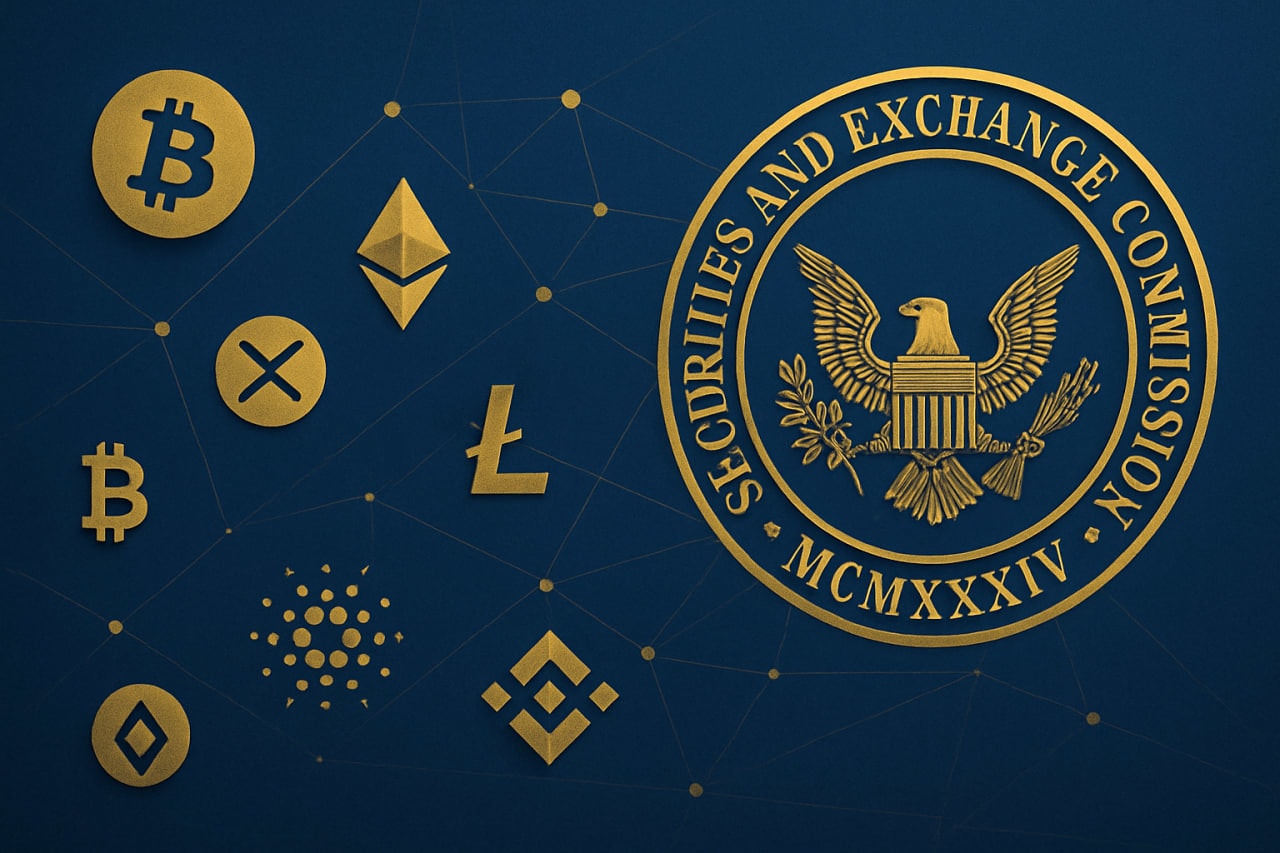
As we move into 2025, the digital currency world finds itself at a pivotal point. Widespread acceptance is growing, fueled by investments from big institutions, easier access for everyday users, integration into payment systems, and the introduction of Exchange Traded Funds (ETFs). However, uncertainty surrounding regulations continues to present a challenge to new ideas and development. The U.S. Securities and Exchange Commission (SEC), a key government body, is playing an increasingly significant role in shaping how the world perceives crypto. The question is no longer whether the SEC will take action, but rather how it will act and what the consequences will be for this rapidly changing sector.
The stakes are incredibly high. As decentralized finance (DeFi), Non-Fungible Tokens (NFTs), and tokenized real-world assets become more common, there’s a growing demand for clear rules from both those creating crypto solutions and established financial firms. The SEC’s strategy will determine whether the industry experiences sustainable growth or whether innovation is forced to move overseas. Understanding their goals and methods is vital for anyone looking to participate in or invest in this space.
The SEC’s Expanding Influence
Over the past five years, the SEC has broadened its understanding of security regulations to encompass a larger variety of digital assets. Under the guidance of Chair Gary Gensler and his successor, the SEC has actively pursued cases against token offerings, staking services, decentralized exchanges, and centralized trading platforms that haven’t registered with the agency. The significant Ripple Labs case, although not fully resolved, has established a precedent for how courts might differentiate between utility tokens and security tokens.
Beyond the Ripple case, legal actions against Coinbase, Binance, and smaller DeFi projects further emphasize the SEC’s intention to exercise broad oversight. These cases often rely on the application of the Howey Test—a legal standard that’s decades old—to modern, blockchain-based assets. Critics argue that applying this outdated framework to decentralized protocols is not only flawed but also detrimental to innovation.
Impact on Innovation and Investment
Crypto developers and venture capitalists frequently voice concerns that the SEC’s strict approach could hinder innovation. Many suggest that using security laws from the 1930s for decentralized technologies creates obstacles that discourage entrepreneurship within the country. For instance, the possibility of enforcement actions has discouraged initial coin offerings (ICOs) and token launches in the U.S., even as Web3 fundraising flourishes in areas like the EU, Dubai, and Singapore.
Furthermore, developers are concerned that strict regulation will discourage experimentation with governance tokens, DAOs (Decentralized Autonomous Organizations), and new ways for communities to own and manage projects. These represent some of the most promising aspects of Web3, and regulatory uncertainty could delay their growth or push them into unregulated markets. Investors, on the other hand, face increased due diligence requirements as they evaluate not just a project’s underlying principles but also its potential regulatory risks.
Consequently, American crypto investors are increasingly limited to secondary markets or platforms located outside the U.S. Several promising startups have moved to jurisdictions with more favorable crypto regulations to avoid potential legal problems in the U.S. This loss of talent and expertise is a growing concern for those who want the U.S. to remain a leader in technological advancements.
Winners, Losers, and the Regulatory Advantage
Some participants benefit from this unclear regulatory environment. Major exchanges like Coinbase have taken a proactive approach by communicating with lawmakers and even filing lawsuits against the SEC to gain clarity. While these legal battles are ongoing, they put pressure on Congress to create comprehensive laws. Meanwhile, smaller decentralized platforms operate in ambiguous legal zones, relying on the decentralized nature of their protocols and governance to avoid jurisdictional reach.
This situation creates an uneven playing field where regulatory loopholes benefit projects that have the resources to hire legal teams or relocate. Large companies can adapt quickly or lobby for specific rules, while smaller innovators struggle with compliance costs or give up on their projects altogether. Additionally, users are often left confused, unsure of what protections they have or which platforms they can trust.
The irony is that regulations designed to protect consumers can sometimes lead them towards less regulated, riskier alternatives. This contradiction is one of the most difficult challenges in creating effective crypto regulations.
International Consequences
The SEC’s actions don’t occur in isolation. Regulators in other countries often take notice of the U.S. approach, either imitating or opposing it. The EU has responded with the Markets in Crypto-Assets (MiCA) regulation, which establishes clear and actionable rules for stablecoins, exchanges, and wallet providers. MiCA has been widely praised for its clarity and has already attracted companies seeking a predictable regulatory environment.
In contrast, China maintains a strict ban on crypto trading but, surprisingly, supports blockchain innovation through government-sponsored initiatives. Countries like Brazil, Japan, and South Korea are developing balanced policies, aiming to protect investors while encouraging innovation. These international differences underscore the urgent need for global cooperation—or at least mutual understanding—regarding crypto regulations.
Projects that can adapt to different jurisdictions and demonstrate their readiness for compliance are better positioned for long-term success. This may explain the growing demand for legal experts in the crypto field and the emergence of platforms offering compliance services.
Navigating the Uncertain Future
The SEC’s current stance suggests that clear regulations may not come from new laws but from precedents set through enforcement actions. For developers, investors, and users, this means moving forward requires caution, compliance, and careful jurisdictional planning. While some see the SEC’s approach as an attack on crypto, others argue that legal boundaries are necessary to legitimize and mature the industry.
However, the positive side is that regulation—even if imperfect—also brings legitimacy. As legal frameworks evolve, crypto could finally shed its image as a speculative and lawless space and become a mainstream financial component. If regulators and innovators can find common ground, the next phase of crypto won’t just focus on price speculation or market fluctuations; it will be about building a lasting infrastructure.
For now, the industry must balance innovation with legal compliance. Whether the SEC ultimately supports or hinders progress will depend on how well both sides can communicate, compromise, and collaborate. Until then, the future of crypto remains uncertain—but full of potential.