
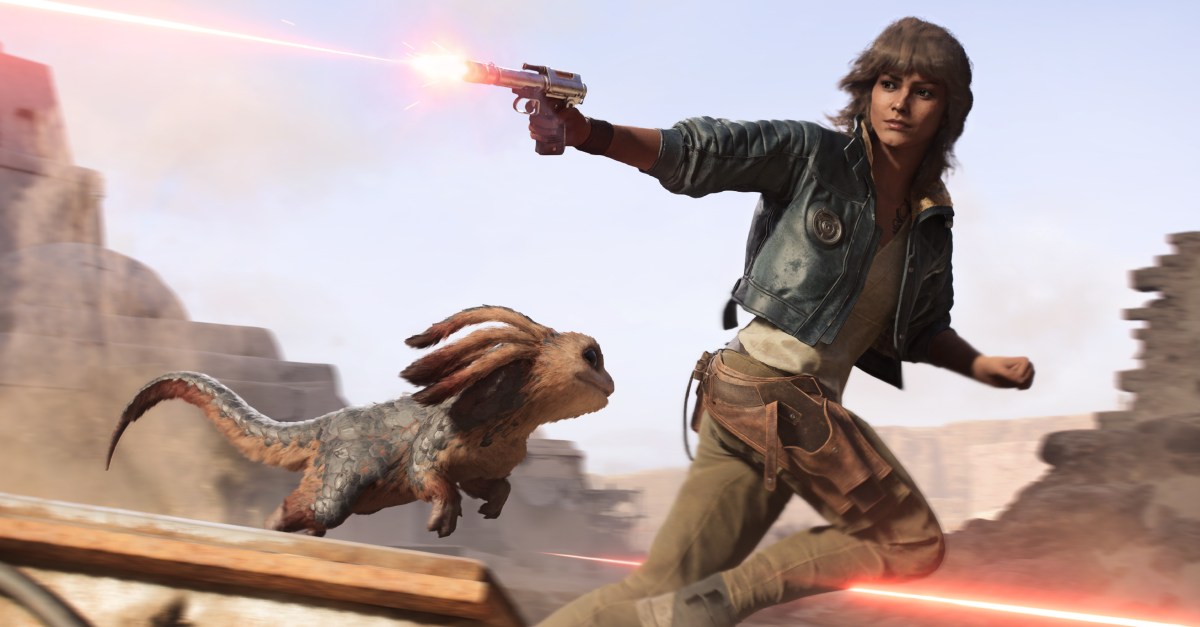
During a recent company-wide meeting, Ubisoft’s head, Yves Guillemot, attributed the underwhelming sales performance of Star Wars Outlaws to weaknesses inherent in the Star Wars franchise itself.
Guillemot stated that “[Outlaws] existed within a brand experiencing turbulence.” Adding to the bad news, rumors have surfaced suggesting a planned sequel for Outlaws may have been shelved. This is a significant blow for fans eagerly anticipating further adventures with Kay Vess.
Is Guillemot’s assessment of Star Wars as a declining force accurate? The situation is likely more nuanced. While the Star Wars universe isn’t collapsing, it certainly doesn’t command the same monolithic presence it held between 2016 and late 2019.
Star Wars Outlaws launched in August 2024, shortly after the debut of The Acolyte in June. The Acolyte, one of the most costly Star Wars television projects to date, became embroiled in controversy almost immediately. The issues ranged from cast members publicly criticizing Disney for failing to shield its diverse cast from considerable online harassment, to widespread review bombing. Separating genuine, well-intentioned criticism regarding The Acolyte’s shortcomings (which were numerous, as with a sizable portion of Star Wars material, even Andor) proved difficult. Even after the show’s cancellation before a planned second season, discussions about its ambition to tell a novel narrative detached from the Skywalker lineage continued for several months.

Photo: Matt Kennedy/Lucasfilm Ltd.
Shortly thereafter, Skeleton Crew premiered on December 3rd. Despite positioning itself as Star Wars’ take on stories like *The Goonies* and *Stranger Things*, its initial two episodes only managed to secure 384 million minutes of viewing time. Comparing this to *The Mandalorian* Seasons 2 and 3, which pulled in 1,032 and 823 million minutes respectively, the justification for Guillemot’s stance to blame Star Wars rather than *Outlaws* becomes easier to see.
Defenders of this massive media franchise have emerged en masse. Although I don’t understand the urge to support any corporation–it’s Star Wars, guys, some criticism won’t kill it–I can see why the impulse arises within the current Star Wars climate.
By all indications, Star Wars is still quite popular. Andor season 2 remains critically praised, and during its release its viewership figures were fairly strong, although impacted somewhat by releasing three episodes each week. Also, EA’s Star Wars Battlefront II strangely crushed player count records, eight years after release. Objectively, Star Wars is a household name. I want more Star Wars!
Based on all the facts, there are clear successes and losses for the Star Wars brand at the moment. This begs the question: What components of the franchise are still effective, and why?

Image: Lucasfilm Ltd.
Even in its slightly underwhelming third season, *The Mandalorian* exceeded other Disney Plus Star Wars series regarding viewership. The first season launched in the same period as *The Rise of Skywalker*, a film equally divisive as *The Last Jedi* before it. While overall opinions on the sequels change, *The Mandalorian* arrived during a period in which fans were desperate to distance themselves from lightsaber fights and characters with famous last names. They instead embraced the common person, a regular individual trying to survive within the universe. Pedro Pascal’s Mandalorian, Din Djarin, fulfilled that and more.
One of *The Mandalorian’s* strengths was its more down-to-earth setting, at least initially. Most of the first season showed Din in less-than-reputable bars or rural communities, interacting with ordinary people and opposing Imperial remnants or pirates. War remained an unavoidable element, yet one could say it revolved primarily around people, without a central, villainous figure revealed until the finale.
But as essential as ordinary characters and familiar settings are, *The Mandalorian*’s real superpower, and the reason it remains so beloved, is its appeal to family audiences. Din Djarin sides with Grogu, a cute alien with the same species as Yoda, and becomes his adoptive parent for three seasons. And who can resist a father-son story? Add the fact that Grogu is an adorable mascot, whose popularity may be grating now, but surely boosted The Mandalorian’s acceptance–and its success is all but guaranteed.
