
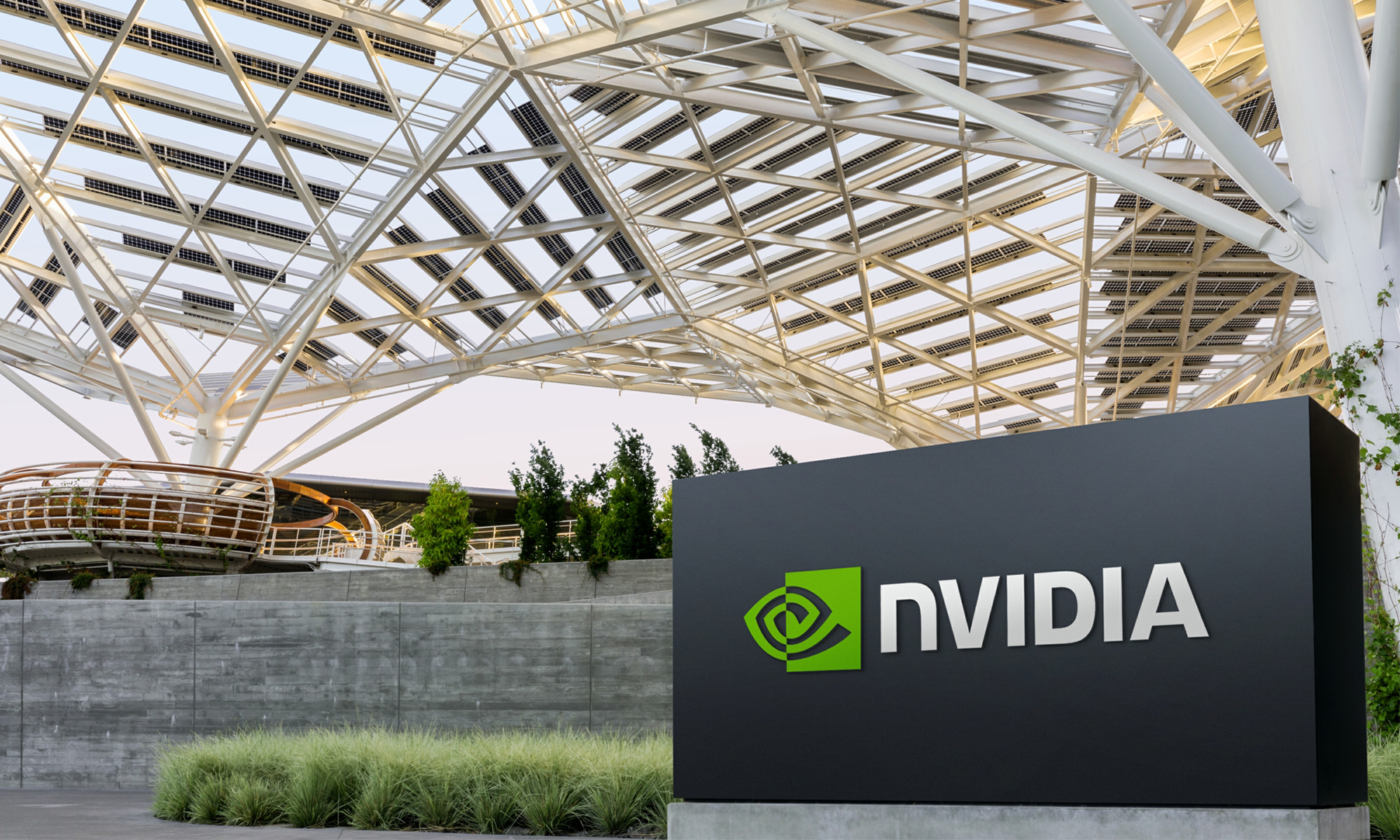
Nvidia’s state-of-the-art graphics processing units (GPUs) have positioned the company as a leader in today’s most significant technological advancements.
When Nvidia (NVDA 0.43%) was established in 1993, it primarily concentrated on gaming and enhancing visual experiences. The company later pioneered the graphics processing unit (GPU) in 1999, which coincided with their initial public offering.
More recently, Nvidia has played a notable role in the digital currency sphere, while also rising to prominence as a major force in artificial intelligence (AI). Currently, gaming contributes to less than 10% of their total earnings. This strategic shift has propelled Nvidia to become one of the largest companies globally, demonstrating how thriving businesses can adapt to cutting-edge technological developments.
Image source: Nvidia.
What Distinguishes Nvidia’s GPUs?
The foundation of Nvidia’s achievements lies in its GPUs – specialized semiconductors engineered for parallel processing. This architecture divides complex operations into smaller, manageable segments that are processed concurrently. Initially, Nvidia GPUs were primarily designed to enhance graphics rendering in video games. One of their significant early partnerships was with Microsoft, who integrated the Nvidia GeForce 3 into the first Xbox gaming console.
In 2006, Nvidia marked a pivotal advancement in GPU technology by introducing Compute Unified Device Architecture (CUDA). CUDA broadened the application of parallel processing beyond graphics, allowing GPUs to be utilized for diverse computational tasks. CUDA programming enables developers to harness Nvidia’s GPUs for application development and coding. By incorporating parallel processing, CUDA enhances processing speed and optimizes resource utilization.
Despite a slow initial adoption, Nvidia remained committed to investing in CUDA. This dedication ultimately yielded substantial returns.
Nvidia’s Entry into the Cryptocurrency Arena
The cryptocurrency market began in 2009 with the debut of Bitcoin. Bitcoin also introduced a novel method called proof of work for validating transactions. Individuals could participate by downloading Bitcoin’s software and using their computing resources to solve intricate cryptographic problems. Successfully solving these problems served as proof of computational effort. In exchange, the devices that solved them first were awarded Bitcoin.
This activity is termed Bitcoin mining. Initially performed on standard computers, participants soon realized that more powerful hardware could increase profitability, driving them to adopt Nvidia GPUs for mining Bitcoin and other cryptocurrencies. Miners discovered that connecting multiple GPUs to a single motherboard amplified their earnings potential, causing a surge in GPU demand.
Nvidia’s association with cryptocurrencies has been subject to scrutiny. In 2018, investors initiated a class-action lawsuit, alleging that Nvidia had not properly disclosed the extent to which cryptocurrency mining contributed to its GPU revenue growth. Nvidia reached a settlement with the SEC in 2022, paying a $5.5 million penalty to resolve the allegations; however, the lawsuit remains ongoing.
Currently, cryptocurrency mining constitutes a relatively minor aspect of Nvidia’s business. This is partly because GPUs are no longer the most efficient method for mining Bitcoin or alternative types of cryptocurrency. Specialized Application-Specific Integrated Circuit (ASIC) miners now offer superior computational power. While some hobbyist miners continue to use GPUs, professional miners prioritize ASICs to maximize profits.
Ascending as a Leading AI Innovator
While crypto miners fueled demand for Nvidia GPUs, the evolution of AI technology unlocked even greater opportunities for the corporation. By 2011, researchers began leveraging Nvidia GPUs for AI research and development. The following year, Alex Krizhevsky utilized Nvidia GPUs and CUDA to develop a neural network known as AlexNet. AlexNet’s victory at the ImageNet image recognition competition highlighted the efficacy of machine learning models powered by GPU training.
In 2016, Nvidia’s CEO, Jensen Huang, contributed a supercomputer equipped with eight GPUs to OpenAI, the company behind ChatGPT. The overwhelming success of ChatGPT upon its release in 2022 further reinforced the capabilities of Nvidia GPUs.
The surge in AI development and Nvidia’s integral role have generated remarkable financial outcomes. Nvidia has reported consistent year-over-year revenue growth exceeding 50% for nine consecutive quarters. In the most recent reporting period, the second quarter of their fiscal year 2026, which concluded on July 27, 2025, Nvidia attained $46.7 billion in revenue. Revenue from data centers, which includes investments in corporate AI, comprised 88% ($41.1 billion) of that total, while gaming revenue accounted for $4.3 billion.
Few observers initially anticipated Nvidia’s transition from a gaming-focused company to a vital entity in both the crypto and AI sectors. The company’s trajectory highlights how businesses with strong competitive advantages, particularly those that lead in GPU technology, can evolve into highly rewarding investment opportunities.
Lyle Daly holds positions in Bitcoin and Nvidia. The Motley Fool holds positions in and recommends Bitcoin, Microsoft, and Nvidia. The Motley Fool recommends the following options: long January 2026 $395 calls on Microsoft and short January 2026 $405 calls on Microsoft. The Motley Fool has a disclosure policy.