
Key Takeaways
-
Nvidia stands out for its superior graphics processing units (GPUs).
-
Initially designed for gaming, GPUs gained traction in cryptocurrency mining due to their robust computational capabilities.
-
GPUs are now indispensable for artificial intelligence training and advancements.
Founded in 1993, Nvidia (NASDAQ: NVDA) began as a company dedicated to advancing gaming through exceptional graphics performance. They pioneered the graphics processing unit (GPU) technology, releasing their first version in 1999, the same year it became a publically traded company.
More recently, Nvidia has expanded its reach into the cryptocurrency sphere and cemented its position as a leader in artificial intelligence (AI). Currently, gaming contributes to less than a tenth of their total revenue. This strategic shift has allowed Nvidia to become the world’s biggest business, demonstrating the potential of businesses to adapt and thrive amid evolving technology.
Searching for investment opportunities? Discover the top 10 stocks our analysts are recommending right now. Learn More »
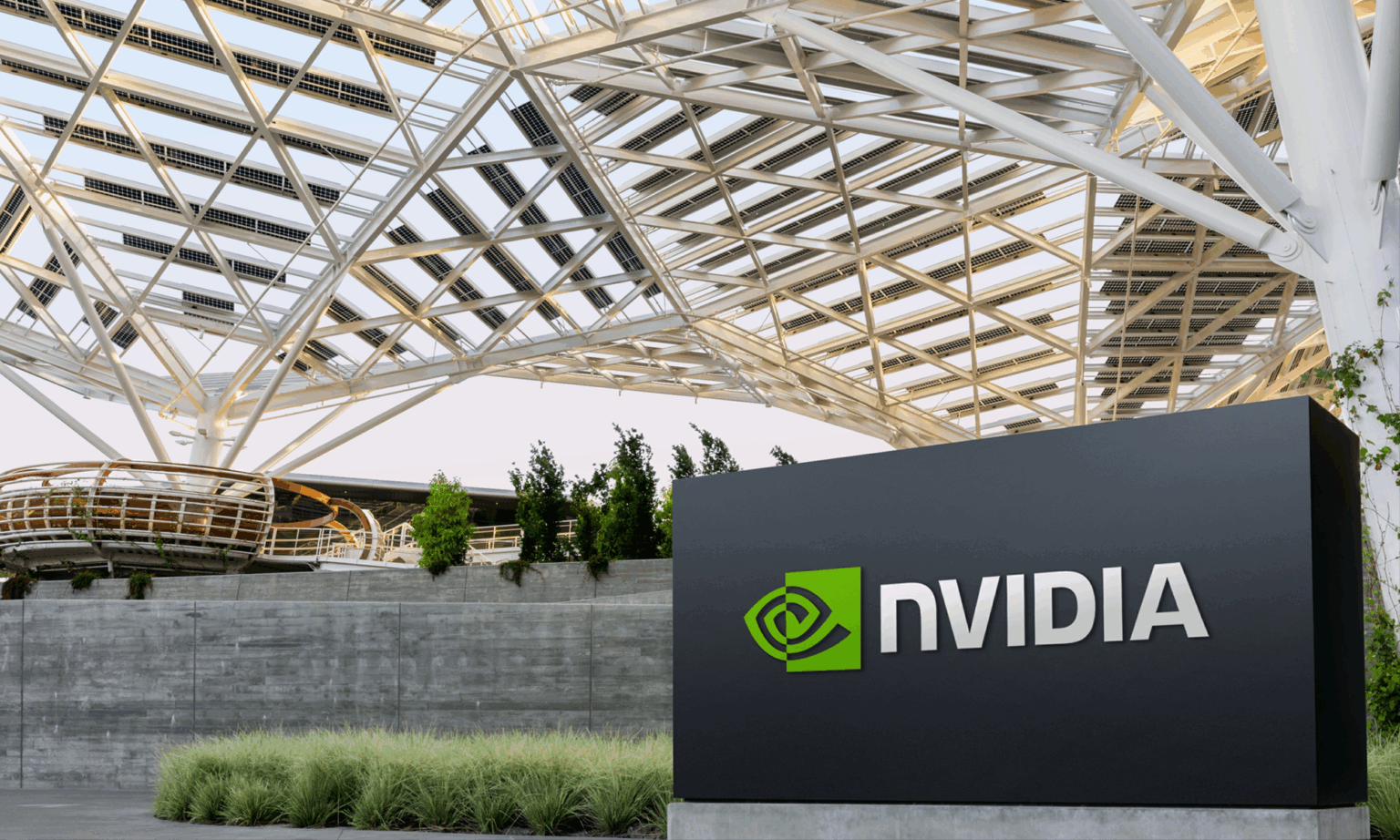
Image source: Nvidia.
The Edge of Nvidia GPUs
Nvidia’s exceptional performance hinges on its GPUs — advanced semiconductors featuring parallel processing capabilities. They divide extensive processes into smaller, manageable segments and tackle them simultaneously. Originally, Nvidia GPUs were created to accelerate the graphics display for videogames. One early adopter was Microsoft, who integrated the Nvidia GeForce 3 into the original Xbox console.
A pivotal moment for Nvidia occurred in 2006 with the launch of Compute Unified Device Architecture (CUDA). This innovation broadened the utility of GPUs by enabling parallel processing for a range of applications beyond graphics. CUDA programming enabled developers to harness the power of Nvidia GPUs for coding and application development. Because of its built-in parallel processing, CUDA offers quicker computational times and maximizes computer resources.
While CUDA didn’t find immediate widespread application, Nvidia’s ongoing investments ultimately made the technology very valuable.
Nvidia’s Cryptocurrency Venture
The introduction of Bitcoin in 2009 gave rise to the cryptocurrency movement. Bitcoin pioneered a “proof of work” method to verify and validate transactions. Individuals could participate in this process by downloading Bitcoin’s software and leveraging their computing hardware to solve complex cryptographic challenges. Successfully solving these problems became a demonstration of computational effort. The computing device which solved the problem first was rewarded with Bitcoin.
This activity, known as Bitcoin mining, was initially carried out using standard computers. However, it became clear that more powerful processing hardware would result in better mining returns, leading to the adoption of Nvidia GPUs. Miners also discovered that connecting multiple GPUs to a single motherboard increased gains, greatly increasing demand for GPUs.
Nvidia’s involvement in the cryptocurrency industry has not been without its issues. A class action lawsuit was filed in 2018, claiming that Nvidia did not disclose that revenue growth of GPUs was largely supported by the crypto mining demand. In 2022, Nvidia paid a $5.5 million penalty to the SEC to settle claims on the subject. However, the lawsuit is ongoing.
Cryptocurrency mining no longer comprises a significant part of Nvidia’s business, especially since GPUs are no longer as competitive when mining Bitcoin or other various cryptos. Currently, Application-Specific Integrated Circuit (ASIC) miners have greater processing potential. Although some hobbyist miners continue to use GPUs, most who aim to profit use ASICs.
Rise as a Leading AI Company
While crypto miners propelled GPU demand, the real source of rapid expansion for Nvidia can be attributed to advancements in AI. Researchers started using Nvidia GPUs in AI development during 2011. Alex Krizhevsky leveraged Nvidia GPUs and CUDA to train the neural network, AlexNet, a year later. AlexNet dominated the ImageNet image recognition contest, demonstrating the possibilities of GPU-trained machine learning methods.
In 2016, Nvidia CEO Jensen Huang donated a supercomputer equipped with eight GPUs to OpenAI, the company behind ChatGPT. The launch and immediate popularity of ChatGPT in 2022 served as more validation for the power of Nvidia GPUs.
The AI boom and Nvidia’s leading role have led to strong financial results. Nvidia has announced year-over-year revenue gains of greater than 50% for the last nine quarters. Most recently, the company announced revenue of $46.7 billion for the second quarter of fiscal year 2026, which ended July 27, 2025. Data center revenue, accounting for business AI spending, was responsible for 88% ($41.1 billion) of total revenue. Gaming revenue totaled $4.3 billion.
Few people foresaw Nvidia evolving from a gaming business to a top performer in the crypto and AI spaces. Its story demonstrates why businesses with distinct competitive advantages, in this case the top GPU business, can transform into highly profitable investments.
Is Investing in Nvidia a Smart Decision?
Before you decide on Nvidia stock, think about this:
The Motley Fool Stock Advisor team of analysts has just identified what they consider the top 10 stocks for investors right now… and Nvidia didn’t make the cut. These 10 stocks have the potential for significant returns over the next few years.
As an example, when Netflix was added to this list on December 17, 2004, a $1,000 investment at the time would now be worth $640,916!* Similarly, when Nvidia was included on April 15, 2005, a $1,000 investment would have grown to $1,090,012!*
Currently, Stock Advisor’s average return is 1,052%, far surpassing the S&P 500’s 188%. Be sure to see the latest top 10 list – accessible upon joining Stock Advisor.
*Stock Advisor’s performance as of September 8, 2025
Lyle Daly owns shares of Bitcoin and Nvidia. The Motley Fool has positions in and recommends Bitcoin, Microsoft, and Nvidia. The Motley Fool recommends the following options: long January 2026 $395 calls on Microsoft and short January 2026 $405 calls on Microsoft. The Motley Fool has a disclosure policy.