
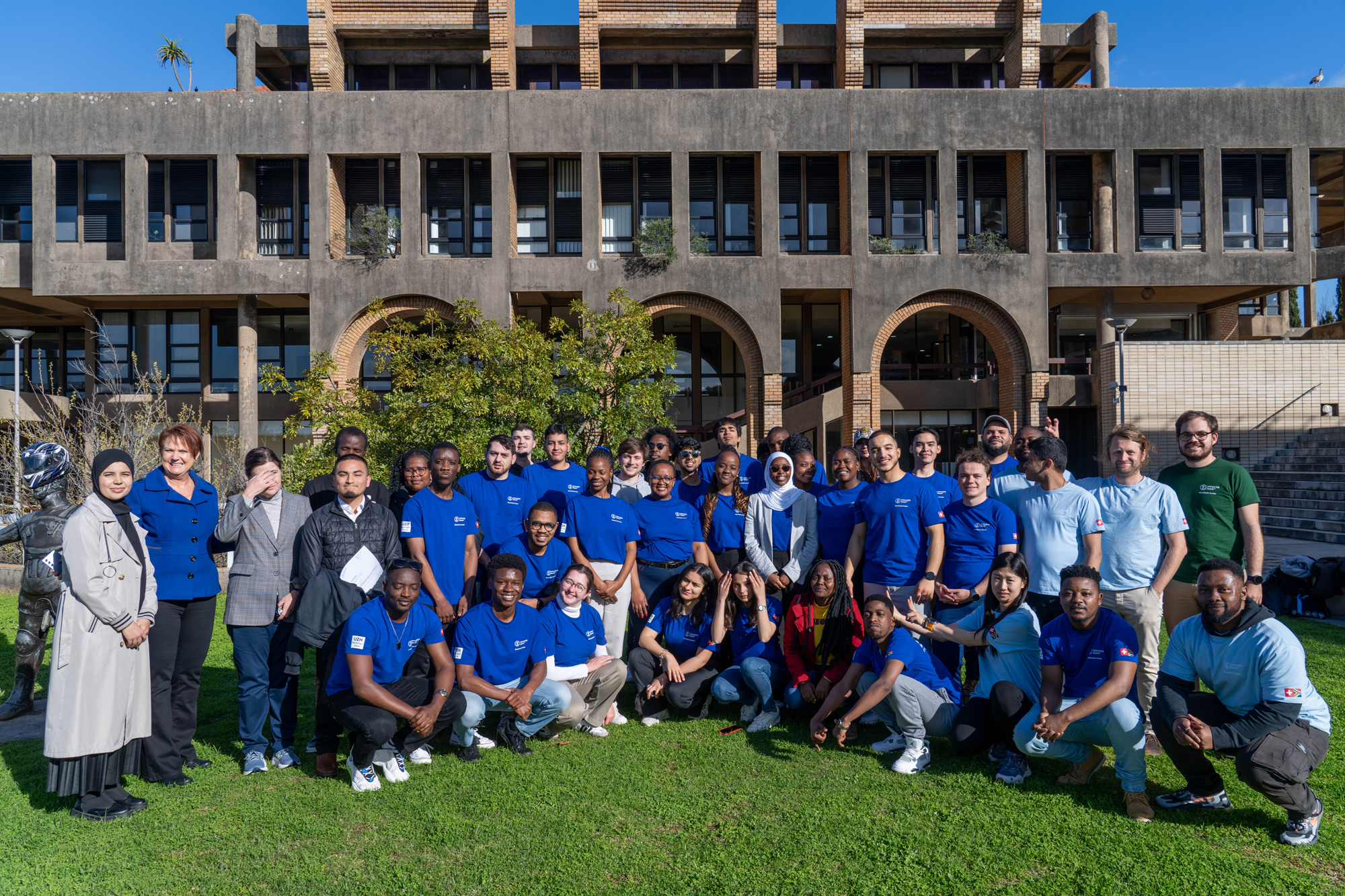
In a groundbreaking cooperative effort, the prestigious University of Zurich (UZH) has teamed up with the respected University of Cape Town (UCT) to introduce its acclaimed Deep Dive into Blockchain (DDiB) Summer School to the African continent for the very first time. The program welcomed a cohort of 40 bright students hailing from various nations across Africa for intensive on-site learning sessions at UCT, a premier higher education institution in Africa.
Throughout the university’s winter recess, UCT’s School of Economics, a part of the Faculty of Commerce, became the venue for the DDiB course. The course featured live-streamed lectures and engaging in-person workshops led by distinguished UZH faculty and prominent figures from the blockchain industry.
This distinctive academic experience was meticulously designed to extend the benefits of UZH’s superior educational resources to students who were either unable or disinclined to travel to Switzerland, providing them with valuable skills crucial for career advancement.
Professor Eftychia Nikolaidou, head of the School of Economics and acting South African Research Chairs Initiative (SARChI) Chair in Blockchain Technology, emphasized that the establishment of a remote campus at UCT acknowledges the burgeoning need for blockchain education and the necessity for global accessibility, fostering enduring, significant connections that propel pioneering research and boost worldwide academic exchanges.
“This setup offers students from Africa, as well as nearby regions such as the Middle East and South America, the chance to acquire a top-tier education that was previously exclusive to Switzerland. By making it easier for these students to participate and increasing the overall capacity for attendees, we are actively cultivating a more diverse and inclusive pool of specialists in the field of blockchain,” she stated.
Collaborating for Impact, Inclusion, and Advancement
The DDiB Summer School hosted in Cape Town is a component of a larger scholastic alliance between UCT and UZH, centered around the UCT–UZH Dual SARChI.
The SARChI program, supported financially by the National Research Foundation (NRF) in South Africa and the Swiss National Science Foundation (SNSF), is specifically aimed at encouraging research across continents, reinforcing connections between institutions, and fostering innovation in essential, future-oriented domains, notably blockchain technology.
“The Fourth Industrial Revolution is sparking rapid innovation in Africa. There are countless opportunities here, which is why we opted to partner with South Africa in the extensive blockchain landscape, spanning from research and innovation to education,” remarked Jacquelene Friedenthal, the science and technology counsellor at the Swiss Embassy in Pretoria.
“Africa is teeming with opportunity, and that is a key reason why we have chosen to collaborate with South Africa across the blockchain ecosystem, covering research, development, and education.”
“This partnership, initiated in 2007, identified blockchain as a focal point for collaboration in 2019, and it has continued to flourish since its inception. I believe its significance lies in its potential as a model for other nations seeking to collaborate with South Africa to drive advancement in research, innovation, and education throughout the African continent.”
Professor Nikolaidou echoed this sentiment, referring to the collaborative venture as a crucial step towards boosting academic excellence while promoting diversity and inclusion within this developing sector.
“Collaborating with the UZH Blockchain Center enables the creation of effective, enduring links that enhance groundbreaking research and foster global academic exchanges. This strategy maximises the project’s influence by investing in talent development, education, and joint ventures, which ultimately benefit both universities,” she added.
A Comprehensive Blockchain Education
Spanning fifteen intensive days, from June 30th to July 18th, the DDiB Summer School adopted a very participatory teaching approach. Hands-on learning through conventional lectures, practice sessions, and animated classroom discussions was an essential aspect of the student learning journey.
A major emphasis was put on a transdisciplinary methodology when it came to blockchain, combining its uses across economics, technology, and legal frameworks.
By integrating these various disciplines, the course offered students a thorough understanding of the ever-changing blockchain environment and provided them with the skills to critically assess its design, implementation, and broader societal effects.
“A full understanding of economics, law, and technology is essential for the full implementation of blockchain technology.”
“The interdisciplinary methodology enabled me to integrate all of the most important aspects of blockchain, allowing me to understand it as a complete system rather than simply an emerging technology,” declared Amina Ahmed, a Bachelor of Science graduate of the University of Nairobi.
“The technical component demonstrated the blockchain architecture and consensus mechanisms, which represent the building blocks of how distinct blockchains function. The economics lectures explored how tokenomics and governance models shape the operation of blockchain networks, while the legal sessions fostered an understanding of the regulatory frameworks that pertain to blockchain and decentralised systems.
“This method allowed me to comprehend how the three areas connect with one another, and that a holistic understanding of the economics, law, and tech underpinning it is essential for applying blockchain technology.”
Bringing the digital edge to the Global South
The DDiB Summer School was a resounding success, which was reflected both in the depth of the learning and the wide range of participation it encouraged.
“The program was exceptional. It provided a great learning opportunity that I wouldn’t have found elsewhere, and I was able to develop relationships that wouldn’t have been possible in other circumstances,” said Precious Nhamo, a Stellenbosch University economics graduate.
“I would unequivocally suggest the course to anybody in any field who is curious about blockchain technology. Regardless of your industry background, there is always the potential for a convergence between blockchain and your area of expertise,” she went on to say.
“Blockchain isn’t just a vision for the future; it’s happening now in the tech sector, so we as young people need to be knowledgeable about it.”
“Blockchain is not just a concept for the future; it’s a reality in the tech industry today, making it important for young people to understand.”
Event organiser, Karen Eksteen, emphasized this, noting blockchain’s expanding significance across sectors, as well as its ability to equip future leaders with the skills they need to succeed, especially in the Global South.
“Blockchain is not only for coders but also for innovators and problem solvers in every field. It has a cross-disciplinary effect and provides emerging career prospects. Professionals who understand blockchain’s implications in governance, risk management, and strategy are needed by organisations, from digital identity solutions to sustainable supply chains,” she stated.
“Knowledge in this area helps individuals prepare for the future. Those with entrepreneurial goals will find that blockchain provides them with instruments to build decentralised applications, token economies, and creative funding mechanisms. This expertise can help innovators create solutions to real-world problems, particularly in developing countries.”
DDiB 2026 at UCT
Given the overwhelmingly positive responses received from participants, organisers, and partners, preparations are already being made to host another edition of the DDiB Summer School at UCT in 2026.
Individuals who are interested in becoming a part of the next cohort are encouraged to follow the UZH Blockchain Center website closely for any upcoming updates, announcements, or application information as soon as they become available.