
A new venture is planning to establish a substantial Bitcoin mining farm in Alaska’s North Slope region, with operations slated to commence later this year. The facility will utilize the area’s readily available natural gas to power its processes. This project serves as a trial run for what the company hopes will become the largest Bitcoin mining operation nationwide.
Stax Capital Partners, based in Wasilla, is spearheading this initiative, which would be the first of its kind in Alaska. Company CEO Sparrow Mahoney aims to “develop a blueprint for sustainable, large-scale Bitcoin mining in Alaska,” emphasizing the state’s unique suitability for the industry’s long-term growth.
Stax recently submitted a permit application to state authorities for the construction of modular units, similar to shipping containers, that will house both natural gas-powered generators and the necessary computer equipment. The proposed site is located approximately 30 miles south of the Prudhoe Bay oil field. These generators will be fueled by the region’s substantial reserves of “stranded” natural gas – a term used in the industry to describe gas that lacks a pipeline connection to potential consumers.
Unlike traditional mining operations that involve extracting physical resources, Bitcoin mining is a digital activity that involves using computers to generate valuable cryptocurrency.
However, the rapid growth of Bitcoin mining facilities, along with other types of data centers, is attracting increased public scrutiny due to their significant consumption of electricity and land resources in many communities in the lower 48 states.
Alaskan officials have been actively promoting the state’s vast, undeveloped land and its potential for generating power using the ample quantities of stranded gas available in the North Slope oil fields. This gas is currently reinjected back into the ground.
However, establishing new industries in this region presents challenges due to its remote location and the high cost of construction. Moreover, the willingness of North Slope oil companies to sell large volumes of gas for Alaska-based data centers or Bitcoin mining remains uncertain, as the price would need to be low enough to compensate for the higher infrastructure and operational expenses in the Arctic environment.
Stax’s natural gas generators are designed to produce 50 megawatts of electricity, which is comparable to the output of Alaska’s largest coal-fired power plant in Healy. According to Mahoney, the company is currently “in talks” with potential natural gas suppliers on the North Slope, but no contracts have been finalized yet.
The scale of Stax’s project significantly surpasses a smaller, proposed Bitcoin mining test project on the North Slope from the previous year. That project, a 1.4-megawatt collaboration between Hilcorp, an oil company, and a smaller infrastructure firm. Mahoney did not specify the exact cost of Stax’s project, but stated that the investment would exceed $10 million.
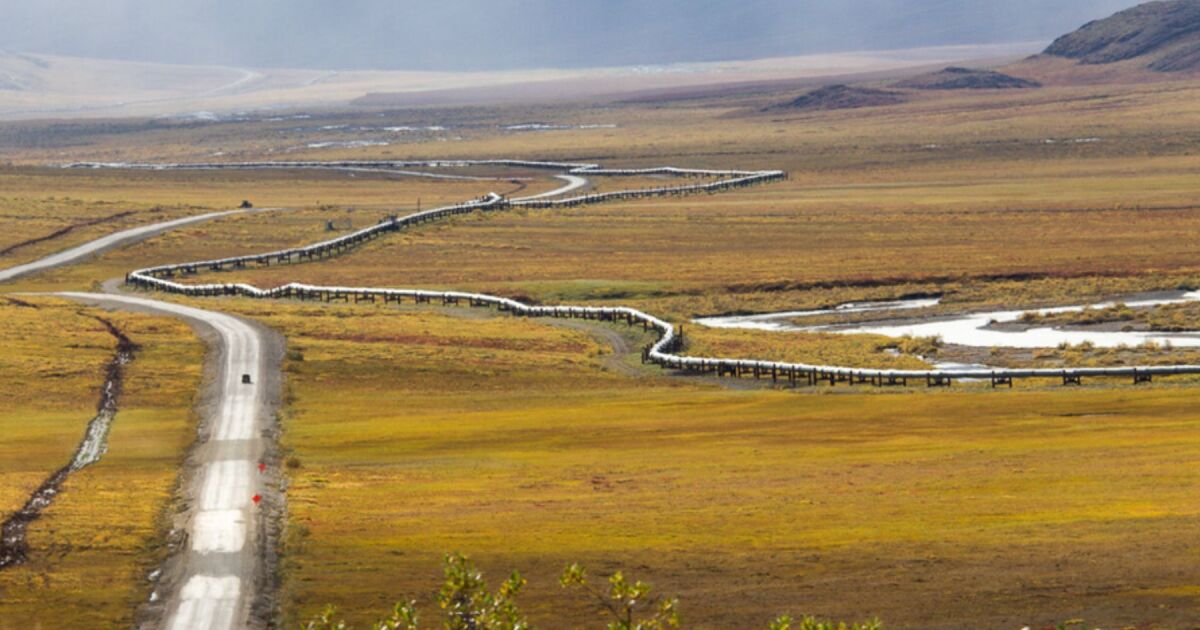
Mahoney also refrained from disclosing the specific method Stax intends to use to transport the gas from the oil fields to the proposed site, which is located at the Franklin Bluffs pad, a facility built during the construction of the trans-Alaska oil pipeline. However, one possibility would be utilizing a pre-existing gas pipeline that runs alongside the oil pipeline and provides fuel for the oil pipeline’s pumping stations.
The proposal for the Bitcoin mine coincides with ongoing efforts by numerous Alaskan lawmakers to promote the construction of a large-scale gas export facility. This project would connect the North Slope oil fields to a port located on the Kenai Peninsula, where the gas would be liquefied and loaded onto cargo ships for delivery to buyers in Asia.
While this gas export project has garnered renewed political backing, securing investors has proven difficult, in part due to its estimated cost of $44 billion or more.
According to Phil Wight, an energy historian at the University of Alaska Fairbanks, Stax’s project could represent an “innovative” approach to capitalizing on North Slope gas resources without requiring the construction of the export facility.
However, he also noted that the Bitcoin mine could have considerable consequences, including increased industrial development in the sensitive Arctic region and the carbon emissions associated with burning natural gas.
“We end up in a problematic situation where we are burning gas that would otherwise remain unused, and we are not advancing the energy transition,” Wight stated.
Mahoney clarified that her project would not involve “any new drilling” and that the chosen location, 30 miles south of the primary North Slope oil fields, is intended to minimize any additional air pollution in that area.
Mahoney, who was raised in Alaska and attended Wasilla High School, previously worked for Frank Murkowski during his tenure as a U.S. Senator. She also has prior experience in the cryptocurrency sector, having assisted the Iditarod in developing its own cryptocurrency, “Iditacoin.”
Stax was founded only a year ago but is collaborating with established businesses in Alaska, according to Mahoney.
Anchorage-based finance company McKinley Alaska Private Investment has pledged the necessary capital for the pilot project, she said. Brian Murkowski, an energy consultant and brother of current U.S. Senator Lisa Murkowski, serves as another advisor to the company. Attorney Jim Shine, a former high-ranking official at the state’s land management agency, is managing some of the permitting processes.
Stax intends to begin construction by the end of 2025, Mahoney stated. If the initial, temporary project proves successful, the company plans to expand its operations, aiming for a power generation capacity of one gigawatt, which is 20 times larger than the initial development.
Even the pilot 50-megawatt project would be considered significant in the contiguous United States, where a New York Times analysis of what it identified as the nation’s 34 “largest” Bitcoin mines only considered facilities larger than 40 megawatts. The largest Bitcoin mine currently operating in the US is a 700-megawatt facility in Texas managed by Riot Platforms.
Mahoney suggests that Alaska could benefit from Stax’s proposed project through the sale of its own gas to the company. The state owns a royalty share, typically at least 12.5%, of the gas produced by companies operating on the North Slope.
“What we are doing is demonstrating that a large, commercially viable opportunity exists based on existing infrastructure and resources,” Mahoney said. “We can capitalize on this together today, and it represents an opportunity of immense potential for the state and for everyone involved.”