
The digital currency landscape is characterized by recurring patterns, oscillating between periods where Bitcoin is the dominant force and times when alternative cryptocurrencies, known as altcoins, take the lead. For traders and investors alike, recognizing these cyclical shifts can be the key to unlocking significant profits and capitalizing on prime opportunities within the crypto sphere.
The Altcoin Season Indicator has become a primary resource for pinpointing these market phases. It provides a data-centric approach to addressing a crucial question in the crypto world: Is it Altseason yet?
Decoding the Altcoin Season Indicator
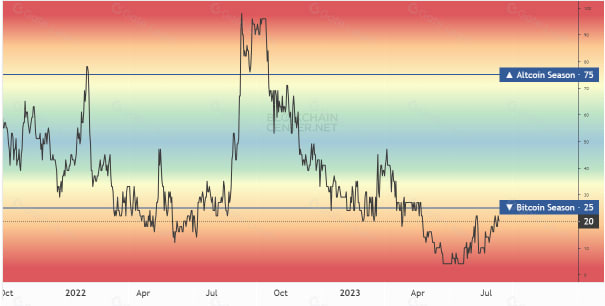
The Altcoin Season Indicator is a measurement tool designed to identify when the cryptocurrency market is experiencing “Altcoin Season”—a period when altcoins, as a group, perform better than Bitcoin. It assesses the performance of the top 50 to 100 cryptocurrencies, excluding stablecoins and asset-backed tokens, over a 90-day period.
The 75% Benchmark
The indicator functions based on a straightforward but effective rule: if 75% or more of the tracked altcoins outperform Bitcoin within the preceding 90 days, the market is considered to be in Altcoin Season. In contrast, if 25% or fewer altcoins demonstrate superior performance compared to Bitcoin, it’s classified as Bitcoin Season.
Understanding the Scale
The indicator typically uses a scale from 1 to 100, where:
Above 75: Signals a definitive Altcoin Season
25-75: Reflects mixed market circumstances
Below 25: Indicates a Bitcoin Season
Current State of the Market
As of July 2025, the indicator registers at a relatively low 16-24. This reading reveals that only 17 out of the top 100 coins are achieving better results than Bitcoin over the last 90 days. This indicates that the market is currently inclined towards Bitcoin, prioritizing Bitcoin’s performance over that of altcoins.
Exploring the Nature of Altcoin Bull Runs (Altseason)
An Altcoin Bull Run, frequently referred to as “Altseason,” goes beyond mere statistical outperformance. It’s a period marked by intense market activity where altcoins experience substantial and quick price escalations, often dwarfing Bitcoin’s gains.
Defining Characteristics of Altseason
During these phases, several significant dynamics come into play:
Capital Shift: Investors reallocate funds from Bitcoin to altcoins, motivated by the potential for higher returns and diversification.
FOMO Effect: The fear of missing out (FOMO) fuels further buying activity as investors pursue quickly appreciating altcoins.
Trading Volume Surge: Altcoin trading volumes dramatically increase, in some instances surpassing Bitcoin’s volume.
Category Rotation: Different altcoin categories (DeFi, memes, layer-1s, etc.) may take turns leading the market’s advancement.
Limited Timeframe: Altseasons generally span weeks to months, rather than years. This makes timing critical for maximizing profits.
Reviewing Historical Data: Learning from Previous Cycles
The 2020-2021 Surge
The most recent significant Altseason unfolded during the 2020-2021 bull market, providing valuable insights into the development of these cycles:
Bitcoin Dominance Decline: Bitcoin’s market dominance decreased from 70% to 38%
Market Cap Boom: The total cryptocurrency market capitalization doubled
Index Zenith: The Altcoin Season Indicator reached 98 on April 16, 2021
Category Outperformers: DeFi tokens, NFTs, and meme coins such as Dogecoin and Shiba Inu experienced unprecedented expansion
Recognizing the Pattern
Historical analysis suggests that Altseasons often follow a recognizable pattern:
Bitcoin experiences a substantial price increase
Bitcoin price stabilizes or consolidates
Investors seek higher returns in altcoins
Capital shifts more rapidly, leading to increased altcoin prices
FOMO intensifies the trend until the market is exhausted
Understanding the Methodology: Platform-Specific Approaches
While the fundamental concept remains consistent, different platforms employ somewhat differing methodologies:
Blockchain Center Approach
Tracks top 50 coins
Excludes stablecoins and asset-backed tokens
Uses 75% threshold for Altseason determination
90-day rolling performance window
CoinMarketCap Method
Monitors top 100 coins
Similar exclusions for stablecoins and wrapped tokens
Applies the same 75% threshold
Daily refresh of calculations
Assets Not Included
Most platforms exclude:
Stablecoins (USDT, USDC, DAI)
Asset-backed wrapper tokens (WBTC, stETH, cLINK)
These exclusions ensure the indicator accurately reflects altcoin performance rather than the behavior of pegged assets
Addressing Limitations: The Index is Not Flawless
A Reactive Nature
The Altcoin Season Indicator inherently reacts to market conditions. It confirms Altseason after it has already commenced. This lag can result in missing ideal entry points, as the most substantial gains often occur during the initial phases of altcoin surges.
Variations in Methodology
The use of differing numbers of coins (50 versus 100) and slightly differing exclusion criteria across platforms can result in variations in indicator values, which could potentially cause confusion for traders.
Evolving Market Conditions
The cryptocurrency market is continuously evolving. Emerging asset classes, shifting market dynamics, and evolving investor behavior may require future modifications to the indicator’s methodology.
Bias Towards History
Historical patterns are not a guarantee of future results. Shifting market conditions, regulatory changes, and technological advancements can alter conventional cycle patterns.
Adding Complementary Indicators: Developing a Broader Understanding
Savvy traders do not rely solely on the Altcoin Season Indicator. Instead, they integrate it with other indicators to form a complete picture of the market.
Bitcoin Dominance
The market share held by Bitcoin relative to the total crypto market can provide earlier signals than the Altcoin Season Indicator. Declining Bitcoin dominance frequently occurs before Altseason.
Trading Volume Ratios
Comparing total altcoin trading volume to Bitcoin’s can indicate growing interest in altcoins even before it is reflected in price performance.
Stablecoin Reserves
Increases in stablecoin reserves, particularly Tether (USDT), can signal the presence of buying power ready to be deployed into altcoins. Historically, higher stablecoin reserves have coincided with altcoin rallies.
Social Sentiment
Social media activity, Google search trends, and community engagement can provide early indications of a shift in investor interest towards altcoins.
Strategic Implications for Traders and Investors
Adapting Position Sizes Across Different Seasons
An understanding of market cycles can inform portfolio allocation strategies:
During Bitcoin Season (Index < 25)
Maintain a higher allocation to Bitcoin
Research and acquire quality altcoins at lower prices
Concentrate on fundamental analysis for long-term holdings
During Mixed Markets (Index 25-75)
Adopt a balanced approach between Bitcoin and altcoins
Monitor market signals for directional shifts
Implement risk management strategies
During Altseason (Index > 75)
Consider taking profits on altcoin positions
Exercise caution towards FOMO-driven investments
Prepare for a potential cycle reversal
Managing Risk in Dynamic Cycles
The Crucial Element of Timing
While Altseasons can be exceptionally profitable, they are also extremely volatile. As such, proper risk management is essential:
Entry Strategy
Avoid chasing price surges when the indicator is already high
Employ dollar-cost averaging during accumulation phases
Establish clear entry and exit criteria before initiating trades
Exit Strategy
Take profits systematically during periods of strong altcoin performance
Do not assume that Altseason will continue indefinitely
Maintain discipline even during FOMO phases
Portfolio Diversification
Diversify risk across different altcoin sectors
Retain some Bitcoin allocation, even during Altseason
Be mindful of potential correlations between altcoins
Current Market Analysis: Assessing the Present Situation in July 2025
Indicators of a Bitcoin Season
Current market conditions suggest that we are in a Bitcoin-dominated phase:
Altcoin Season Indicator: 16-24
Only 17 out of the top 100 coins are performing better than Bitcoin
Bitcoin dominance is likely increasing
Implications for Investors
Quality altcoins may be available at appealing prices
Patience is required while awaiting the next Altseason
Emphasis should be placed on fundamental research and accumulation strategies
Possible Catalysts for Change
Several factors could contribute to a shift towards Altseason:
Stabilization of Bitcoin’s price following recent volatility
Growing institutional investment in altcoins
Regulatory clarity for specific altcoin categories
Technological advancements in select sectors
Looking Forward: Preparing for the Next Altseason
Building Watchlists
Use the ongoing Bitcoin Season to identify and research promising altcoins:
Prioritize projects with solid fundamentals
Consider diverse sectors (DeFi, Layer-1s, gaming, etc.)
Monitor development activity and community growth
Accumulation Strategies
Use dollar-cost averaging to acquire quality projects
Set price alerts for significant movements
Maintain discipline during accumulation phases
Risk Preparation
Plan exit strategies before establishing positions
Set achievable profit targets
Maintain emergency funds for unexpected opportunities
The Psychological Aspects of Market Cycles
Emotional Hurdles
Different market phases present distinct psychological challenges:
During Bitcoin Season
Exercising patience as altcoins underperform
Resisting FOMO during Bitcoin gains
Maintaining confidence in altcoin research
During Altseason
Managing greed during rapid gains
Resisting overtrading
Maintaining discipline in taking profits
Cycle Transitions
Identifying when market conditions are changing
Adapting strategies to evolving market phases
Avoiding reliance on past performance
Conclusion: Thriving Through Market Cycles
The Altcoin Season Indicator is a useful tool for comprehending cryptocurrency market cycles. However, its effectiveness is enhanced when combined with other indicators and sound investment principles. While the indicator can validate the arrival of Altseason, successful crypto investors prioritize preparation, patience, and disciplined execution regardless of current market circumstances.
As we navigate the current Bitcoin Season in July 2025, remember that markets move cyclically. Today’s underperforming altcoins could become tomorrow’s top performers. It’s vital to remain focused on risk management and realistic expectations for long-term success.
Profiting from these cycles depends not only on knowing when Altseason arrives but also on preparing for it in advance. By understanding the Altcoin Season Indicator, observing other indicators, and maintaining disciplined investment strategies, traders and investors can position themselves to capitalize on the ongoing shifts in cryptocurrency market dynamics.
Whether you’re a seasoned trader or new to the crypto space, the Altcoin Season Indicator offers a data-driven framework for understanding a critical dynamic within cryptocurrency markets. Use it strategically, combine it with other analytical tools, and remember that in the volatile world of cryptocurrency, preparation and patience are often more impactful than perfect timing.