
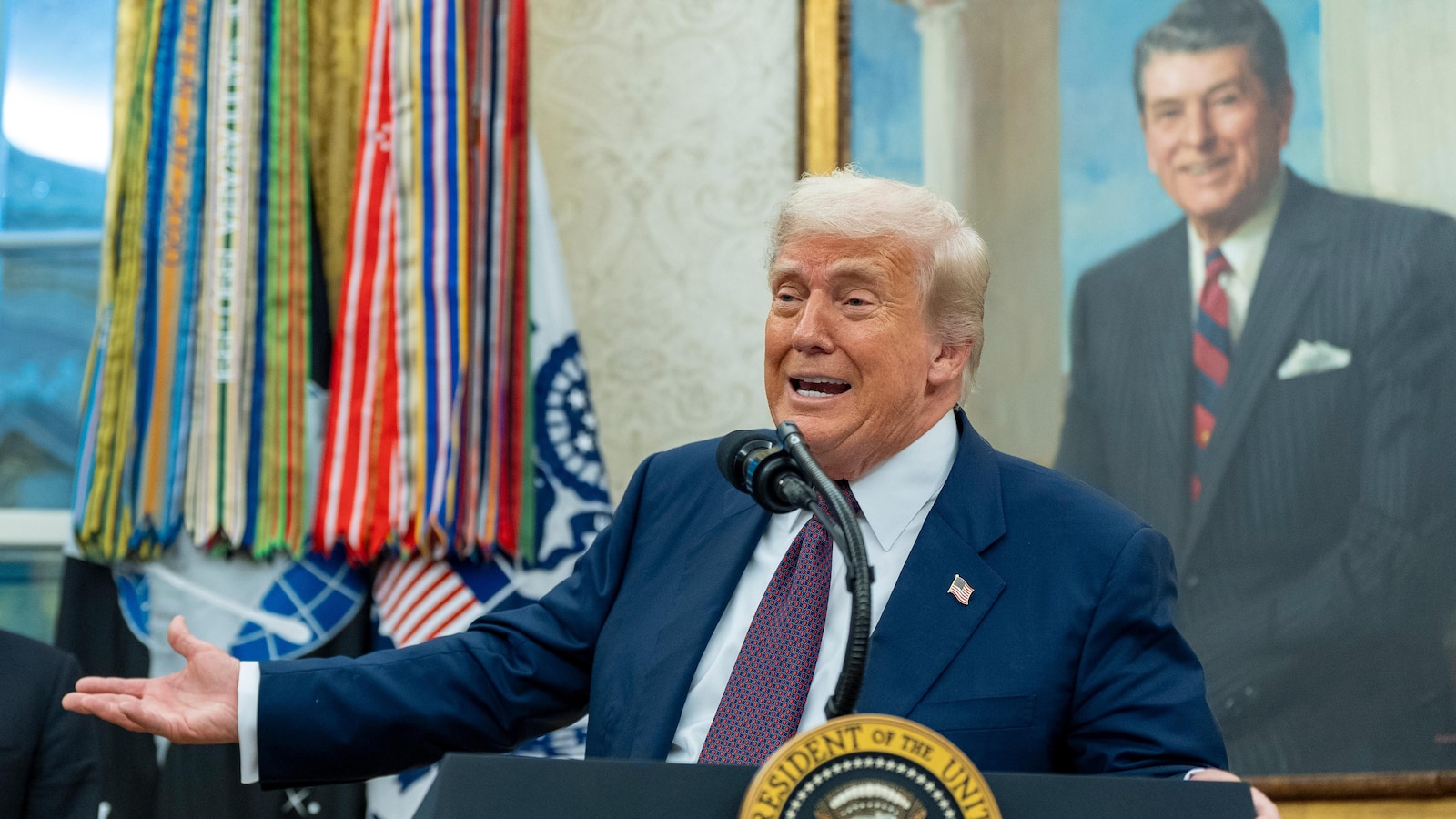
NEW YORK —
Former President Donald Trump has recently issued an executive order directing an investigation into potential discriminatory practices by financial institutions. The order focuses on whether banks have unfairly targeted conservatives and specific sectors, including firearms manufacturers and cryptocurrency ventures. Trump contends that certain entities have discriminated against him and his supporters, prompting this action.
The core issue addressed by the executive order is known as “debanking,” a practice involving banks closing accounts or refusing services to specific individuals or industries. Trump has publicly accused major financial players such as JPMorgan Chase and Bank of America of debanking his businesses in the past, allegations which both institutions have refuted.
Trump’s order instructs federal banking regulators to ensure equitable treatment by banks, prohibiting discrimination based on political or religious viewpoints. It also mandates investigations into potential instances of discrimination, with cases to be referred to the Department of Justice within 120 days of the order’s enactment.
This move could expose banks to potential civil or criminal investigations, leading to fines or other penalties if found in violation.
The term “debanking,” as used by Trump and his party, often refers to situations where banks terminate relationships with customers due to perceived business risks. Banks maintain that account closures and loan denials are based on risk assessments and their constitutional right to choose their business partners, as long as they adhere to anti-discrimination laws like the Equal Credit Opportunity Act.
Enacted during the Civil Rights Movement, the Equal Credit Opportunity Act prohibits discrimination by banks based on characteristics such as race, religion, gender, and national origin.
Another form of debanking involves government regulators pressuring banks to avoid certain sectors or individuals. During Barack Obama’s presidency, the Department of Justice advised banks to avoid “high-risk” industries, including payday lenders and firearms manufacturers.
This government-influenced debanking is often labeled “reputational risk,” where concerns about an industry’s image lead banks to exercise caution in lending and services. Historical examples include businesses operating in high-risk countries, engaging primarily in cash transactions, or facing repeated regulatory scrutiny.
Banks, having previously benefited from Trump’s deregulation policies, have generally maintained a cordial relationship with his administration, positioning themselves as neutral actors navigating a challenging political landscape.
“It is in the financial interests of banks to serve as many customers as possible, taking deposits, supporting borrowers” stated a joint press release by major banking lobby groups Thursday. “Unfortunately, the excessive regulatory overreach, the supervisory discretion, and the unclear maze of regulations have stood in the way as the (executive order) makes clear,”
Conservatives contend that the concept of reputational risk has expanded to allow banks to discriminate unfairly. The banking industry asserts that it does not engage in systematic debanking or target specific industries or individuals. Banks have begun to remove reference to “reputational risk” from policies and procedures.
“Today’s Executive Order helps ensure all consumers and businesses are treated fairly, a goal the nation’s banks share with the Administration,” the banks said.
For Trump, the topic of debanking has personal significance. In an interview on CNBC earlier this week, Trump claimed that major banking institutions, including Bank of America and JPMorgan Chase, discontinued services after he left office in 2021.
He told CNBC, “They totally discriminate against … me maybe even more, but they discriminated against many conservatives”
Both institutions maintain that they did not debank Trump.
“We don’t close accounts for political reasons, and we agree with President Trump that regulatory change is desperately needed,” said a spokeswoman for JPMorgan Chase in a statement.
The Obama administration’s encouragement for banks to “debank” certain sectors has been a rallying point for conservatives. It’s one reason why the cryptocurrency industry backed Trump in 2024. While the Biden administration did not explicitly force banks to debank the crypto industry, Democratic President Joe Biden’s bank regulators did express some public concern about it, a move that was read by banks as a reason to steer away from crypto. Trump and his allies have dubbed the Biden administration’s stance “Operation Choke Point 2.0.”
Republicans have also proposed legislation aimed at preventing alleged debanking practices. Senator Tim Scott of South Carolina, who chairs the Senate Banking Committee, has introduced a bill that would prevent bank regulators from considering reputational risk when assessing a bank’s financial health and risk profile.