
In the evolving world of blockchain technology, Base has emerged as a central hub for SocialFi over the last couple of years. While other Layer 2 solutions are geared toward decentralized finance (DeFi), gaming, or non-fungible tokens (NFTs), Base has prioritized the development of decentralized social networks. From the initial buzz surrounding Friend.tech to the continued expansion of Farcaster and its ecosystem, SocialFi is increasingly becoming a key factor in attracting users to the Base network.
Why Base Is Seen as the SocialFi Center?
Base boasts a significant ecosystem within the cryptocurrency space, partly because it benefits from Coinbase’s large existing user base, providing a solid starting point. This connection to Coinbase also means Base incorporates many of the tools and features already developed by Coinbase. A key advantage is the Coinbase Smart Wallet, which streamlines the process of registering, authenticating, and using social applications. The user experience mirrors that of Web2 platforms, but with the added benefit of on-chain data and interactions, a major draw for SocialFi users.
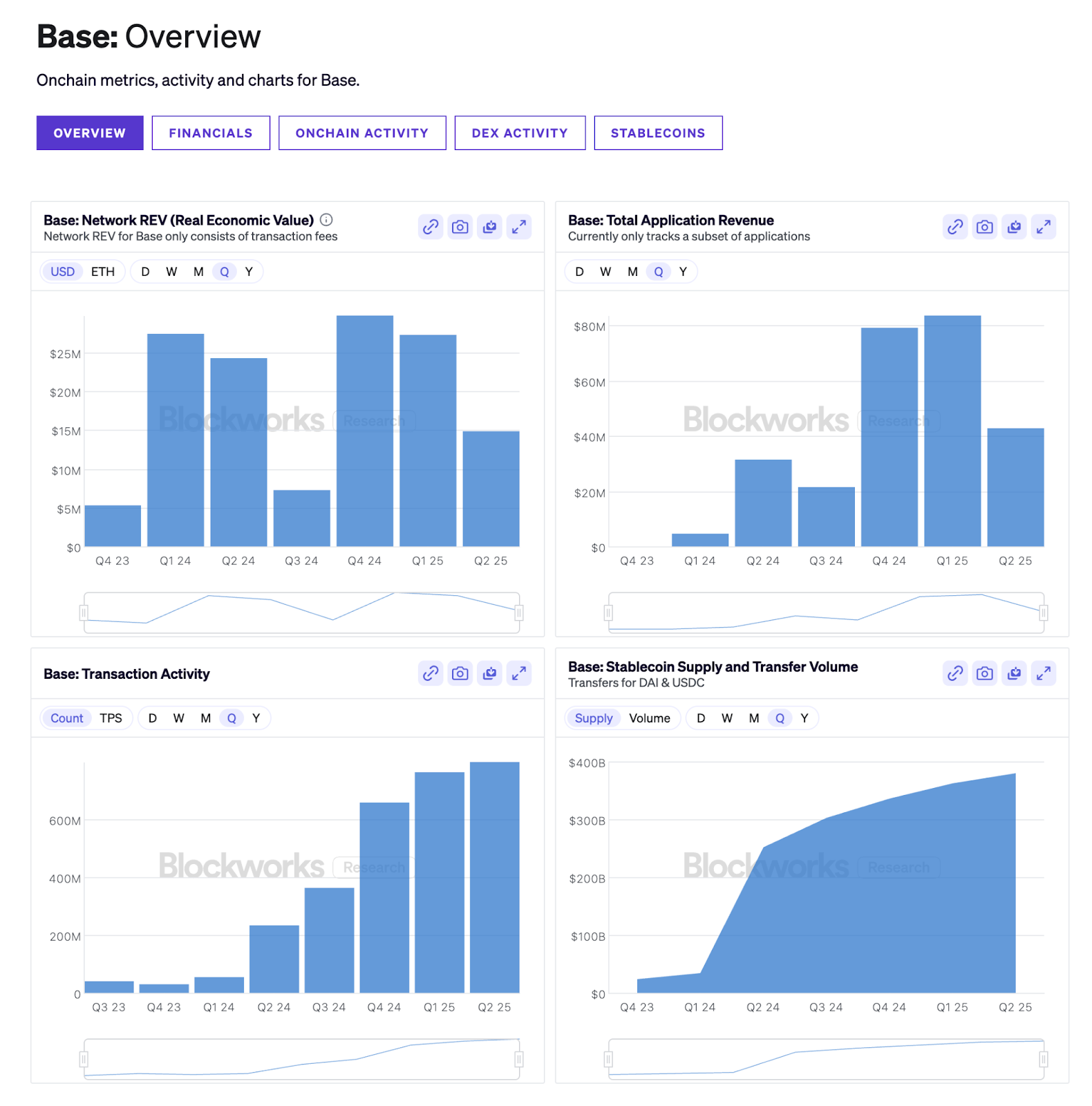
Source: Blockworks
According to data from Blockworks, Base consistently maintains a high level of daily active users (DAU), typically ranging from 600,000 to 800,000, and occasionally surpassing even Arbitrum and Polygon. At its height, Base saw 181 million wallet addresses, and transaction volumes frequently reached between 1 and 2 million per day, peaking at 3 million during the Onchain Summer 2025 event.
For more: Exploring the Top Gaming and NFT Ecosystems on Base
The Friend.tech Phenomenon: A SocialFi Story
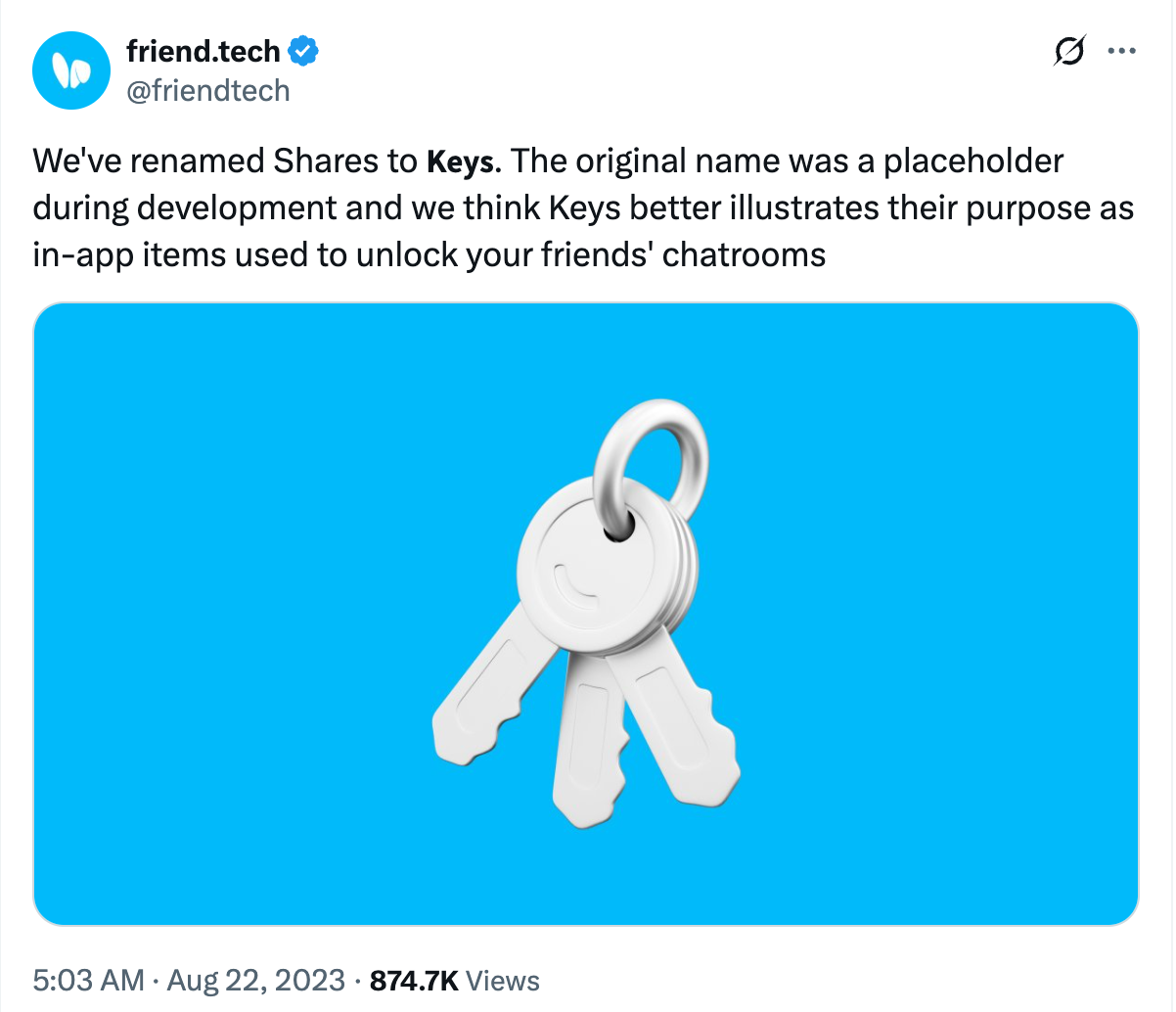
Friend.tech, launched in 2023, was one of the first SocialFi applications to gain widespread attention. It operated on a simple model: users could purchase and sell “shares” (later called “keys”) representing individual user accounts, turning social connections into a kind of tradable asset.
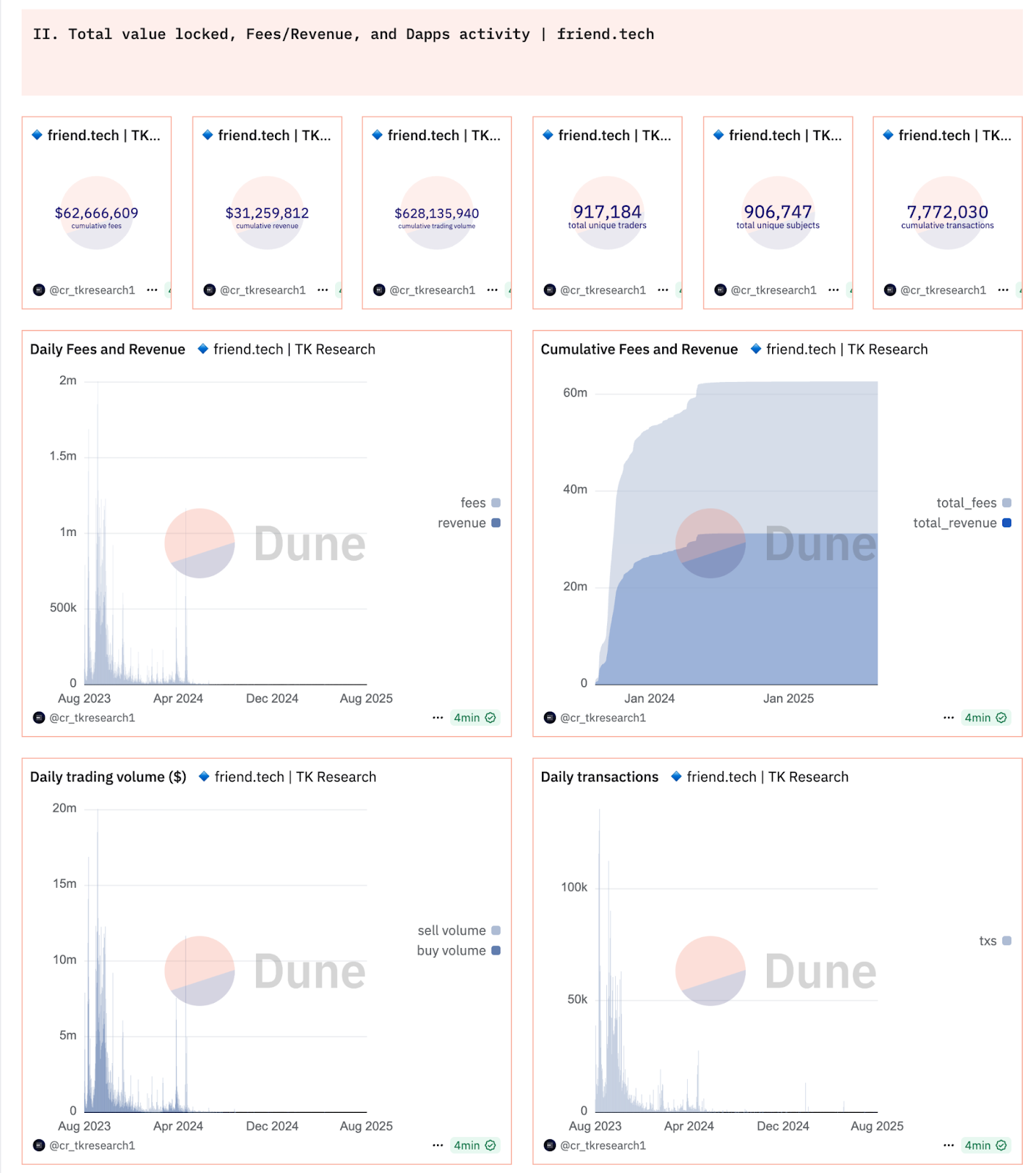
Source: Dune
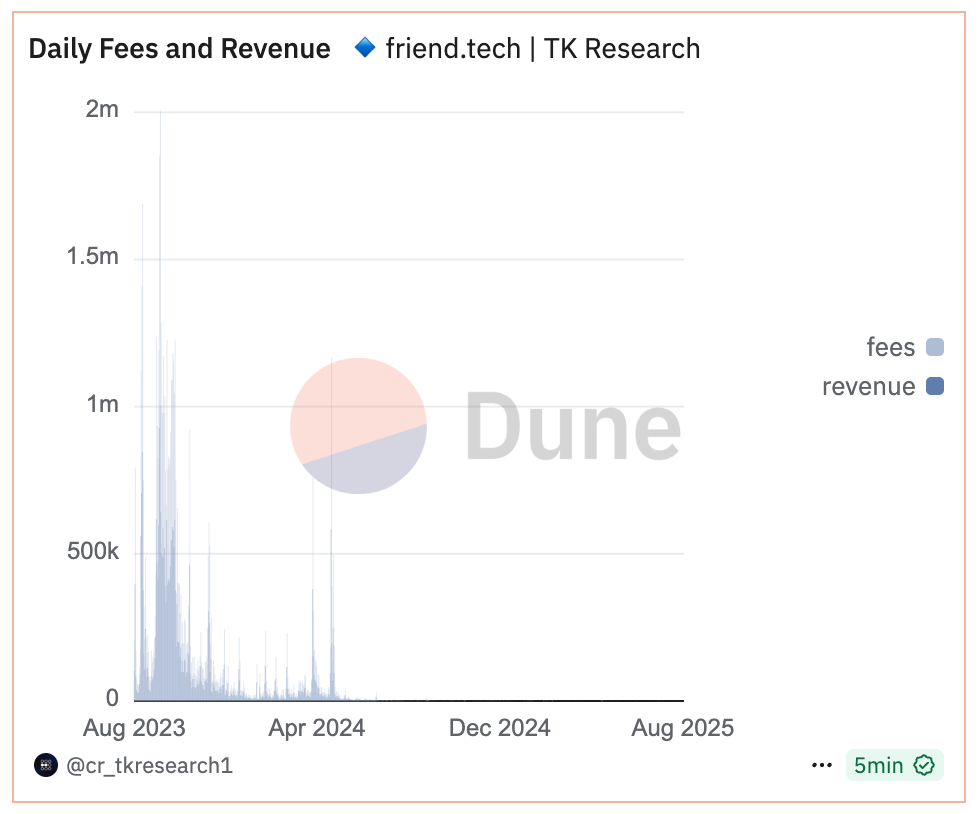
Just 17 days after its launch on August 11, 2023, Friend.tech reached a Total Value Locked (TVL) of $6.4 million, generating impressive daily fees that sometimes reached $1.5 million, with $80 million worth of “shares” being traded. The platform attracted 125,000 active traders. Positive news regarding potential funding from Paradigm contributed to the growing excitement, making Friend.tech a notable success story following the rise of PEPE.
Source: X
At its peak, Friend.tech processed over 500,000 transactions per day on Base and generated millions in fees. However, this initial enthusiasm was short-lived. Within approximately 20 days of its peak, transaction volumes decreased by 95%, the TVL plummeted from millions to almost zero, and users quickly left as the speculative momentum waned. Ultimately, the platform failed to deliver lasting social value.
Source: Dune
This experience highlights the need for SocialFi to provide more than just speculative opportunities. Long-term success requires a combination of financial incentives and genuine social value that encourages ongoing participation.
Farcaster and Warpcast: Constructing a Social Infrastructure
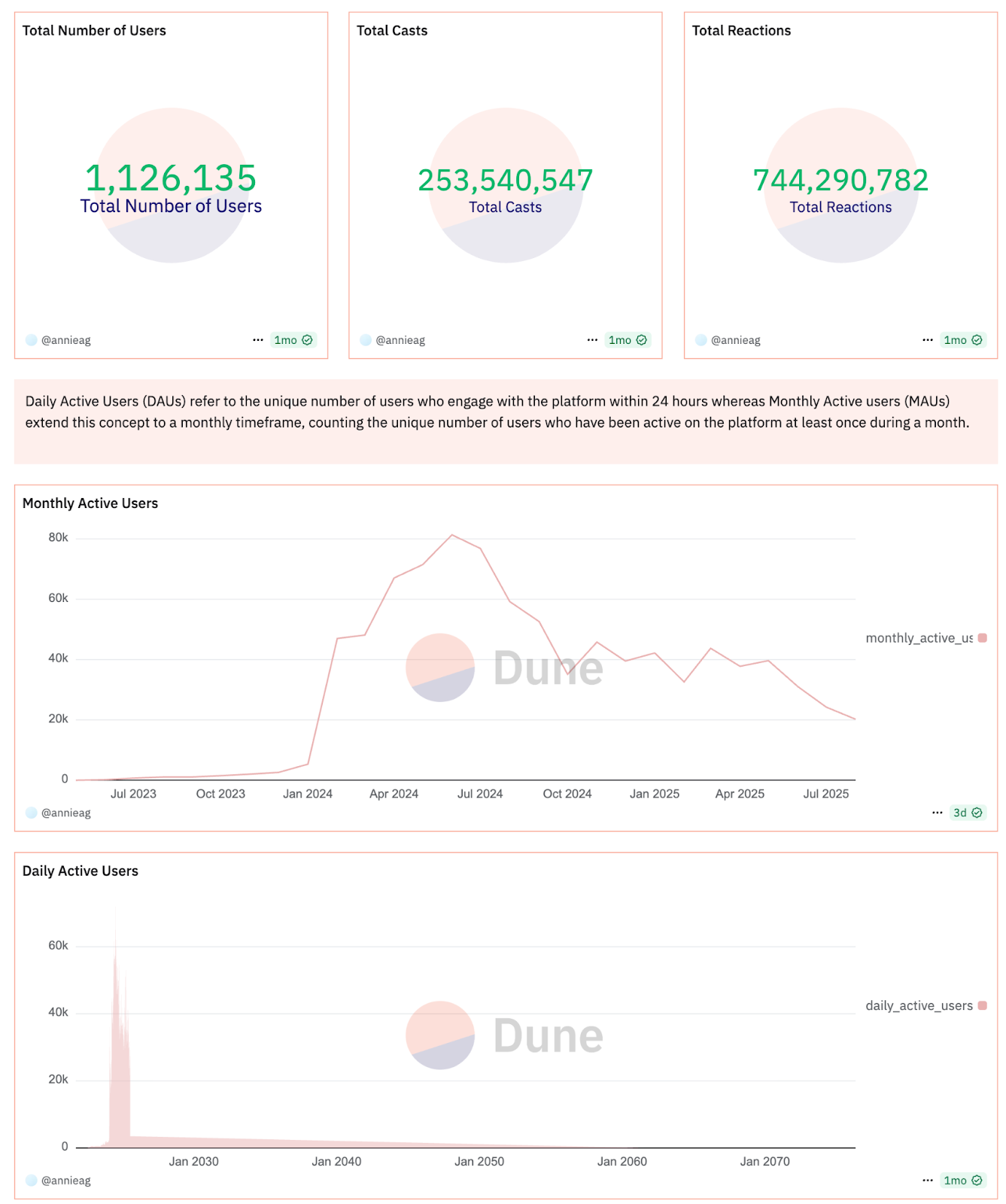
Unlike Friend.tech’s rapid rise and fall, Farcaster has been steadily gaining traction, indicating a more sustainable approach. Increasingly, it seems that Farcaster could become a critical component of the SocialFi ecosystem built on Base.
Source: Dune
Farcaster is a decentralized social protocol often referred to as the “Twitter of Web3,” emphasizing its openness and adaptability. It allows developers to create applications directly on the protocol and its social graph. Warpcast is the most commonly used client. A defining feature of Farcaster is the introduction of Frames, which are on-chain mini-applications integrated directly into posts. Using Frames, users can mint NFTs, make token payments, join decentralized autonomous organizations (DAOs), or execute trades, all within their social feed.
Frames transform Farcaster from a basic social network into a multifaceted platform combining social interactions, financial transactions, and on-chain application use—a unique advantage compared to traditional Web2 platforms.
DEGEN: From Meme to a Usable Token
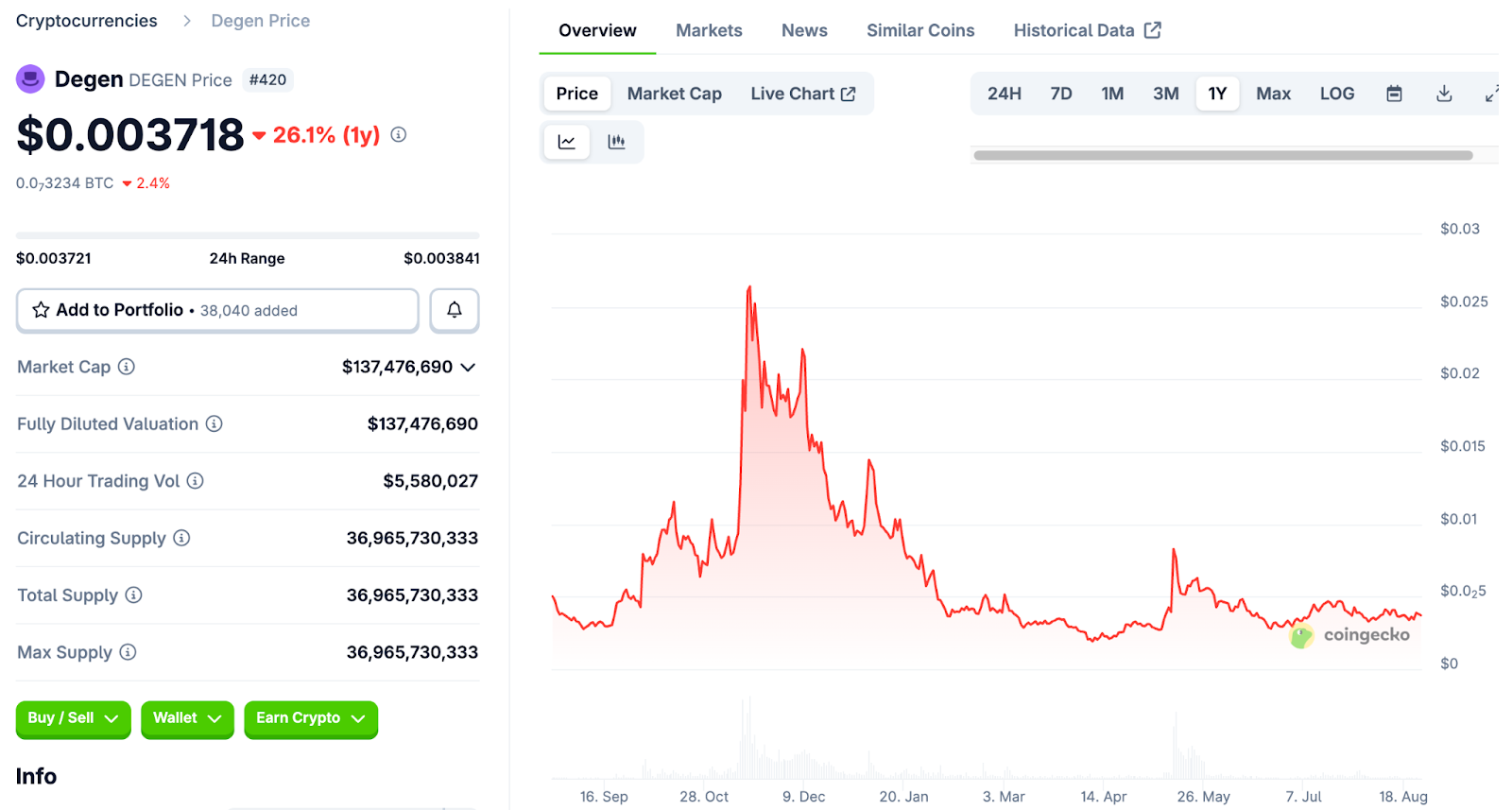
The DEGEN token has significantly contributed to the growth of Warpcast within the Farcaster ecosystem. Initially created as a memecoin, DEGEN was quickly implemented as a tipping mechanism, enabling users to reward posts, incentivize content creators, and promote high-quality content. This created a positive feedback loop: increased user engagement drove demand for DEGEN.
Source: Coingecko
Beyond tipping, DEGEN has become the gas token for Degen Chain, a Layer-3 solution built on Base specifically for social on-chain activities related to platforms like Warpcast. Low transaction costs and high processing speeds have enabled Degen Chain to attract nearly 2 million accounts and facilitate over 20 million transactions within a short period, indicating strong community support.
DEGEN has expanded its utility through tools like DegenSwap, grant programs, and play-to-earn games, solidifying its position beyond a simple memecoin. Its direct integration with daily activity on Warpcast demonstrates clear network value and establishes it as a driver of sustainable growth, contrasting with the short-term speculative boosts provided by SocialFi trends like Friend.tech.
For more: Analyzing Meme Coins on Base: The Cases of BRETT, DEGEN, and TOSHI
Zora’s Role on Base
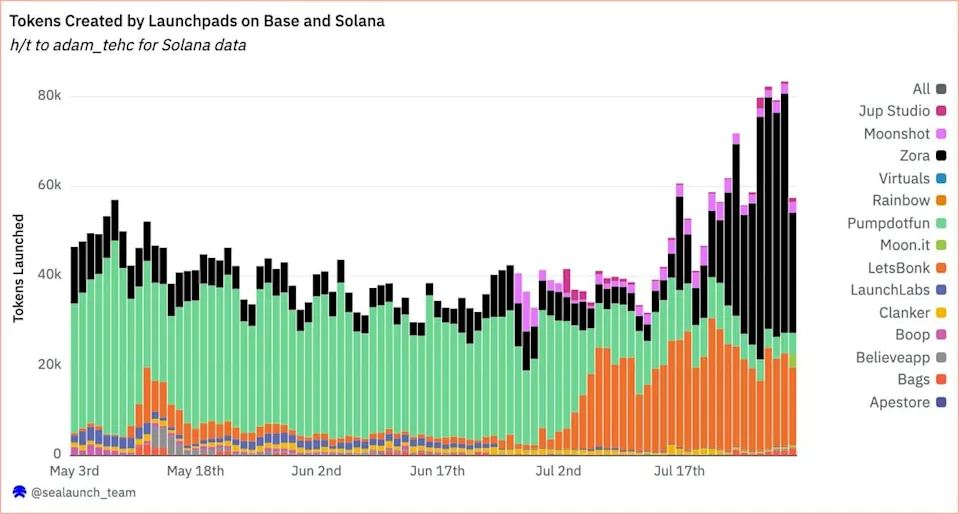
Zora has also become a prominent social platform within the Base ecosystem. After Coinbase’s wallet rebranding to “Base App”, Zora’s applications, which aided Base in outperforming Solana in daily token creation, quickly attracted significant attention.
Data from Dune Analytics indicates that daily token creation on Base surged from about 6,600 in early July to over 50,000 by the end of the month, with Zora accounting for nearly 45% of this activity. Zora was minting over 51,000 tokens daily, attracting over 2 million monthly users and gaining 77,000 new users weekly.
Source: Dune
Based on this positive trend, the team decided to launch a native token, ZORA, in April 2025, with a capped supply of 10 billion. The distribution was as follows: 10% airdrop, 20% community incentives, 5% liquidity, 20% treasury (locked for four years), 18.9% team, and 26.1% strategic contributors. Snapshots were taken between January 2020 and March 2025, with a subsequent round in April 2025.
For more: Analyzing the ZORA Coin Rally: Hype or Real Progress?
Prior to this, Zora had already released Zora Network, a Layer 2 solution built on the OP Stack to optimize NFT minting costs and improve scalability. The Zora Network enables tokenization of content, including posts, images, and links.
The outcome is clear: Zora has transitioned from a traditional NFT platform to a content finance protocol, building cultural and financial infrastructure on the blockchain.
SocialFi’s Potential: The Key to Base’s Mass Appeal?
The central question is whether SocialFi can become the transformative application that brings Base into the mainstream. Friend.tech demonstrated SocialFi’s capacity to generate buzz and excitement, but Farcaster is establishing long-term sustainability. If platforms like Farcaster continue to develop features like Frames, integrate utility tokens, and capitalize on Coinbase’s Smart Wallet for simplified user onboarding, Base stands a good chance of becoming the preferred blockchain for social applications.
SocialFi’s inherent strength lies in its foundation. Each sector has distinct advantages. DeFi, with its complexities and financial language, can be intimidating. The gaming industry relies heavily on studios creating successful titles. However, SocialFi resonates with a basic human need: connection and belonging. This inherent appeal gives Base a competitive edge as it leads the way in the next stage of blockchain development.