


Bhutan is implementing Ethereum blockchain technology to underpin its national digital identity system.
Aya Miyaguchi, affiliated with the Ethereum Foundation, has confirmed the initiative. This project showcases how the Himalayan nation is exploring cutting-edge technologies, moving beyond the traditional use of blockchain for just cryptocurrency and tokens to its application within vital government systems.
The plan, according to Miyaguchi, is to equip each of Bhutan’s approximately 800,000 residents with a secure, blockchain-based digital identity, fully controlled from their personal devices, by the year 2026.
This marks a significant step in the evolution of Bhutan’s digital identity program since its inception in 2023.
The National Digital Identity program began with the ceremonial registration of The Gyalsey, a symbolic act demonstrating Bhutan’s commitment to the digital age. The initial platform was built on Hyperledger, a private or permissioned blockchain typically used for corporate testing purposes.
By 2024, the Bhutanese government transitioned to Polygon, attracted by its reduced transaction costs and privacy-enhancing zero-knowledge proofs, which allow identity verification without exposing sensitive personal information.
Within a year of using Polygon, government officials concluded that migrating to Ethereum would provide unmatched decentralization and enhanced security measures on a global scale.
Jigme Tenzing, Secretary of the GovTech Agency, reportedly stated:
“Ethereum stands as one of the most decentralized blockchain networks globally, rendering it exceptionally resilient to disruption. This transition will solidify the security and stability of our national digital identity framework.”
Why Ethereum was chosen, and the reason for choosing it now
Bhutan’s decision reflects an international re-evaluation of identity management practices given the increasing frequency of identity fraud.
The World Bank’s ID4D data indicates that approximately 850 million individuals worldwide still lack any officially recognized form of identification. An additional 3.3 billion people lack digitally verifiable identity records. This exclusion hinders access to crucial financial systems and public services.
Governments have often attempted to solve this problem using centralized databases. However, these systems are costly to maintain and susceptible to security breaches.
In the United States, a reported 22% of Americans have experienced identity theft. The Federal Trade Commission (FTC) documented over 1 million related complaints in 2023, with elderly individuals often targeted, resulting in losses exceeding $10 billion.
Bhutan’s strategy aims to reverse the standard model by empowering citizens to maintain control over their digital identities rather than relying on a central registry.
Miyaguchi explained that the updated NDI will adopt a Self-Sovereign Identity (SSI) architecture, utilizing Decentralized Identifiers (DIDs) and Verifiable Credentials (VCs).
Each Bhutanese citizen will have an encrypted digital wallet, accessible through their smartphone, where verifiable data like birthdates, addresses, and educational qualifications will be stored and authenticated using cryptographic proofs.
This adjustment significantly impacts cost considerations. The World Bank estimates that the costs of traditional identity programs typically range from $5 to $10 annually per user, particularly in countries with lower income levels.
Bhutan’s blockchain-based approach could potentially decrease that cost to under $1 per user, depending on transaction costs and validator fees on the blockchain.
Bhutan’s forward thinking digital identity move is concurrent with a broader movement of digital identity modernization initiatives around the globe.
The United Nations Joint Staff Pension Fund recently implemented a blockchain verification system for its 70,000 pensioners across 190 different nations.
A report produced by the global entity detailed significant positive effects, including a 40% reduction in the reliance on paperwork, a 95% reduction in archival expenditures, and an almost perfect 100% retention rate among users when it comes to using the new digital system.
Bhutan plans to replicate similar results on a nationwide level.
How This Benefits Ethereum
If this innovative move proves successful and gains traction, Bhutan could become one of the first nations demonstrating the suitability of permissionless blockchains, like Ethereum, for vital public infrastructure.
Miyaguchi emphasized:
“This milestone not only represents a significant national achievement but also a substantial stride towards a more transparent and reliable digital future at a global level.”
This initiative could also function as a beneficial outcome for Ethereum, solidifying its reputation as a key settlement layer for both monetary transactions and metadata management.
Moreover, Bhutan’s exploration could encourage the wider tokenization of real-world assets, including land ownership records, educational transcripts, or professional certifications, all requiring strong and reliable identity verification.
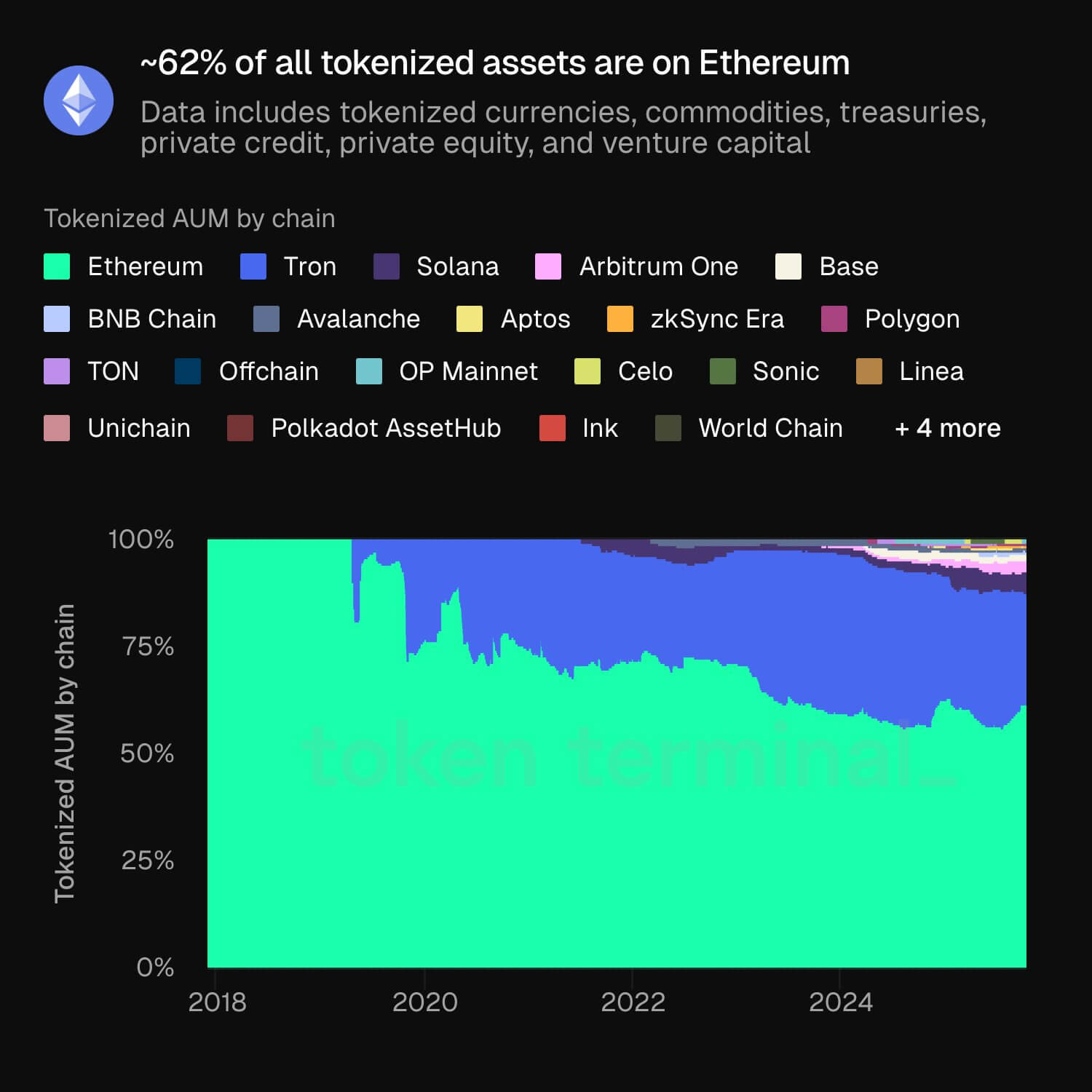
It’s worth noting that Ethereum is the most commonly used blockchain for RWA tokenization, accounting for 62% of all tokenized assets, including tokenized currencies, resources, treasuries, and other items.